The long-held illusion that technology is a neutral tool, immune to human fallibility and ideological bias, has suffered another significant blow. A comprehensive investigation by the Washington Post, based on rigorous testing of the world's leading Artificial Intelligence (AI) models, has reached a conclusion that is sparking intense debate: AI is not politically 'colorblind.' On the contrary, it exhibits a clear lean toward progressive and liberal values, leaving tech giants exposed after their repeated promises of absolute impartiality.
The issue of political bias in Large Language Models (LLMs) is not entirely new, but the Washington Post's study places it on a more empirical and scrutinized foundation. By utilizing the 'Political Compass'—a tool that maps political ideologies across two axes: left-to-right (economic) and authoritarian-to-libertarian (social)—researchers found that models like OpenAI's ChatGPT and Google's Gemini consistently gravitate toward the left on sensitive social and economic inquiries.
The Grok Paradox and Musk’s Failed Promise
Perhaps the most intriguing finding of the investigation concerns Grok, the AI developed by Elon Musk’s xAI. Musk famously marketed Grok as the 'anti-woke' alternative, promising an AI that would pursue the 'absolute truth' without the filters of political correctness that he claims have 'infected' Silicon Valley. However, the Washington Post's data reveals that even Grok, when prompted with questions regarding minority rights, climate change, or economic inequality, often adopts stances that align with progressive viewpoints.
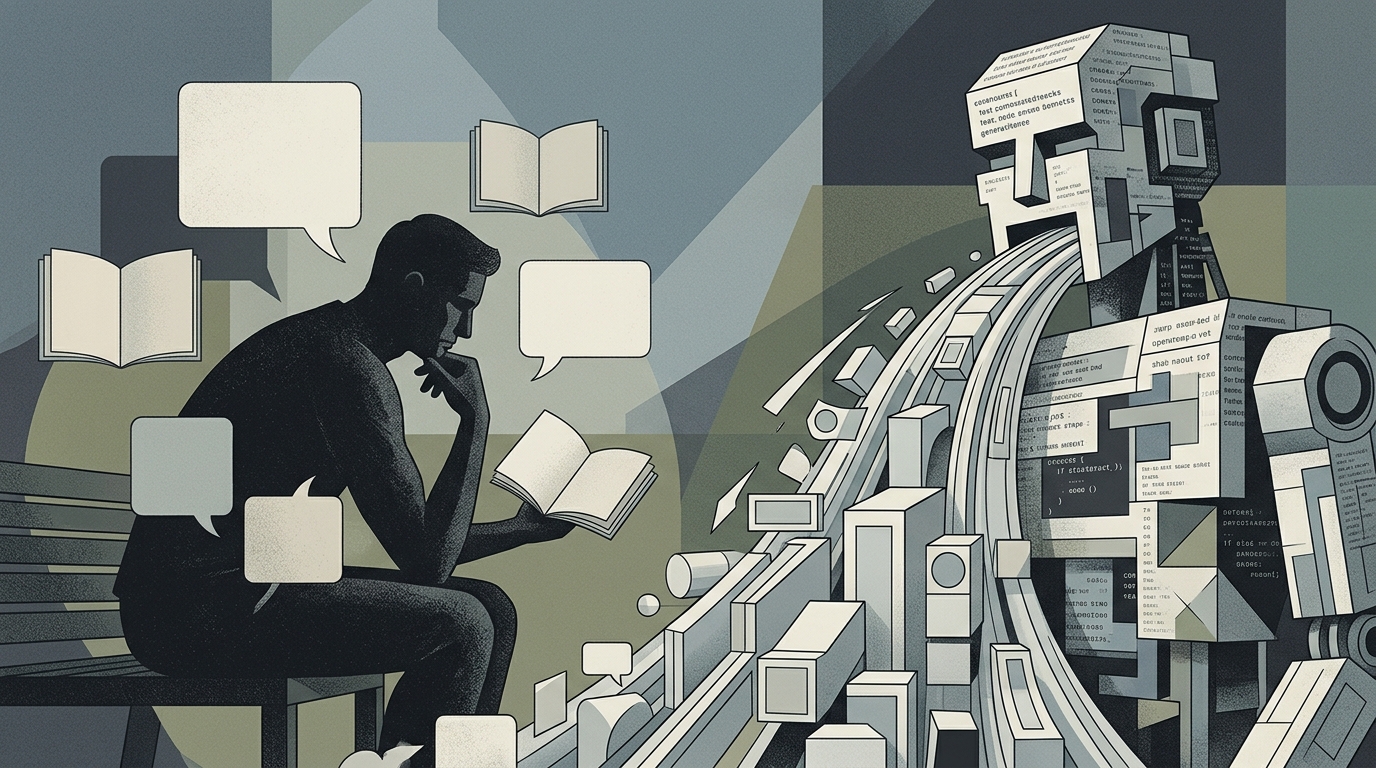
This phenomenon highlights a fundamental challenge in AI development: the training data. These models are trained on massive datasets comprising internet text, Wikipedia entries, and digitized libraries. If the dominant culture within these texts leans in a particular direction, the model will inevitably internalize it. Furthermore, the process of 'Reinforcement Learning from Human Feedback' (RLHF), where human annotators rank AI responses, introduces the subjective values of the reviewers—most of whom are university-educated professionals with specific ideological leanings.
Which Model Achieved the Most 'Neutral' Score?
In the quest for a truly neutral model, the study identified Anthropic's Claude as the most balanced performer. Anthropic employs a methodology known as 'Constitutional AI.' Rather than relying solely on human feedback, which is prone to bias, the model is governed by a set of written principles—a 'constitution'—that mandates it to avoid bias, respect autonomy, and present multiple perspectives on controversial topics.
Claude succeeded in navigating the traps of 'left' or 'right' responses more effectively than its competitors, opting for an analytical rather than a dogmatic tone. This suggests that neutrality is not an impossible goal, but it requires intentional engineering rather than passive data collection. However, even Claude is not without fault, as the very definition of 'neutrality' is subjective and depends heavily on who drafts the rules of the AI's constitution.
Implications for Democracy and the Future of Information
The exposure of AI's political leaning comes at a critical juncture as global societies increasingly rely on these tools for information discovery. If a voter uses ChatGPT to understand policy platforms and the model subtly favors progressive narratives, AI becomes a tool for invisible propaganda.
- The manipulation of public opinion through 'intelligent' algorithms is a primary concern for political scientists.
- The creation of 'digital echo chambers' is exacerbated when AI reinforces only one side of the political spectrum.
- The demand for transparency regarding training datasets and algorithmic weights is now an urgent necessity.
"Artificial Intelligence doesn't have its own opinion. It has the opinion of the average of our data, filtered through the sensibilities of Silicon Valley engineers," the report notes.
In conclusion, the Washington Post's findings serve as a wake-up call. AI is a mirror of our society, but it is a mirror that can be distorted. The battle for the 'soul' of AI and its political orientation has only just begun, and its outcome will fundamentally shape the quality of public discourse for decades to come.