When Netflix began its global ascent over a decade ago, the promise was simple and revolutionary: "Cut the cord." Traditional television, with its rigid schedules and endless commercial breaks, was cast as a fossil of a bygone era. Streaming was to be the viewer's paradise—on-demand, high-quality content that was, above all, ad-free. Today, in 2026, that utopia has yielded to a harsh economic reality. Ad-free streaming is no longer the standard; it is a premium luxury.
The Great Retreat: From Disruption to Integration
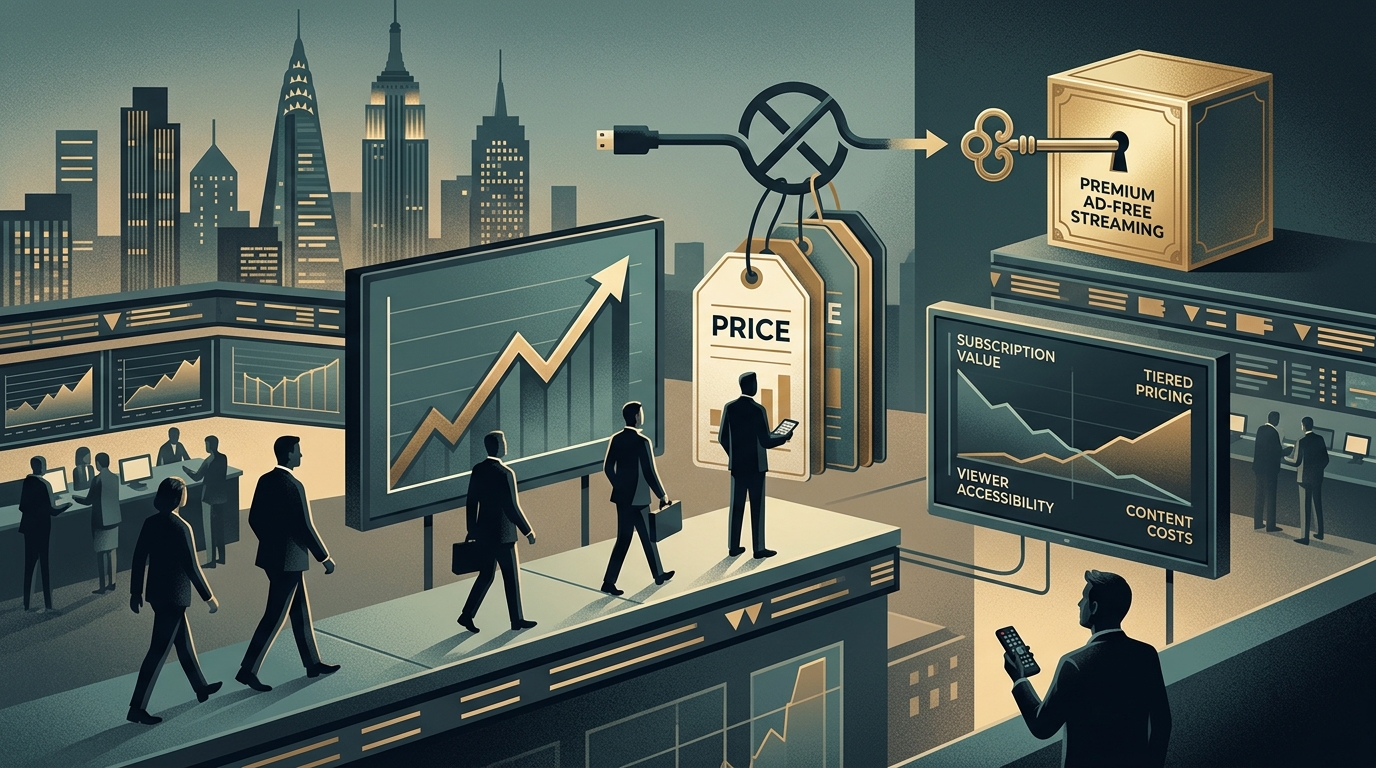
The streaming industry is undergoing a phase many analysts call "re-bundling." What began as an attempt to overthrow the cable TV model has ended up mimicking it almost point-for-point. Major platforms—Netflix, Disney+, Amazon Prime Video, Max—have all introduced ad-supported tiers while simultaneously hiking prices for their "premium" ad-free packages. This shift marks the end of the "subsidized" era of streaming, where venture capital and corporate debt funded cheap, uninterrupted entertainment for the masses.
This strategy is not accidental. After years of profligate spending on content acquisition and subscriber growth, Wall Street investors are now demanding profitability. Market saturation means growth through new users has plateaued, particularly in developed economies. Consequently, companies are focusing on increasing Average Revenue Per User (ARPU). Paradoxically, a user on a cheaper ad-supported tier is often more profitable for the platform than an ad-free subscriber, thanks to the lucrative nature of digital advertising auctions.
The Economics of Attention and the Viewer Divide
The "pay-to-avoid-annoyance" model is one of the most effective forms of economic stratification in the digital economy. Our attention has become the primary currency. The ability to watch a film or a series without being interrupted to be sold detergent or car insurance is now a premium service. This creates a new social divide in entertainment: those with the financial means enjoy art in its pure form, while the majority of users are forced to endure a fragmented, commercialized experience.
- The Rise of AVOD: Advertising Video On Demand (AVOD) is seeing explosive growth as consumers, squeezed by inflation, choose to "pay" with their time rather than their wallets.
- The Return of the Bundle: Telecommunications providers are once again offering packages that bundle multiple streaming services, mirroring the golden age of satellite and cable TV.
- Algorithmic Advertising: Streaming ads are not the traditional "blind" commercials of broadcast TV. They are hyper-targeted, based on the vast amounts of data platforms collect, making them more intrusive yet more valuable to brands.
Cultural and Artistic Implications
Beyond the economics, there is the question of artistic integrity. Creators of streaming series and films used to write without the constraint of "commercial breaks." The forced insertion of ads into content not designed for them destroys the rhythm and viewer immersion.
"Streaming was our last hope for a clean relationship between creator and audience,"says a prominent Hollywood producer.
"Now, the narrative is once again subservient to the needs of commerce."
Looking ahead, we are likely to see even more extreme versions of this trend. Platforms are already testing models where ads appear the moment a user hits "pause," or using AI to insert dynamic product placement into scenes in real-time, tailored to the specific viewer's profile. Silence and focused attention are becoming the ultimate status symbols of the digital age, accessible only to those who can afford the gatekeeper's rising toll.