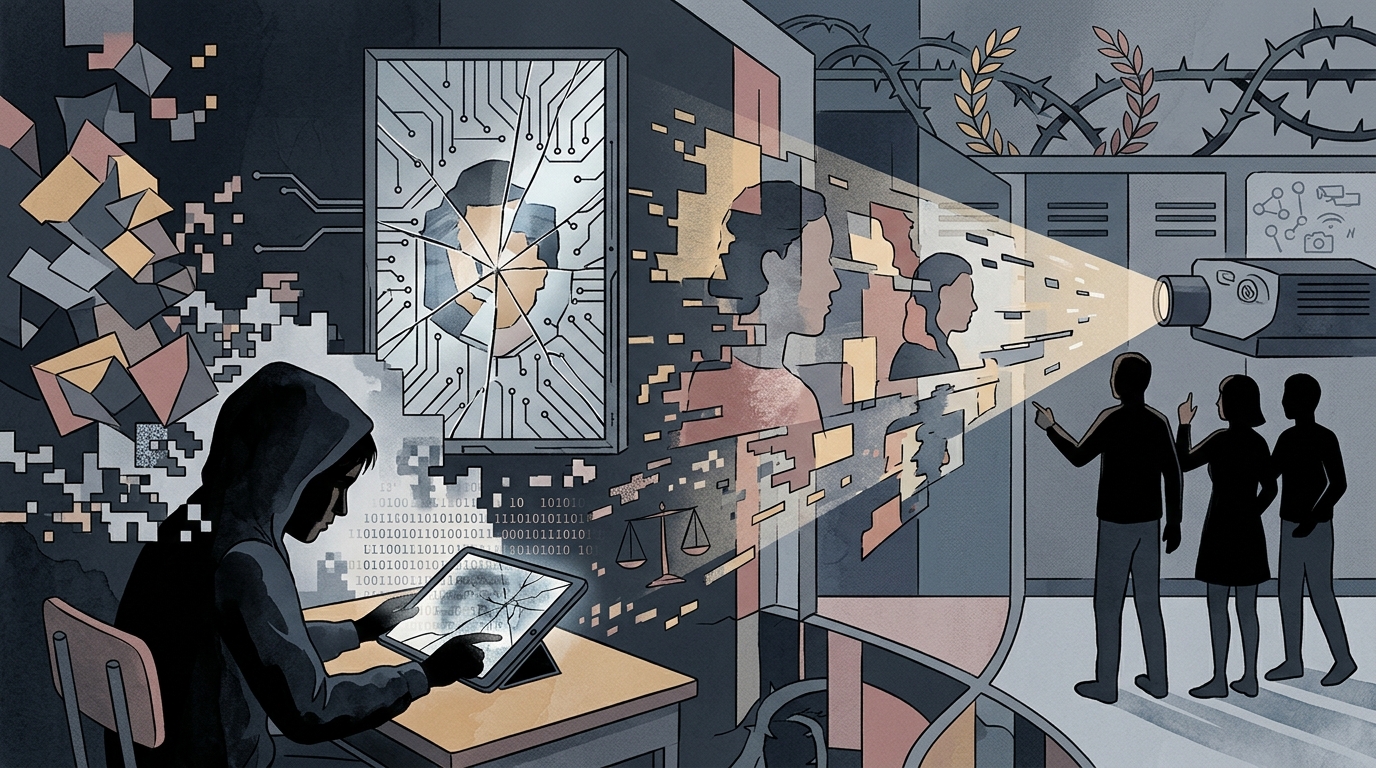
The era of digital innocence has ended. As we navigate mid-2026, artificial intelligence, while offering unprecedented breakthroughs in science and productivity, has simultaneously armed those seeking to bully and socially isolate others. Recent reporting, highlighted by the Wall Street Journal, reveals a nightmare reality: the use of AI applications to create non-consensual deepfake nudes among students, a practice spreading like an epidemic in schools globally.
The Democratization of Digital Violence
Only a few years ago, creating a convincing deepfake required specialized programming knowledge and high-end hardware. Today, the process has been simplified to the point where a teenager with a mid-range smartphone can digitally "undress" any classmate within seconds. So-called "undressing" or "nudify" apps use Generative AI to remove clothing from standard photos, creating images that, while fake, are hauntingly realistic.
- Easy access via Telegram bots and shadow websites.
- Zero cost for basic content generation.
- A lack of effective filters on major social media platforms.
The problem lies not just in the technology, but in the velocity at which this content is shared. An image created in a bedroom can reach the screens of an entire school before the victim even realizes it exists. The psychological toll is immense, leading to cases of severe depression, social withdrawal, and even suicidal ideation.
The Legal Vacuum and Big Tech Responsibility
Despite regulatory efforts like the European Union's AI Act, legislation is struggling to keep pace with innovation. In the United States, the debate surrounding Section 230 continues, with many arguing that platforms should face criminal liability for hosting such content. However, the decentralized nature of the internet allows these apps to operate from jurisdictions with lax regulations, making the tracking of creators nearly impossible.
"This isn't just bullying; it is a form of digital sexual violence that leaves permanent scars on a child's identity," says a leading cybersecurity expert.
Tech giants, from Apple and Google to Meta and Discord, are under mounting pressure to implement stricter filters. Yet, the "black market" for AI tools is thriving. Algorithms trained to create art are now being weaponized to destroy lives, and the accountability of the developers behind these models remains one of the greatest ethical questions of our time.
Education and Prevention: The Only Shield
The conversation around internet safety must shift from general theory to the practical handling of the deepfake phenomenon. Schools are no longer just places of learning; they are arenas of digital ethics. Parental awareness is equally critical, as many remain unaware of the existence of these tools. Cultivating empathy in the digital sphere is the only long-term solution to a problem that technology alone cannot fix.
In conclusion, artificial intelligence has surfaced the darkest aspects of human behavior. Protecting minors from deepfakes is not merely a matter of technological filters but a profound political and social challenge that requires immediate global action. If boundaries are not established now, the future of youth social interaction risks being irreparably poisoned.