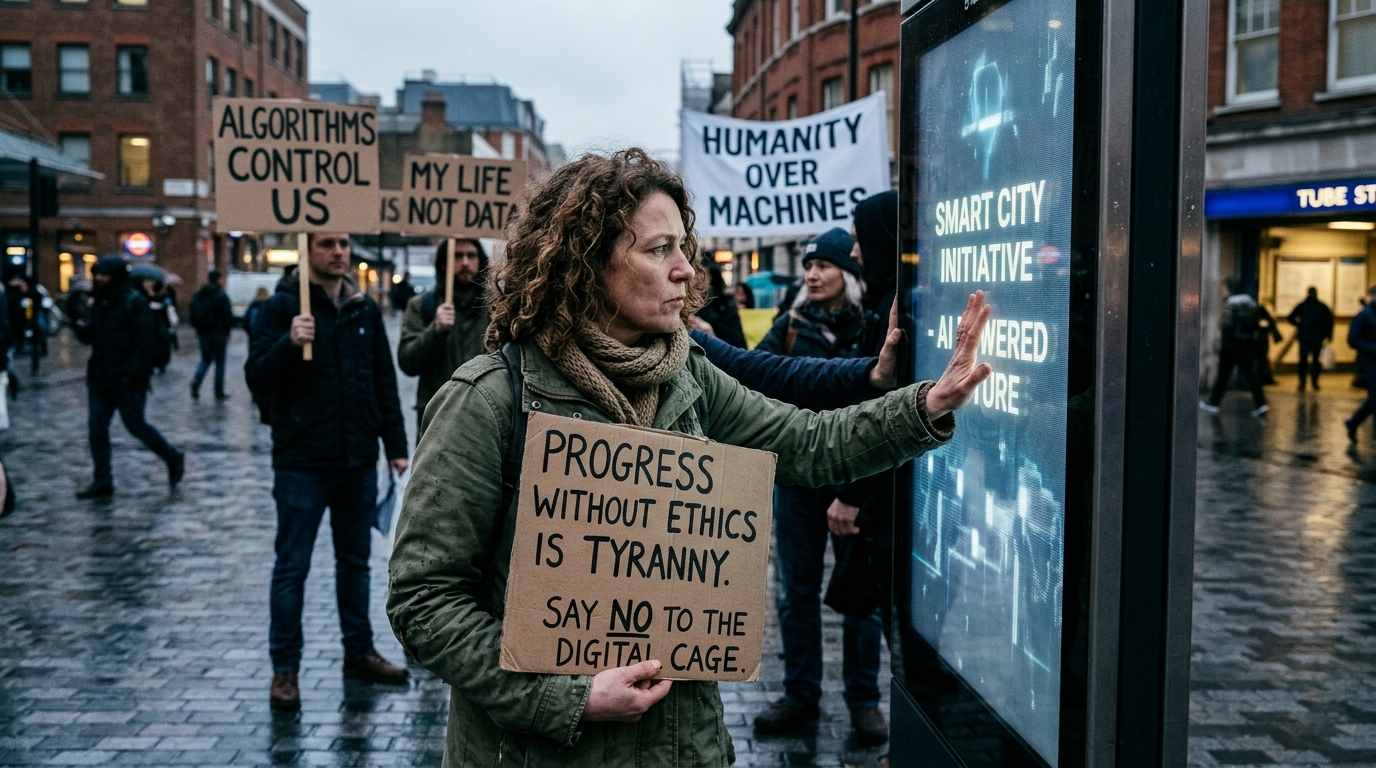
The discourse surrounding Artificial Intelligence (AI) is often trapped in a binary narrative: will machines replace us, or will they make us superhumanly productive? However, a closer examination of the American labor market reveals a far more complex and unsettling reality. The primary threat is not merely displacement, but the gradual erosion of job quality, privacy, and worker bargaining power. In the United States, where the social safety net is traditionally thinner than in Europe, AI is acting as a catalyst for a new era of labor vulnerability.
The Rise of Algorithmic Management
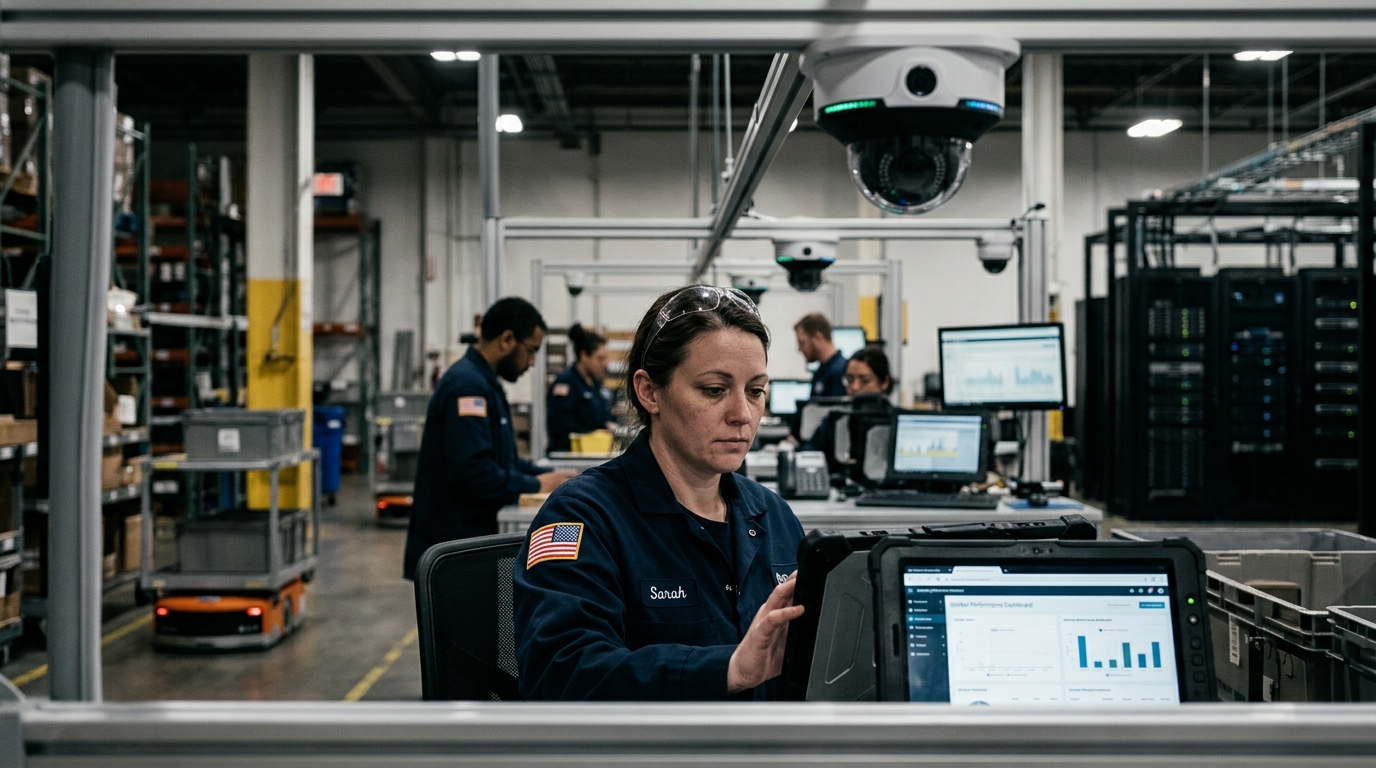
The first front of this transformation is not a robot taking a worker's place, but an algorithm becoming their supervisor. "Algorithmic management" is expanding beyond the gig economy (Uber, Amazon) and into traditional sectors like banking, law, and healthcare. AI systems now monitor worker performance in real-time, analyzing every mouse click, every second of idle time, and even the emotional tone of voice during client calls.
This constant surveillance creates a high-stress environment where human judgment is sidelined in favor of "optimization." When an algorithm determines shifts, promotions, or even terminations based on opaque data points, the worker loses the ability to advocate for themselves. The personal relationship with an employer is replaced by a cold, mathematical equation that often ignores human needs or the unpredictable nuances of real-world work.
The Taskification of Skilled Labor
Another critical aspect is the process of deskilling. The traditional view was that AI would primarily affect manual labor. However, Large Language Models (LLMs) are now targeting "cognitive labor." This process does not necessarily lead to immediate layoffs but to what sociologists call "taskification." Complex professional roles are being broken down into smaller, simpler tasks that can be performed by less-skilled workers aided by AI.
This results in wage suppression and the disappearance of career ladders. If a junior lawyer or a data analyst sees 80% of their tasks automated, the market value of their expertise plummets. Workers are transformed into "tool operators" rather than creators or decision-makers, making them easily replaceable and economically precarious. This shift threatens to hollow out the middle class, leaving a small elite of AI owners and a vast pool of low-paid task-performers.
The Institutional Void and American Exceptionalism
Why are American workers uniquely vulnerable? The answer lies in the institutional framework. Unlike the European Union, which has already enacted the AI Act with specific protections for workers' rights, the U.S. relies on a patchwork of fragmented regulations. The principle of "at-will employment" allows employers to terminate workers without cause, facilitating the rapid replacement of humans with AI systems without severance or notice.
Furthermore, the decoupling of healthcare from citizenship and its tie to employment in the U.S. makes job loss due to automation an existential threat. Without strong unions—which have been systematically weakened over recent decades—workers lack the collective voice necessary to demand guarantees for ethical AI usage and a fair share of the productivity gains generated by these technologies.
Data Extraction as a New Form of Exploitation
Finally, there is the issue of "training one's replacement." Many workers today are unknowingly training the AI models that will eventually render their roles obsolete. Every email written, every line of code debugged, and every strategic decision recorded in corporate systems serves as training data for algorithms. This invisible extraction of knowledge and experience occurs without additional compensation or intellectual property protections. AI essentially cannibalizes human expertise to create a digital surrogate that costs a fraction of the price, leaving the original creator marginalized.
In conclusion, Artificial Intelligence is not a neutral technology. Within the current U.S. economic structure, it tends to amplify the power of capital over labor. Protecting workers requires more than just technical fixes; it demands a radical reimagining of labor rights in the digital age, aimed at restoring human dignity in the face of algorithmic tyranny.