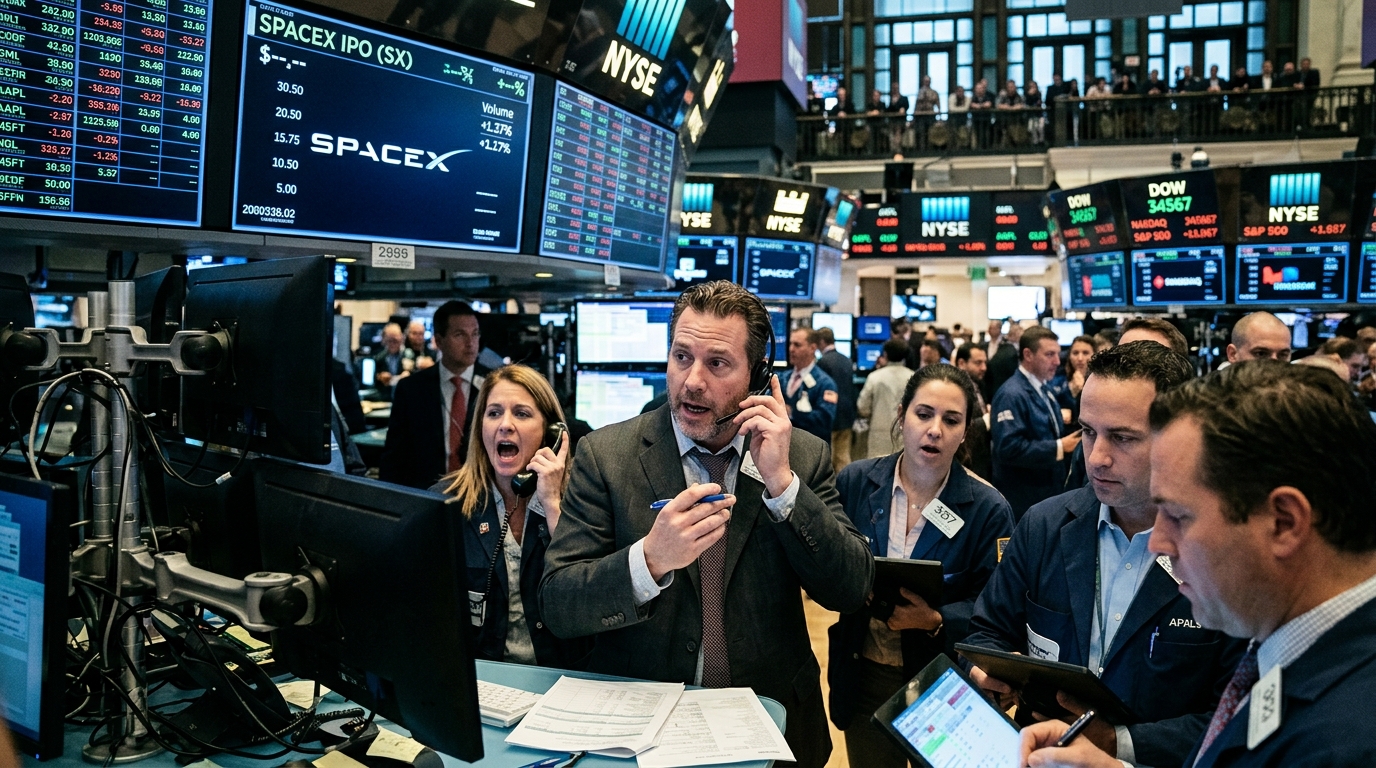
The landscape of international markets on the morning of June 2, 2026, reflects a period of mature contemplation. Wall Street futures are trading in slightly negative territory, a move that analysts interpret not as a sign of crisis, but as a necessary pause in the frantic AI race that dominated the first half of the decade. After three years of explosive growth for tech giants, the market is entering a phase where promises must now be accompanied by tangible financial results and sustainable profit margins.
The Transition from Expectation to Reality
2026 is characterized by an investor shift toward 'Agentic AI'—systems that don't just generate text or images but execute complex business processes autonomously. While Nvidia remains the undisputed leader in hardware, attention has shifted to software and service companies tasked with proving that the integration of these tools drastically reduces operating costs. Recent earnings announcements from the cloud computing sector show that demand remains robust, but the capital expenditure (Capex) required for building new data centers is putting pressure on free cash flows.
The slight decline in futures is also linked to inflation concerns. Despite expectations that AI would act as a deflationary force by boosting productivity, the massive demand for energy and rare minerals has created new cost centers. Central banks are closely monitoring whether the 'intelligence economy' can sustain itself without causing overheating in energy prices.
The Energy Challenge and Infrastructure
One of the primary reasons for today's caution is the infrastructure 'ceiling.' Data centers in 2026 require amounts of power that existing grids struggle to provide. Wall Street now scrutinizes a tech company's energy agreements as rigorously as its algorithms. Investors are pivoting toward utilities and nuclear energy providers (SMRs), viewing them as the indirect but clear winners of the AI revolution.
- Semiconductor market capitalization remains at historical highs but with increased volatility.
- Regulatory bodies in the US and EU are ramping up pressure for algorithmic transparency, affecting Big Tech sentiment.
- The bond market shows signs of stabilization, awaiting the Fed's next moves regarding interest rates.
According to analysts, the current correction is healthy. 'We are not seeing a bubble bursting, but a market learning to price the real impact of technology,' a report notes. The focus is no longer on who has the best AI model, but on who can operate it with the lowest energy and computational cost.
Geopolitics and Technological Nationalism
Finally, the factor of 'Sovereign AI' cannot be overlooked. Many nations, including EU members, are investing in their own infrastructure to avoid total dependence on American technology. This market fragmentation creates new challenges for Wall Street multinationals, which see their profit margins squeezed by local regulations and subsidized competitors. Today's nervousness in futures is a reflection of this complex puzzle, where technology meets politics and ecology.
"Artificial Intelligence is no longer a promise for the future; it is the operating code of today's global economy, and Wall Street is trying to figure out the licensing fee for that code."
In conclusion, the small losses in futures serve as a reminder that even the most revolutionary technologies are subject to the laws of supply and demand, energy, and interest rates. The upcoming sessions will be critical in determining whether the market will find the support needed for a new rally toward the end of the year.