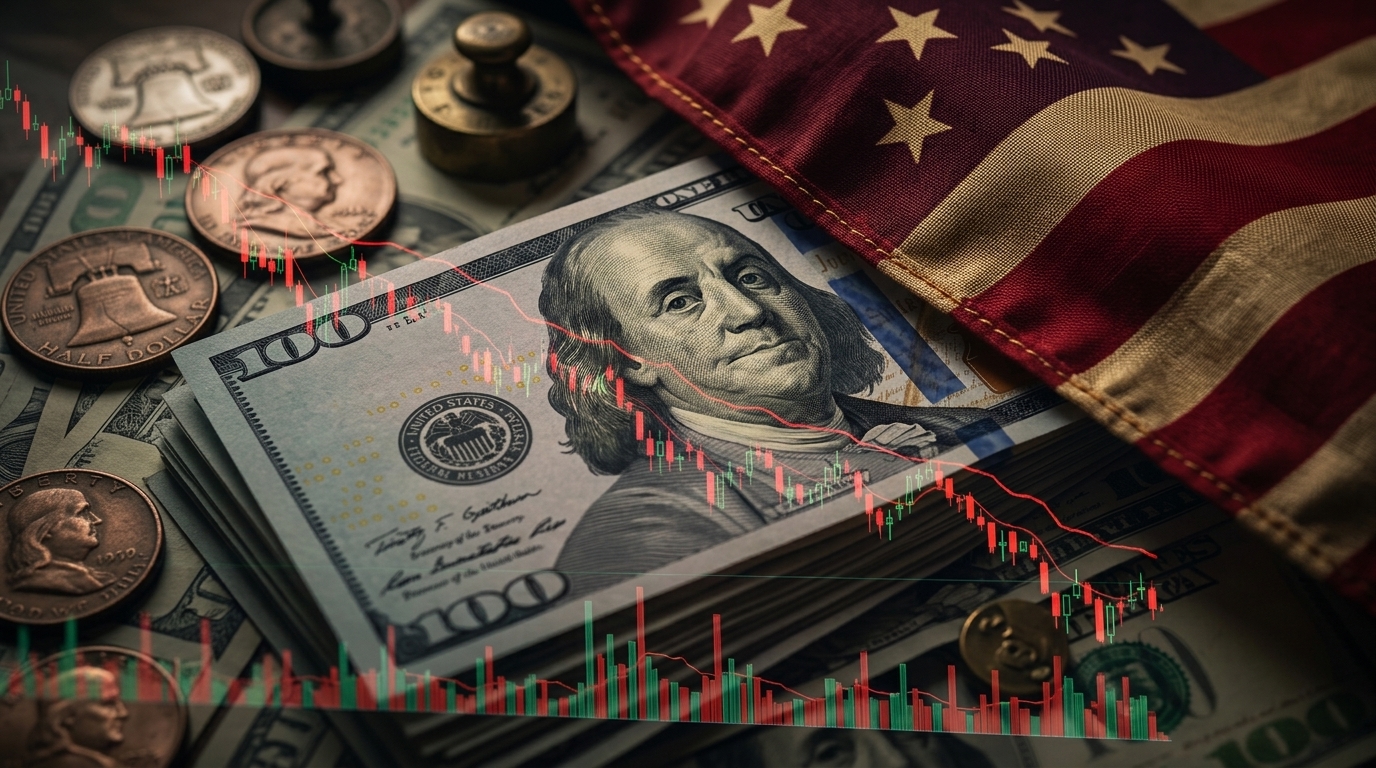
The global financial stage is witnessing a significant retreat of the US Dollar, marking a potential turning point in the monetary policy of the world's largest economy. After a prolonged period of dominance, the 'Greenback' has entered a negative trajectory, recording its steepest weekly losses in over three months. The catalyst for this shift is the recently released June 2026 employment data, which painted a picture of a US labor market that is finally showing signs of cooling under the weight of restrictive interest rates.
The Cracks in the 'American Exceptionalism' Narrative
For much of the past two years, the US economy has defied gravity, maintaining robust growth and a tight labor market despite the Federal Reserve's aggressive tightening cycle. However, the latest non-farm payrolls report suggests that this era of 'American Exceptionalism' may be nearing its end. The data showed fewer jobs added than forecasted, alongside a revised downward trend for previous months. More importantly, the unemployment rate ticked up to 4.1%, a level that often signals a shift from a healthy slowdown to a potential downturn.
Investors reacted with clinical precision. The dollar index (DXY), which measures the currency against a basket of peers, plummeted as traders recalibrated their expectations for the Fed's next move. The narrative has shifted decisively from 'higher for longer' to 'how soon and how deep will the cuts be?' This repositioning has led to a broad sell-off of the dollar, as the yield advantage of US Treasury bonds begins to erode in anticipation of a dovish pivot.
Market Sentiment and the Pivot to Cuts
The Federal Reserve now finds itself at a critical crossroads. Jerome Powell has repeatedly stated that the central bank is 'data-dependent,' and the latest data is shouting for attention. While inflation has cooled significantly from its peaks, it has not yet reached the 2% target. However, the Fed's dual mandate includes maximum employment, and the rising jobless rate is a red flag that cannot be ignored. The market is now pricing in a high probability of a rate cut in September, with some analysts even suggesting an earlier move if subsequent data confirms the trend.
- The uptick in unemployment suggests that the labor supply-demand balance is returning to pre-pandemic norms.
- Wage growth is moderating, which reduces the risk of a wage-price spiral that could reignite inflation.
- Global investors are shifting capital toward the Euro and the Yen, which offer recovery potential as the dollar's premium fades.
This shift in sentiment is not just about the US. It is a reflection of a global rebalancing. As the interest rate differential between the US and other major economies narrows, the massive 'carry trade' that supported the dollar is beginning to unwind, creating a self-reinforcing downward pressure on the currency.
Global Ripple Effects: From Frankfurt to Tokyo
The dollar's decline is a double-edged sword for the rest of the world. In the Eurozone, a stronger Euro helps dampen imported inflation, particularly for commodities like oil and gas which are priced in dollars. This could give the European Central Bank (ECB) more room to maneuver in its own interest rate path. Conversely, a stronger Euro makes European exports less competitive on the global stage, a concern for manufacturing powerhouses like Germany.
"The Greenback's retreat is a relief valve for emerging markets that have struggled under the weight of dollar-denominated debt and high import costs," noted a senior economist at the IMF.
In Japan, the Ministry of Finance and the Bank of Japan are likely breathing a sigh of relief. The Yen has been under immense pressure, forcing interventions to prevent a freefall. A naturally weakening dollar achieves what market interventions often fail to do: a sustainable stabilization of the exchange rate without burning through foreign exchange reserves. This geopolitical breathing room could lead to a more synchronized global economic recovery if managed correctly.
Conclusion: A New Chapter for the Greenback
As we move through the second half of 2026, the trajectory of the dollar will remain the primary driver of global asset prices. If the US labor market continues to soften without collapsing, we may witness the elusive 'soft landing' that the Fed has been aiming for—albeit with a significantly weaker currency. However, if the unemployment rate climbs further, the dollar's decline could accelerate as the market prices in a recession. For now, the King Dollar era is facing its most serious challenge yet, as the reality of a slowing American economy finally catches up with the forex markets.