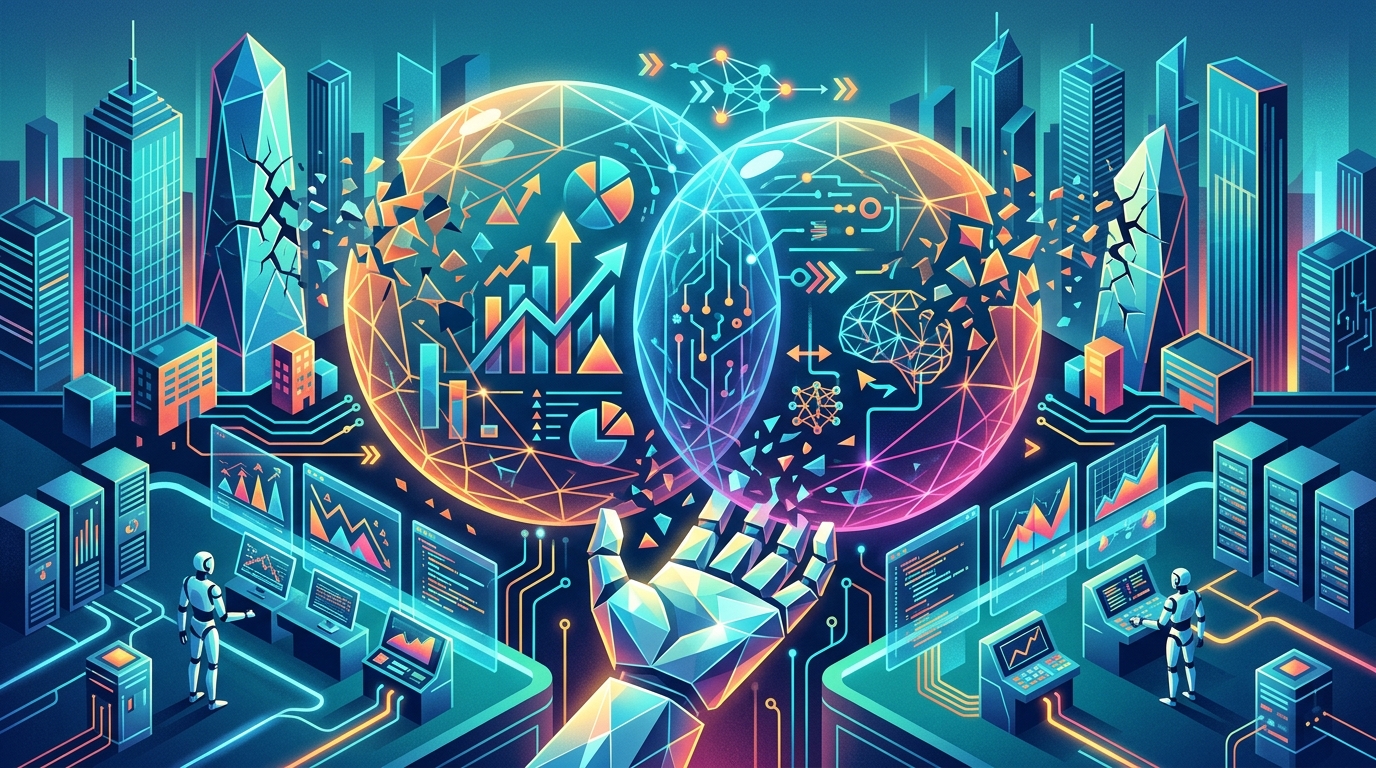
In the corporate world, there is an unwritten pact: leaders speak of Artificial Intelligence (AI) as a tool for "empowering" the workforce. However, Prashanth Mahendra-Rajah, Uber's Chief Financial Officer (CFO), recently decided to tear down this facade. In a rare moment of candor that is echoing across Wall Street, he admitted what many feared but few dared to articulate officially: AI is not just coming to assist workers, but to make many of them redundant.
The Shift from Augmentation to Replacement
For years, the Silicon Valley narrative was soothing. "AI will be your co-pilot," they said. But Uber, a company born from disrupting traditional labor models, seems to be leading the charge in a new direction. Mahendra-Rajah pointed out that the company views Generative AI as a means to drastically reduce costs in sectors that traditionally required hundreds or even thousands of employees, such as customer support, software engineering, and legal services.
This statement is not just a strategic forecast; it is a confession of how Big Tech perceives the future of work. "Efficiency" no longer translates to humans working faster, but to the complete automation of processes. In the case of Uber, which has already faced intense scrutiny for its "gig" worker model (drivers), extending this mindset to administrative and technical staff signals a new era of corporate restructuring.
The Impact on White-Collar Jobs
If the first phase of automation hit industrial manufacturing, the current phase targets the heart of the middle class. Uber's CFO emphasized that AI allows the company to "do more with less." This catchphrase is code for headcount reduction. Developers, data analysts, and support specialists are now on the front lines of risk.
- Coding: Using AI tools for writing code reduces development time, but also the number of junior developers needed.
- Customer Service: Advanced chatbots can now handle complex complaints, displacing entire call centers.
- Legal and Accounting: Contract analysis and bookkeeping are now performed in fractions of a second by algorithms.
The question arises whether the economy can absorb these workers into new roles. The optimism of previous years is giving way to skepticism, as the pace of technological advancement seems to outstrip the human workforce's ability to retrain.
"It is no longer about whether AI will affect jobs, but how quickly companies will decide that human presence is an unnecessary cost."
Investor Pressure and the Social Cost
Mahendra-Rajah's honesty stems from the pressure he faces from Wall Street investors. In a high-interest-rate environment, profitability is everything. AI offers a promise of expanding profit margins without the need for wage hikes or health benefits. However, this short-term shareholder success could lead to long-term social instability.
Uber, acting as a harbinger of trends, shows us that the "social contract" of labor is being unilaterally renegotiated. If tech giants manage to decouple wealth production from employment, governments will face an unprecedented crisis. The need for a regulatory framework surrounding AI adoption is no longer a theoretical debate but an urgent necessity for social cohesion.
Conclusion: The Wake-Up Call
The admission by Uber's CFO should serve as a warning. Technology is not neutral; it is used to serve specific economic goals. As AI integrates deeper into corporate structures, the challenge for society will be to ensure that the benefits of automation do not accumulate only at the top of the pyramid, leaving behind an army of "useless" workers. The future Uber described is already here, and it is harsher than we were promised.