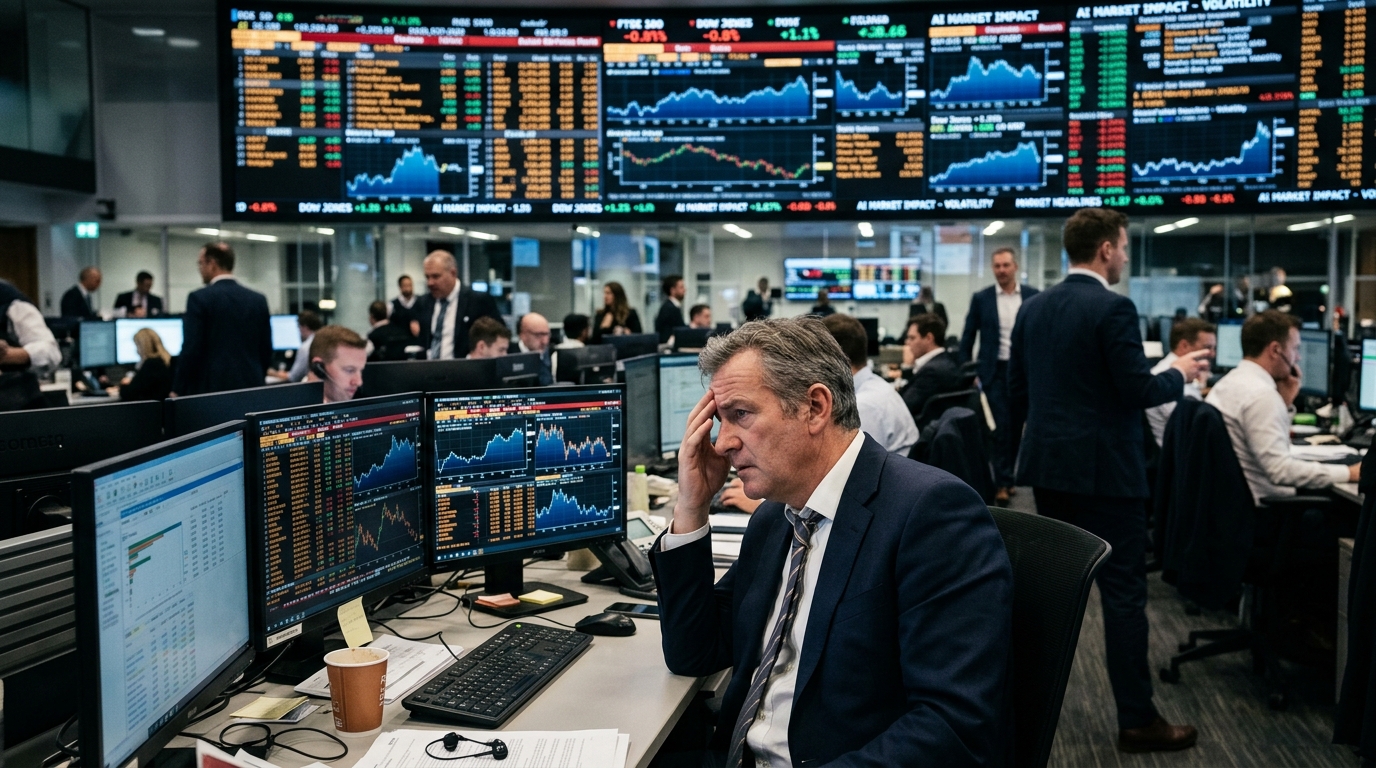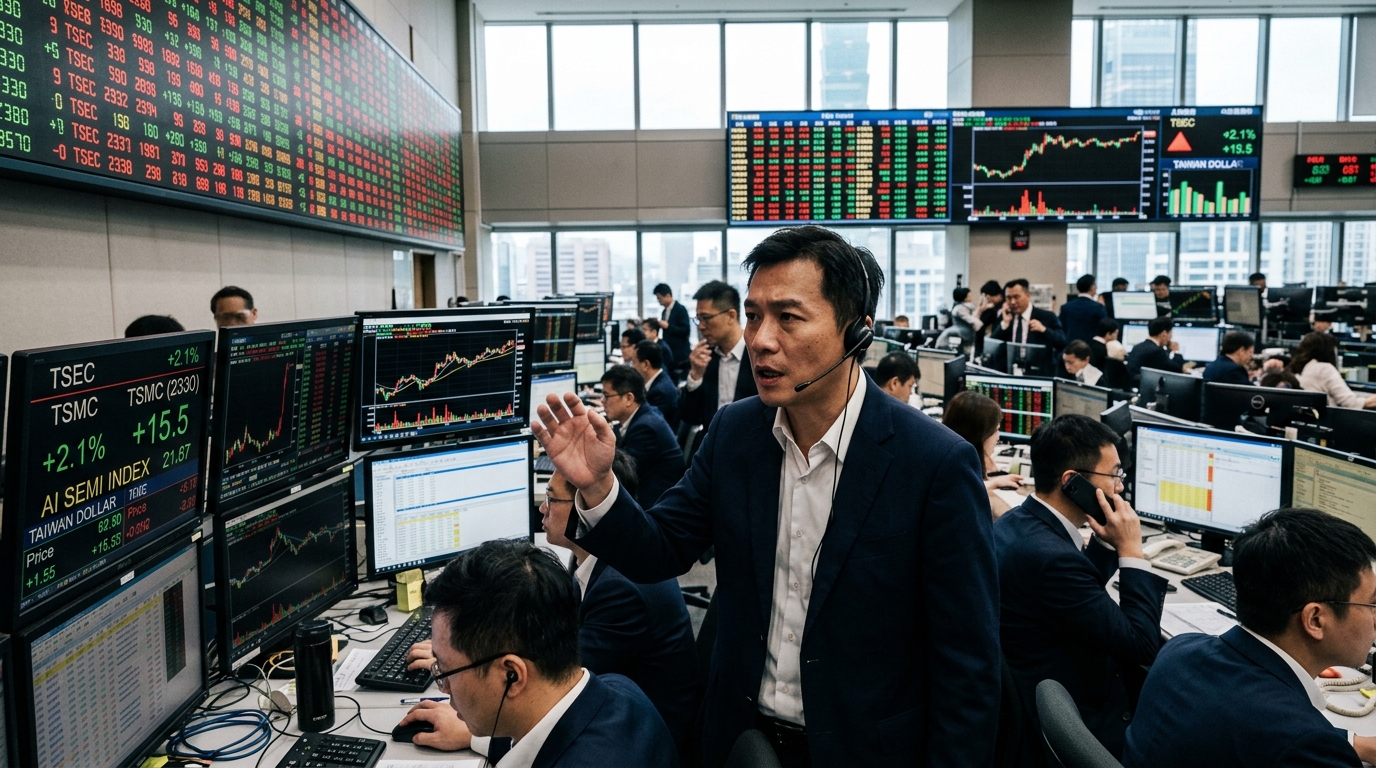
In the heart of the global technology landscape, Taiwan Semiconductor Manufacturing Co. (TSMC) is not merely a corporation but the barometer of the world economy. As we move through the first half of 2026, a significant shift is occurring in capital markets: local investors in Taiwan are "narrowing the gap" with Wall Street, compressing the historical premium that American Depositary Receipts (ADRs) have long enjoyed over common shares in Taipei.
For years, the valuation discrepancy between the Taiwan Stock Exchange (TWSE) listing and the New York Stock Exchange (NYSE) equivalent served as a tool for arbitrageurs and a signal of global thirst for exposure to the chipmaking giant. However, recent data indicates that this spread has retreated to a two-year low. This phenomenon is no accident; it reflects a deep conviction among local investors that the Artificial Intelligence (AI) revolution is still in its nascent stages, and that TSMC remains the undisputed king of the hill.
The Domestic Awakening and the AI Engine
The surge in local demand in Taiwan is driven by a convergence of factors, chief among them the relentless demand for high-performance computing. TSMC, which manufactures nearly 90% of the world’s most advanced semiconductors—including the chips powering Nvidia’s AI clusters and Apple’s next-generation devices—is seeing its order books overflow. Local investors, possessing a front-row seat to industry developments, appear less willing to leave the lion's share of profits to foreign institutional players.
According to market analysts in Taipei, this shift suggests a maturation of the domestic market. While Taiwanese investors were historically more conservative, the explosion of AI applications and TSMC’s consistent profitability have spurred an aggressive re-rating of the company’s value. The narrowing ADR premium means the local share price is rising faster than its New York counterpart, as liquidity in Taiwan is heavily funneled into the tech sector.
“We aren’t just seeing a market move; we are seeing a vote of confidence in Taiwan’s national economic security through technological supremacy,” noted a senior investment banker in Taipei.
Geopolitics and the ‘Silicon Shield’
Beyond the balance sheets, the close relationship between local investors and TSMC has a profound geopolitical dimension. The concept of the “Silicon Shield” remains central. The belief that the global economy is so dependent on TSMC that a conflict in the Taiwan Strait would be catastrophic for all parties acts as a unique safety net for local investors. While Wall Street often reacts spasmodically to rumors of geopolitical tension, investors in Taiwan have grown accustomed to the noise, focusing instead on the fundamental strength of the business.
Furthermore, TSMC has begun executing its ambitious expansion plans in the US, Japan, and Germany. Although international markets worry about the capital expenditure involved and potential margin erosion, the domestic market views these moves as necessary to maintain global dominance. The company’s ability to mass-produce 2nm chips and its research into 1.4nm technology reinforce the narrative that competitors like Intel and Samsung are still several steps behind.
The Financial Mechanics of Arbitrage
Technically, the narrowing ADR premium is also due to changes in capital flows. Institutional investors who use ADRs to access TSMC without dealing with the restrictions of the local currency market are finding that the cost of this convenience is shrinking. When the premium is high, investors favor local shares; when it narrows, the market reaches a state of equilibrium that suggests global and local expectations are finally aligning.
- Demand for Nvidia’s Blackwell architecture through 2025 and 2026 has effectively locked in TSMC’s production capacity.
- Dividend payouts remain highly attractive for local pension funds and retail holders.
- Fluctuations in the New Taiwan Dollar (TWD) against the USD are recalibrating the attractiveness of US-listed securities.
In conclusion, the convergence of valuations indicates that TSMC is no longer viewed as an “exotic” or risky emerging market play for Wall Street, but as a global pillar that its home market is now claiming with renewed vigor. Taiwan is no longer just exporting chips; it is exporting the investment confidence required to sustain the next chapter of digital history.