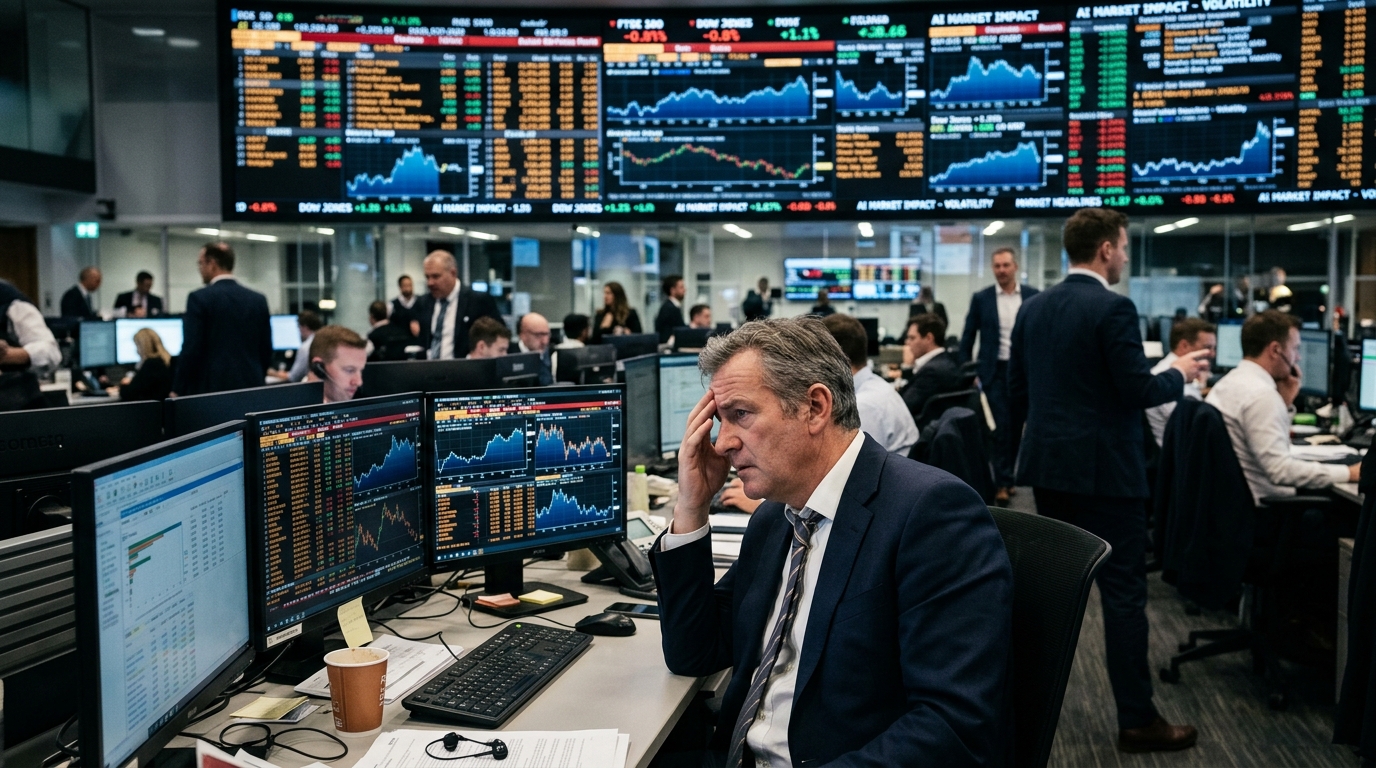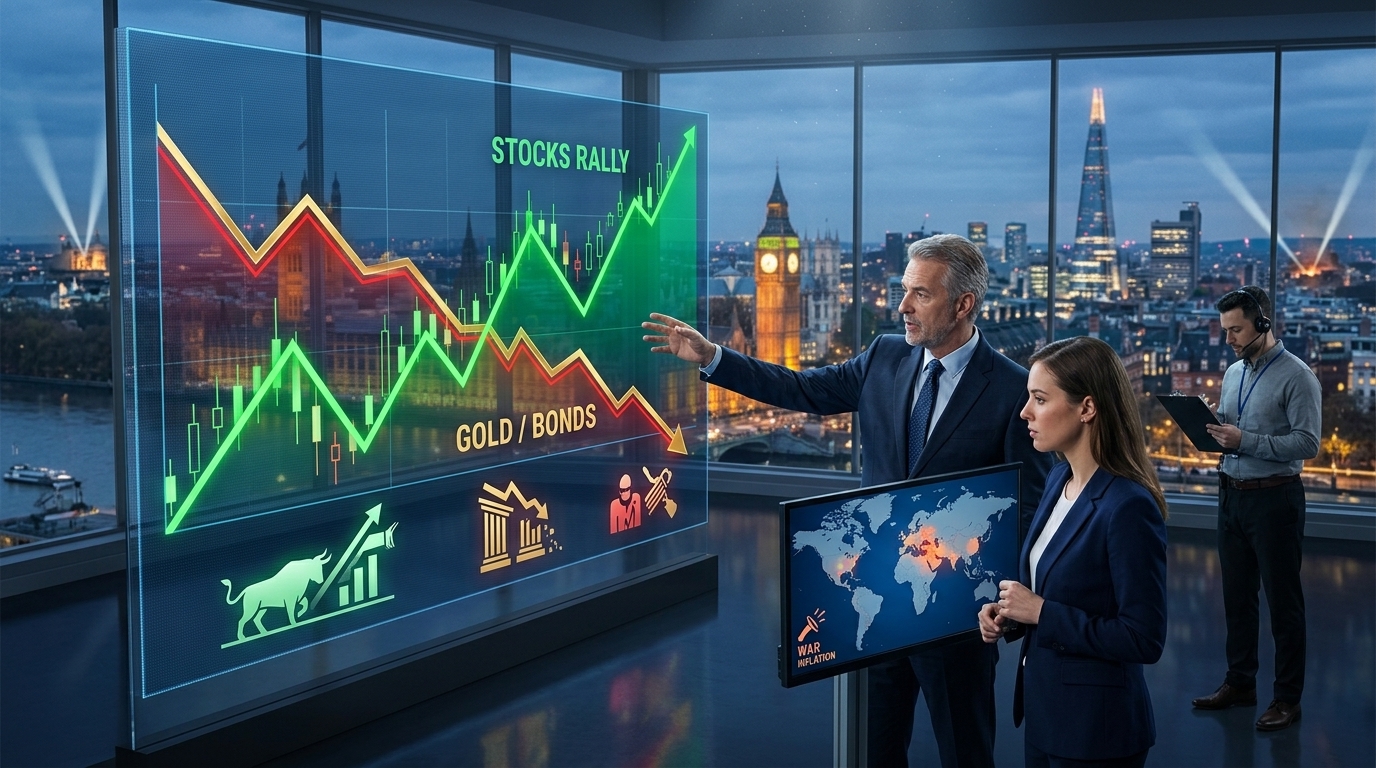
In the history of financial markets, geopolitical instability has always served as a red flag, driving investors toward the safety of gold and government bonds. However, the year 2026 seems to be overturning every established conviction. Despite ongoing conflicts in the Middle East, energy volatility, and strained relations between major powers, international stock indices are hitting record highs, leaving analysts to wonder if we have entered a new era of economic decoupling from ground reality.
The Collapse of Traditional Safe Havens
For decades, gold was the ultimate 'harbor' in times of crisis. Today, although it remains at high levels, its momentum seems to be fading in the face of the aggressive rise of tech stocks. Simultaneously, the bond market is under severe pressure. Yields on US and European securities remain at levels suggesting that investors no longer fear an immediate recession but are instead preparing for a period of 'higher for longer' interest rates.
The pressure on bonds reflects a profound shift in market psychology. Investors prefer to take on the risk of corporate earnings rather than be locked into fixed returns that may not cover persistent inflation. This shift of capital from 'safe' to 'profitable' is the primary reason why stocks continue to gallop, ignoring the sirens of war.
The 'AI Shield'
One of the key reasons for this resilience is the Artificial Intelligence (AI) revolution. Markets no longer view the economy through the lens of traditional industries hit by energy costs. Instead, they focus on the massive productivity gains promised by AI. Big tech companies—the so-called 'Magnificent Seven' and their successors—have managed to create their own growth ecosystem that appears immune to geopolitical turbulence.
"The market is no longer a mirror of geopolitics, but a projector of the technological future," Wall Street analysts note.
The liquidity being channeled into the tech sector acts as a bulwark. Even if oil prices fluctuate due to conflicts, the reduction in operating costs through automation and AI offsets the losses, keeping corporate profit margins at impressive levels.
Geopolitical 'Normalcy' and Desensitization
Another phenomenon being observed is the gradual desensitization of investors to conflict news. In the past, an escalation in the Middle East would trigger an immediate sell-off. Today, markets seem to have 'priced in' continuous instability. There is a cynical but pragmatic admission that as long as conflicts remain regional and do not completely disrupt global supply chains, multinational profitability will remain unscathed.
- The resilience of American consumption despite high interest rates.
- The shift of central banks toward more flexible liquidity management.
- The search for yields in an environment where cash loses value due to structural inflation.
In conclusion, the market paradox of 2026 is merely proof that capital always seeks the path of maximum return, defying fear. The traditional relationship between war and 'safe havens' has been broken, giving way to a new dynamic where technological superiority and corporate adaptability are the only real guarantees.