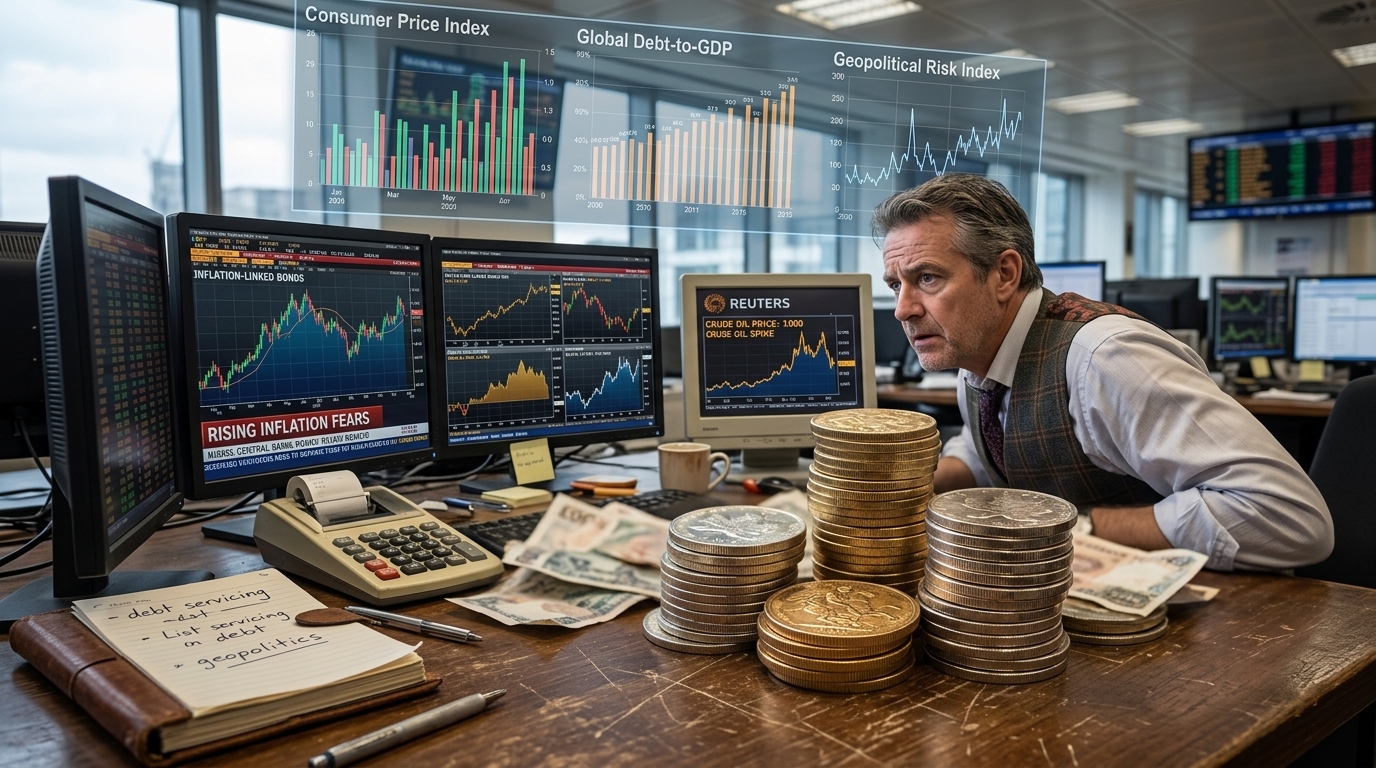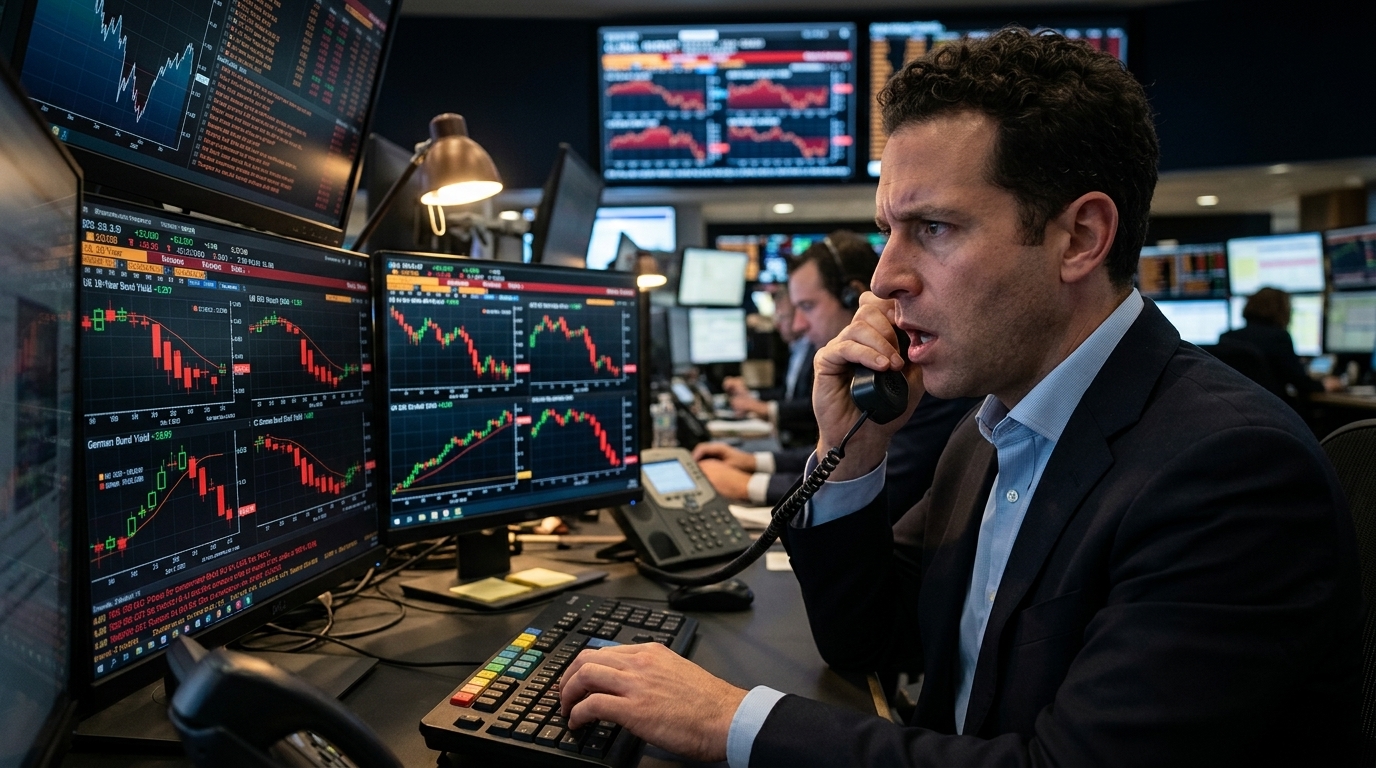
For months, Wall Street and international markets operated under a strange spell of euphoria. Despite geopolitical tensions, persistent inflation, and high interest rates, investors bought stocks as if they had discovered a magic elixir that neutralized the laws of economic gravity. However, recent days suggest that reality is returning with a vengeance. The "great bond sell-off," which began quietly, has now evolved into a storm dragging equities down with it, awakening memories of the disastrous year 2022.
The Surge in Yields and the End of Illusions
The root cause of the turmoil lies in the sovereign bond market, considered the backbone of the global financial system. When bond prices fall, their yields rise. The yield on the U.S. 10-year Treasury, the global benchmark for borrowing costs, has begun climbing again to dizzying levels. This movement is not merely a technical correction; it is a statement by the markets that interest rates will remain "higher for longer."
Investors, who until recently were betting on a series of rate cuts by the Fed and the ECB well into 2026, are now forced to recalibrate. Inflation is proving to be more "sticky" than expected, particularly in the services and energy sectors. As bond yields rise, stocks lose their luster. Why should one risk capital in the volatile stock market when a decent, guaranteed return can be secured from government securities?
The Ghost of 2022 and the Correlation Trap
The great fear among fund managers is the return of the "positive correlation" between bonds and stocks that defined 2022. In a normal economic environment, when stocks fall, bonds tend to rise, acting as a safety net. In 2022, however, both asset classes collapsed simultaneously, leaving investors with nowhere to hide. Current signs indicate we might be at the beginning of a similar cycle.
Technology stocks, which led the rally in previous years due to the Artificial Intelligence boom, are the most vulnerable. Their valuations are based on future earnings, which are "discounted" based on current interest rates. The higher the rates, the lower the present value of those future profits. Consequently, the Nasdaq is at the forefront of the losses as the AI narrative confronts the harsh reality of the cost of capital.
Fiscal Threats and Geopolitical Risk
Beyond monetary policy, another factor fueling the bond sell-off is the fiscal condition of major economies. The United States continues to run massive deficits, forcing the Treasury to constantly issue new debt. An oversupply of bonds, at a time when central banks are no longer the "buyers of last resort" due to quantitative tightening (QT), is pushing prices down and yields up.
Simultaneously, geopolitical instability in the Middle East and Ukraine keeps oil prices elevated, stoking inflationary pressures. Markets are beginning to realize that the "golden age" of low inflation and zero interest rates that followed the 2008 crisis is gone for good. The transition to this new regime is painful and fraught with volatility.
The Stance of Europe and the Athens Stock Exchange
Europe is not immune. Despite the European economy being weaker than its American counterpart, yields on German Bunds and French bonds are following the upward trajectory of U.S. Treasuries. The ECB is in a precarious position: it must decide whether to continue fighting inflation or protect a stagnating growth rate.
In Greece, the Athens Stock Exchange, which had posted significant gains recently, is also coming under pressure. Although the Greek economy is growing at rates above the Eurozone average, the domestic market remains sensitive to the global "risk-off" sentiment. Banks, which benefited from high interest rates, are now beginning to worry about the potential increase in non-performing loans (NPLs) if the cost of money remains prohibitive for much longer.
Conclusion: A New Reality
The question is no longer whether a correction will occur, but how deep it will be. The bond market is sending a loud warning signal that equities can no longer ignore. The "buy the dip" strategy, which worked flawlessly over the last decade, is being called into question. Investors are being asked to adapt to a world where capital has a cost, volatility is the norm, and returns are no longer guaranteed by central bank money printing. The "nightmare of 2022" may not repeat in exactly the same form, but the lesson remains: the bond market is always the final arbiter of economic truth.