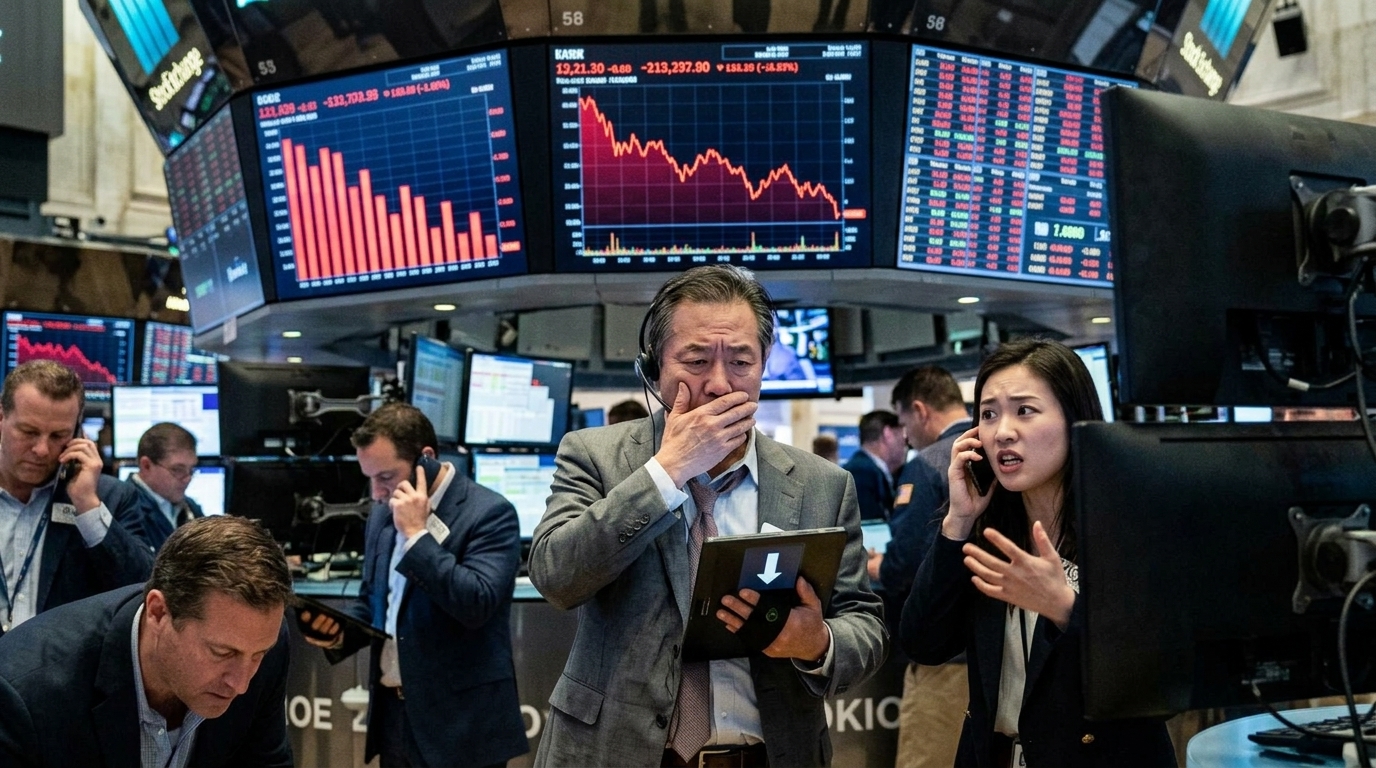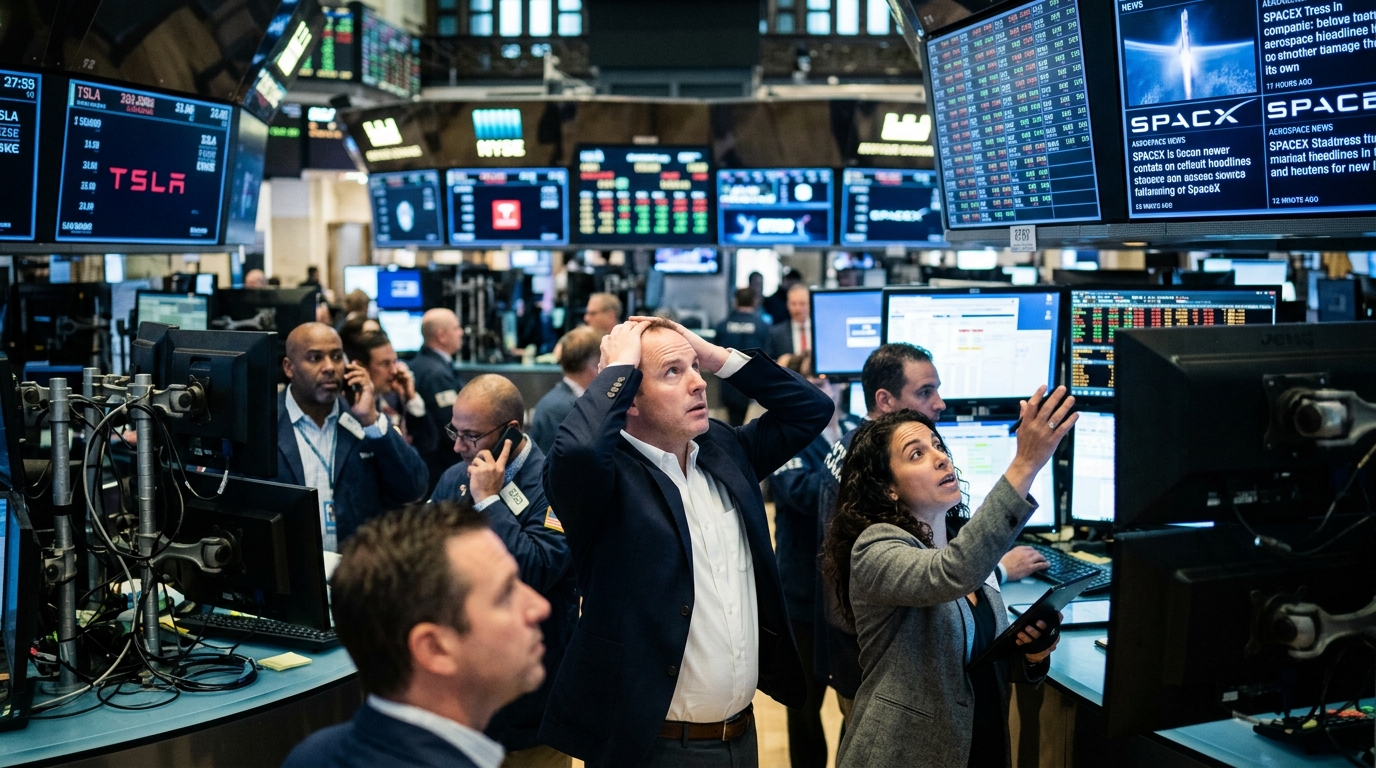
June 18, 2026, will be remembered in market history as the moment the hierarchy within Elon Musk's empire began a violent realignment. After years of anticipation, speculation, and countless successful launches, SpaceX finally crossed the threshold of the public market last Friday. However, the space company's triumphant first week had an unexpected "victim": Tesla Inc. Shares of the automaker, which for a decade stood as the ultimate symbol of technological growth, are recording significant losses as capital shifts en masse toward Wall Street's new "star."
The Cannibalistic Nature of Investor Enthusiasm
Tesla's decline during this holiday-shortened week is not merely a random fluctuation. Analysts at Bloomberg Tech point out that we are witnessing a phenomenon of "internal cannibalistic reallocation." Institutional investors, who held large positions in Tesla as the sole vehicle for exposure to the Musk ecosystem, now have an alternative. And this alternative, SpaceX, offers something Tesla seems to have lost: the sense of an unlimited, monopolistic future.
While Tesla struggles with electric vehicle (EV) market saturation, relentless competition from China, and the erosion of its profit margins, SpaceX entered the boards as the absolute sovereign of the orbits. With Starlink already generating positive cash flow and Starship promising to revolutionize interplanetary transport, SpaceX is viewed as vital infrastructure for the 21st century, unlike Tesla, which is now increasingly regarded as a "mature" automotive manufacturer.
Starlink: The Engine Fueling Valuation
The key to SpaceX's outperformance relative to Tesla lies in the scale and recurring nature of Starlink's revenue. As global demand for satellite internet skyrockets, SpaceX has managed to create a global network that no other company can directly challenge in the near future. On Wall Street, subscription-based revenue (a SaaS-like model) is always valued higher than the sale of hardware goods like cars.
Investors see in SpaceX a company less affected by lithium prices or geopolitical tensions in battery supply chains than Tesla. SpaceX controls its vertical production to a degree Tesla could only dream of. Furthermore, government contracts with the U.S. Department of Defense and NASA provide a safety cushion that Tesla, dependent on consumer demand, lacks.
The Challenge of Managing Two Giants
Another issue concerning the market is the allocation of Elon Musk's time and attention. With SpaceX now a public company, requirements for transparency, quarterly reporting, and investor relations have doubled. There is a widespread fear that Tesla, already facing hurdles in Full Self-Driving (FSD) development and the rollout of new models, will take a backseat.
The market seems to be voting for "space." SpaceX's market capitalization in its first week approached dizzying levels, while Tesla saw its valuation retreat below critical technical support levels. If this trend continues, Tesla may need to reinvent itself not as a car company, but as an AI and robotics firm (Optimus), to regain lost ground. However, for now, Musk's "pixie dust" seems to have moved from the streets to the stars.
Conclusion: A New Era for the Musk Ecosystem
The SpaceX IPO was not just a financial act; it was a paradigm shift. For the first time, Tesla is not the sole representative of Musk's vision on the stock exchange. This competition for the same investment dollars will force Tesla to prove its value based on fundamental economic metrics rather than just the promise of the future. SpaceX, on the other hand, begins its public journey with the momentum of a Falcon 9 rocket, leaving Tesla to struggle with the gravity of a saturated market.