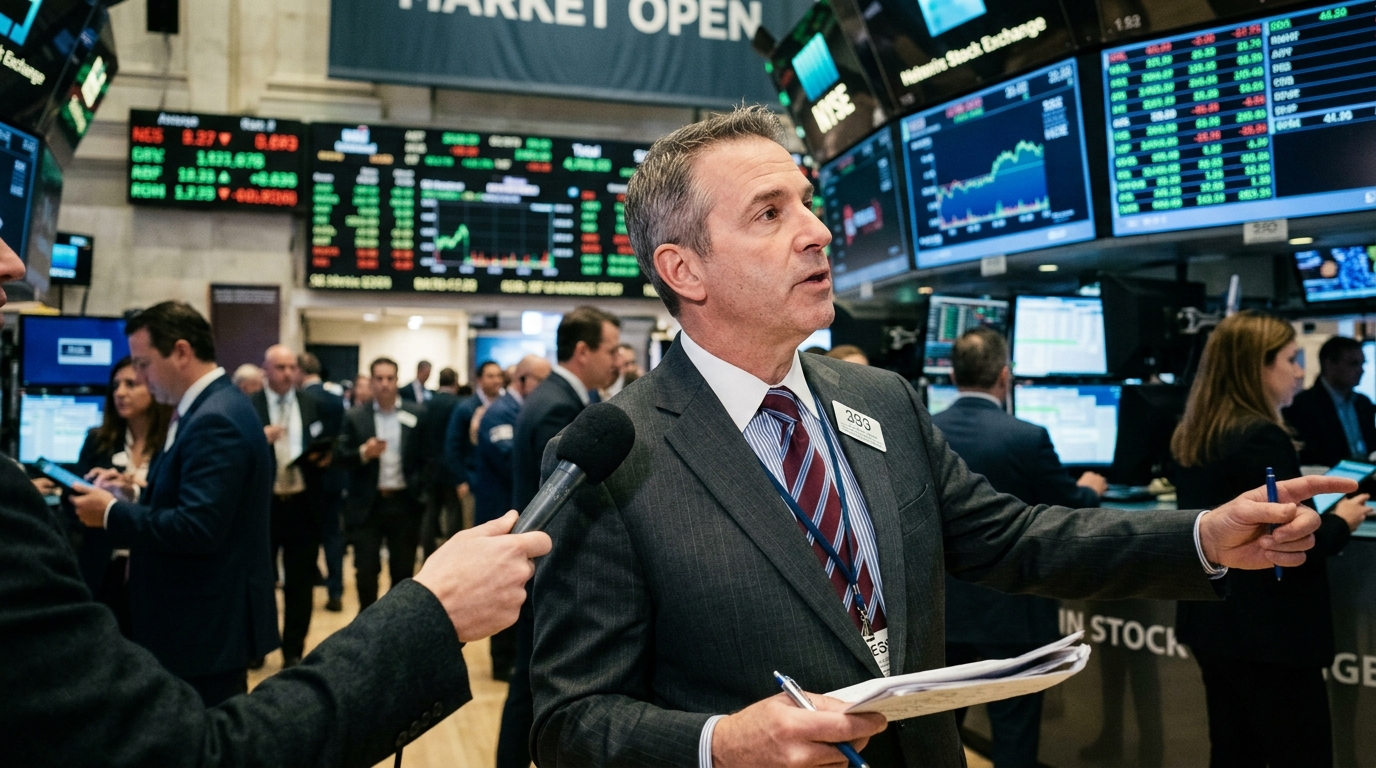
July 11, 2026, marks a watershed moment for the global financial markets as SK Hynix, the South Korean semiconductor titan, formalized its dominance on the world stage. The company's long-awaited debut on the U.S. stock exchanges was far from a routine listing; it was a thunderous confirmation that the euphoria surrounding Artificial Intelligence (AI) is nowhere near its peak. With shares recording double-digit gains within the first hours of trading, SK Hynix is proving that control over High Bandwidth Memory (HBM) is effectively the 'new oil' of the digital era.
The Strategic Imperative of HBM and the Nvidia Alliance
The meteoric rise of SK Hynix is no accident of market timing. The company has successfully outmaneuvered traditional rivals like Samsung and Micron, securing its position as the primary supplier for Nvidia’s high-performance processors. HBM3E and the nascent HBM4 chips form the literal backbone of the data centers training today’s Large Language Models (LLMs). Without the speed and thermal efficiency provided by Hynix’s specialized memory, the AI revolution would hit a physical wall.
Wall Street analysts note that the decision to list in the United States is a masterstroke of geopolitical maneuvering. By committing to its new advanced chip packaging facility in Indiana, SK Hynix is aligning itself with Washington’s 'friend-shoring' strategy. This move significantly mitigates the risks associated with geopolitical volatility in the Taiwan Strait and the Korean Peninsula, offering institutional investors a safer harbor for their capital while tapping into the deepest liquidity pools on the planet.
Economic Euphoria or a Semiconductor Bubble?
Despite the overwhelming optimism, cautionary voices remain. SK Hynix’s valuation has reached levels that discount flawless execution and uninterrupted growth for the next decade. However, the underlying fundamentals tell a story of resilience. Profit margins on HBM products are substantially higher than those of traditional DRAM found in aging PC and smartphone markets. The shift from commodity memory to specialized AI hardware has fundamentally changed the company's fiscal profile.
- Demand for AI-optimized servers is projected to grow by 40% year-over-year.
- SK Hynix currently commands over 50% of the global HBM market share.
- Subsidies from the U.S. CHIPS Act are providing a significant buffer for R&D expenditure.
The market seems to be betting that AI is not a transient trend but a structural shift in the global economy. By evolving from a mere component manufacturer into a critical infrastructure partner for Silicon Valley, SK Hynix has effectively future-proofed its business model against the cyclicality that usually plagues the chip industry.
The Geopolitical Chessboard and the Path Ahead
The success of SK Hynix’s U.S. debut also sends a potent message to Seoul. South Korea is witnessing its flagship enterprise undergo a partial 'Americanization' to maintain its competitive edge. This creates a new dynamic in U.S.-Korea relations, where technological synergy transcends traditional military alliances. For investors, SK Hynix is no longer a 'Korean stock'—it is a global tech heavyweight that dictates the pulse of the Fourth Industrial Revolution.
"You aren't just buying a memory company; you are buying a ticket to the computational power of tomorrow," remarked a prominent fund manager during the Nasdaq opening ceremony.
In conclusion, the U.S. debut of SK Hynix is the culmination of a multi-year strategy. The company's ability to foresee the specialized memory needs of AI gave it a head start that it has yet to relinquish. The question is no longer whether the stock will continue its ascent, but how quickly competitors can close the technological gap before SK Hynix becomes an unassailable monopoly in the AI memory space.