In a period where the global economy is attempting to balance on a tightrope, Greek export businesses find themselves facing a new, multi-layered crisis. The recent survey by the Greek Exporters Association (SEVE) paints a stark picture of the impact of the ongoing Middle East ignition, highlighting how geopolitical instability translates into direct economic strangulation for domestic production. As we approach mid-2026, the "new normal" of uncertainty is no longer a theoretical threat but a daily reality reflected in balance sheets and corporate strategies.
The Supply Chain Under Siege
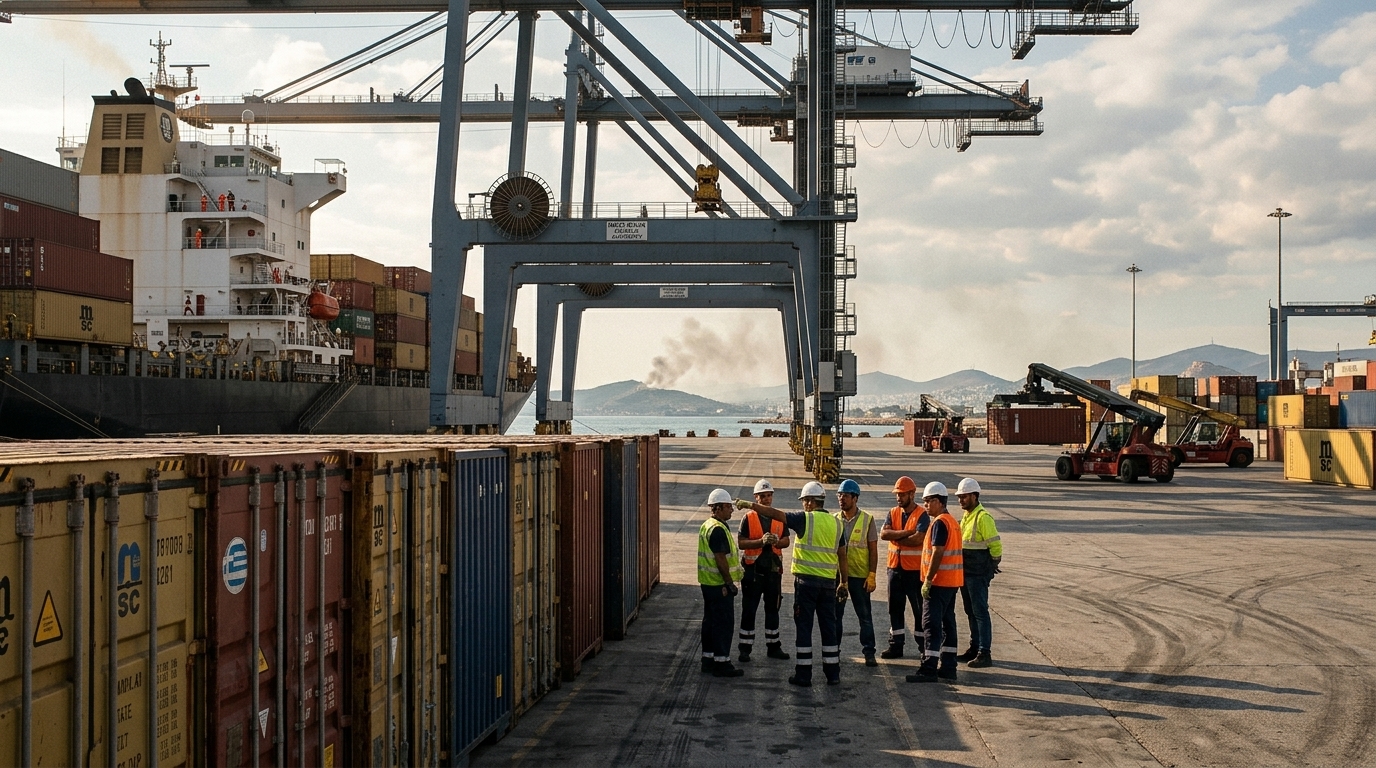
The most significant finding of the survey concerns transportation costs and delivery times. The Red Sea crisis, which has forced ships to bypass the Suez Canal and circumnavigate Africa via the Cape of Good Hope, has sent freight rates soaring to levels reminiscent of the darkest days of the pandemic. For Greece, which serves as Europe's gateway to the East, the blow is twofold. The Port of Piraeus, while remaining a pivotal hub, is seeing its momentum tested by delays and route diversions.
According to SEVE, over 70% of exporting companies report significant delivery delays, which in some cases exceed 20 days. This affects not only liquidity but also the reliability of Greek exporters in international markets. When a product arrives late, the risk of contract loss is palpable, especially in sectors with perishable goods such as food and agricultural products, which form the backbone of Greek exports.
Energy Costs and Raw Material Inflation
Beyond logistics, the survey sounds an alarm regarding production costs. The Middle East remains the regulator of global energy prices. Every escalation in the region triggers nervousness in oil and gas markets, which is immediately passed on to the operating costs of Greek factories. Greek industry, which has already suffered the consequences of the energy crisis of previous years, is now in a state of constant alert.
- Increase in industrial electricity costs by 15-20% on an annual basis.
- Shortage of key raw materials imported from Asia through the Red Sea.
- Inability to perform long-term planning due to fuel price volatility.
This situation creates an explosive mixture. Businesses are forced to either absorb the costs to remain competitive, shrinking their profit margins, or increase prices, risking their exit from markets. The SEVE survey shows that the majority of companies are choosing a middle path, which, however, is not sustainable in the long term if the crisis persists.
Strategic Retreat and the Search for New Markets
Amidst this grim landscape, a trend of strategic retreat is observed. Greek exporters are increasingly turning towards European Union and Balkan markets, attempting to reduce their dependence on the distant and unstable markets of Asia and the Middle East. However, this "introversion" within the EU has its limits, as competition is extremely intense and growth rates in Europe remain sluggish.
"Greek extroversion is being tested under the harshest conditions of recent decades. It is not just a matter of cost; it is a matter of survival for an entire production model," the SEVE report states characteristically.
The need for state support and European intervention is now imperative. SEVE proposes the implementation of targeted measures, such as subsidizing transport costs for exporting companies and providing guarantees for export insurance in high-risk areas. Simultaneously, the use of technology and Artificial Intelligence to optimize supply chains is emerging as an essential tool for minimizing losses.
Conclusions and Outlook
The crisis in the Middle East is not a transient phenomenon but a structural challenge reshaping the global trade map. For Greece, exports are the engine of growth, and any disruption to this mechanism has direct consequences on GDP and employment. The SEVE survey serves as a final warning: without strategic planning, market diversification, and the shielding of the production base, Greek exports risk falling into a permanent state of "suffocation." The next day requires composure, innovation, and, above all, a new approach to international economic diplomacy.