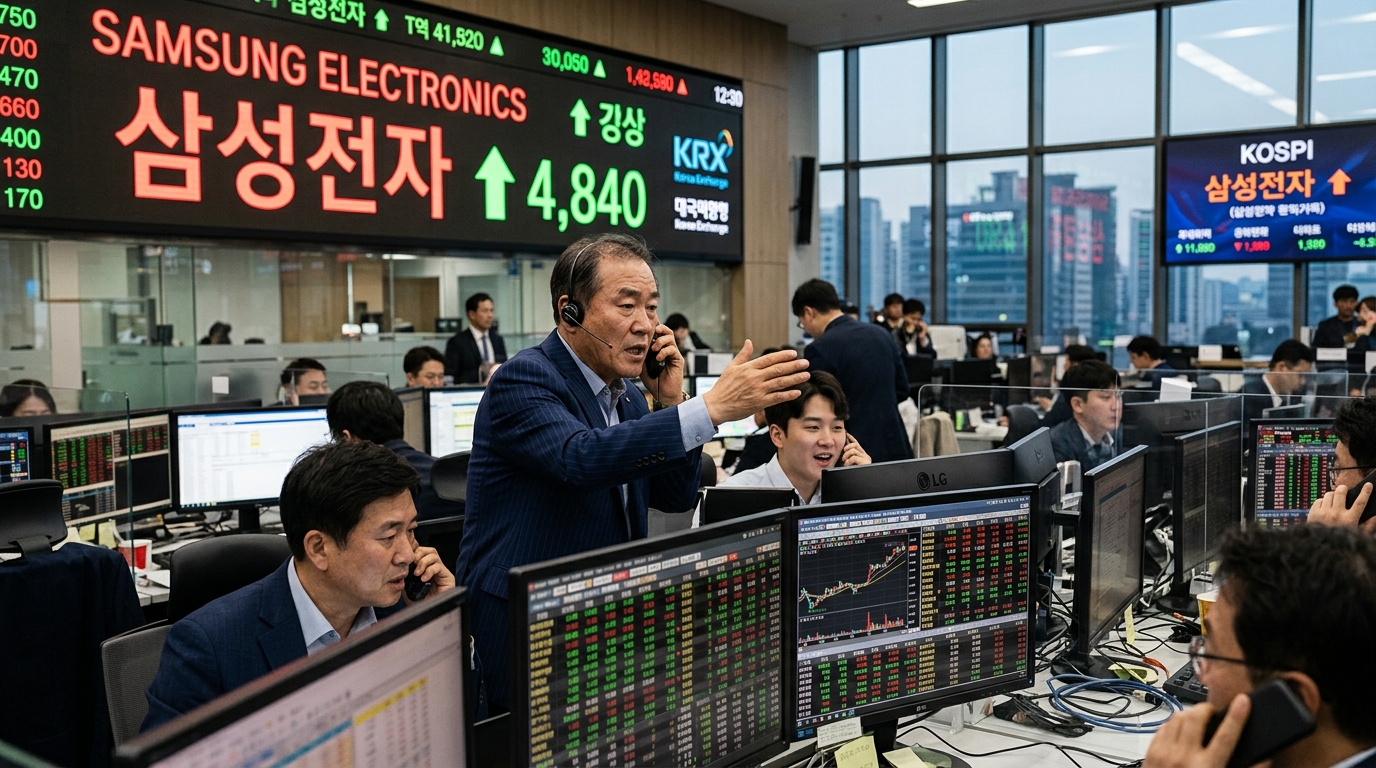
The saga of the Samsung dynasty has long been the ultimate symbol of South Korea’s economic ascension. However, over the past five years, the Lee family faced challenges that would have dismantled almost any other corporate titan. From the death of patriarch Lee Kun-hee in 2020 and the astronomical $12 billion inheritance tax bill to the legal battles and imprisonment of current leader Jay Y. Lee, the dynasty’s survival once seemed precarious. Today, in April 2026, the narrative has shifted dramatically. The family’s wealth has doubled in just twelve months, reaching a staggering $45 billion, fueled by a global gold rush where Samsung holds the essential tools: Artificial Intelligence.
The HBM Revolution and the Nvidia Alliance
The primary engine behind this explosive growth is High Bandwidth Memory (HBM). As AI transitioned from an experimental novelty into the backbone of the global economy, the demand for chips capable of processing vast datasets at lightning speed became paramount. Samsung, after a period of lagging behind its rival SK Hynix, successfully reclaimed its dominance. The certification of Samsung’s HBM3E and HBM4 chips by Nvidia in late 2025 served as the definitive turning point.
The semiconductor market has entered a new "super-cycle." Investors, witnessing Samsung Electronics' profit margins soar to 40% within its chip division, have driven the stock to record highs. For the Lee family, who maintain control through a complex web of cross-shareholdings, this surge translated into an immediate boost in net worth. Jay Y. Lee, who once traded his business suit for a prison uniform, is now hailed as the architect of the "AI-First" strategy that salvaged the family legacy.
The Inheritance Tax Ordeal and Survival Tactics
To appreciate the scale of this success, one must recall the crisis of 2021. The inheritance tax levied on the family was among the largest in global history. Lee Kun-hee’s widow, Hong Ra-hee, and her children were forced to take out multi-billion dollar loans using their shares as collateral, while also engaging in block trades to meet the installments required by the Korean state. Many analysts predicted at the time that the family would inevitably lose its grip on the conglomerate.
"The survival of the Samsung dynasty was never a foregone conclusion. It required a unique blend of political leniency, strategic foresight, and, above all, the AI explosion to bridge that $12 billion gap," notes a senior financial analyst in Seoul.
The skyrocketing share prices in 2025 and 2026 allowed the family not only to service their debts with greater ease but also to consolidate their influence. Lee Boo-jin and Lee Seo-hyun, Jay Y.’s sisters, also saw their personal fortunes climb as their respective domains—Hotel Shilla and Samsung C&T—integrated AI solutions to optimize operations and attract significant foreign investment.
Geopolitics and the Future of the Chaebol
Despite the current triumph, the road ahead is fraught with geopolitical complexities. Samsung sits at the epicenter of the technological cold war between the United States and China. Navigating the reliance on American technology while maintaining access to the Chinese market is a delicate balancing act Jay Y. Lee must master. Furthermore, the "Chaebol" model—the massive family-run conglomerates that dominate the Korean economy—faces mounting pressure for increased transparency and modern corporate governance.
- Foundry Investments: Samsung is aggressively investing over $150 billion to compete with TSMC in the contract chipmaking business.
- Galaxy AI: The integration of generative AI into mobile devices has revitalized hardware sales, allowing Samsung to reclaim market share from Apple in key Asian markets.
- Sustainability: Meeting ESG targets in energy-intensive semiconductor manufacturing is the next major hurdle for the dynasty.
The Samsung case demonstrates that in the AI era, technological superiority can heal even the deepest economic and legal wounds. The Lee family are no longer merely heirs to a 20th-century empire; they are the gatekeepers of a future written in code and silicon. The remaining question is whether this concentration of wealth and power will remain acceptable to Korean society, or if the next crisis will be social rather than financial.