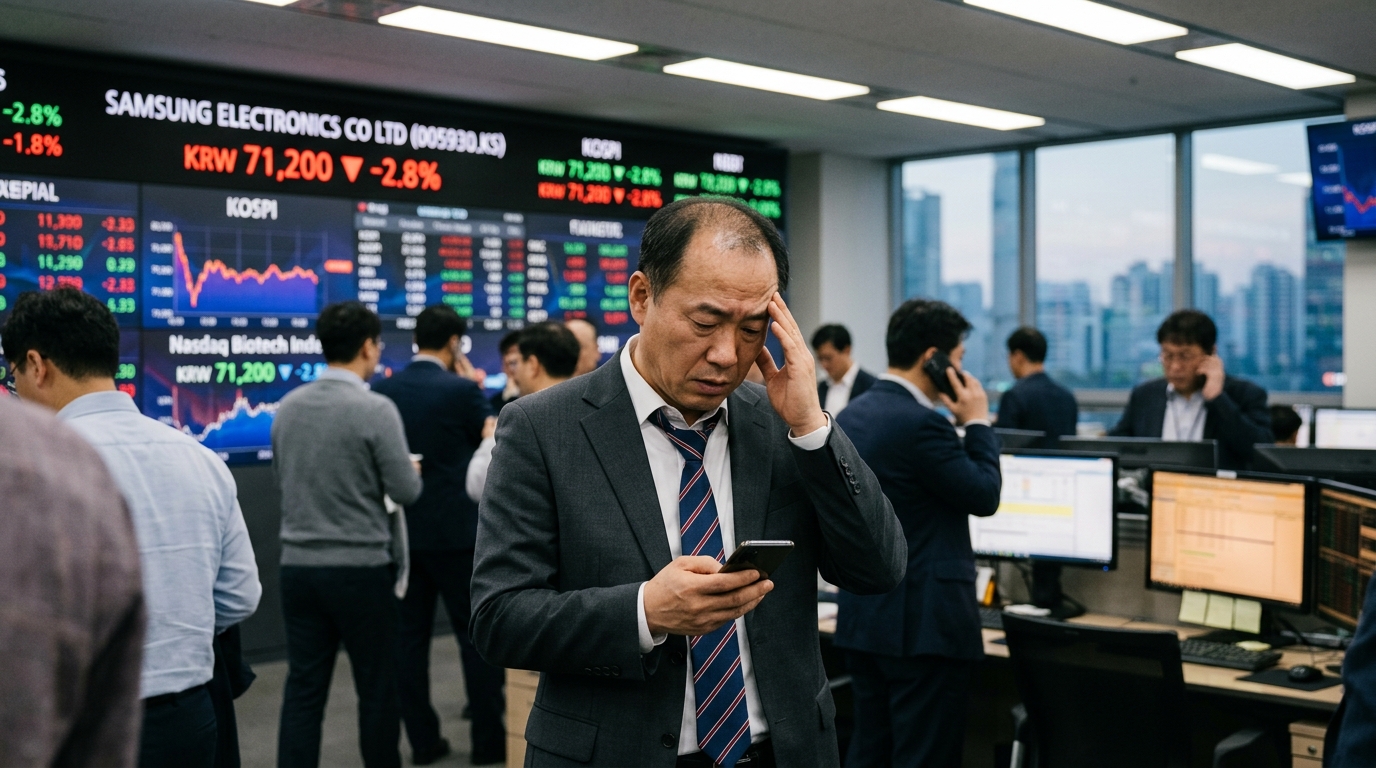
In a pivotal moment for the global technology industry, Samsung Electronics Co., the world's preeminent maker of memory chips, is facing the specter of significant production disruptions. The news that labor negotiations between management and the National Samsung Electronics Union (NSEU) have collapsed has sent ripples of concern through international markets, as the threat of the first strike in the company's history becomes increasingly tangible. This dispute, centered on wage demands and the bonus system, is far more than a domestic South Korean issue; it is a development with profound geopolitical and economic implications.
The Breakdown of Negotiations and Core Grievances
The talks, which spanned several months, reached a stalemate when union representatives rejected the company's latest offer for a pay increase. The NSEU, representing approximately 20% of Samsung's South Korean workforce—over 28,000 employees—is demanding transparent criteria for performance bonuses and a substantial raise that reflects both inflation and the record profits expected from the Artificial Intelligence boom.
Samsung’s management, for its part, is attempting to balance rising labor costs with the necessity for massive investments in Research and Development (R&D). The company is currently locked in a fierce competition with SK Hynix and Micron Technology for dominance in the High Bandwidth Memory (HBM) market, components that are essential for Nvidia’s AI processors. A prolonged work stoppage could delay the delivery of these critical parts, triggering a domino effect of delays across the entire information technology sector.
The Strategic Importance of Chips in the AI Era
To grasp the magnitude of the risk, one must examine Samsung's role within the AI ecosystem. HBM3E chips are effectively the fuel for Large Language Models (LLMs). Samsung has already faced investor pressure as SK Hynix managed to secure an early lead in supplying Nvidia. Any disruption at manufacturing plants in Pyeongtaek or Giheung would mean Samsung losing precious ground at a time when demand is at its absolute zenith.
"This isn't just about the money; it's about respect for our contribution to the company's success," a union spokesperson stated. "Management must understand that without the workers, the chips do not manufacture themselves."
The historical dimension of this conflict is also noteworthy. For decades, Samsung maintained a strict "no-union" policy, enforced by its founder and subsequent leaders. The shift in this corporate culture over recent years, driven by public pressure and legislative changes, has created a new environment of labor relations that the company is still struggling to navigate effectively.
Economic Implications and Market Impact
Analysts warn that the coming weeks will be decisive. Should the union proceed with a full-scale work stoppage, the cost to Samsung could reach hundreds of millions of dollars per day. Furthermore, there is a risk that the company's major clients, such as Apple and Qualcomm, might seek alternative suppliers to ensure the stability of their own production lines. Samsung's shares have already seen a dip following the announcement of the failed talks, reflecting investor fears of a protracted period of uncertainty.
In conclusion, the crisis at Samsung serves as a stark reminder of the fragile nature of global technological infrastructure. In a world increasingly dependent on digital processing power, industrial peace at key players like Samsung is not a luxury but a prerequisite for global economic stability. The ability of Samsung’s leadership to bridge the gap with its workforce will determine not only the company's future but also the very pace of technological progress in the years to come.