The global aviation industry is once again at a critical crossroads, with Ryanair sounding the alarm over an 'Armageddon' scenario. Michael O'Leary, the controversial but undeniably successful CEO of the budget carrier, is no stranger to bold pronouncements. However, this time, his warnings reflect a deeper concern regarding the structural stability of European aviation amid escalating geopolitical tensions in the Middle East and the subsequent volatility in energy markets.
The Geopolitical Chessboard and Fuel Costs
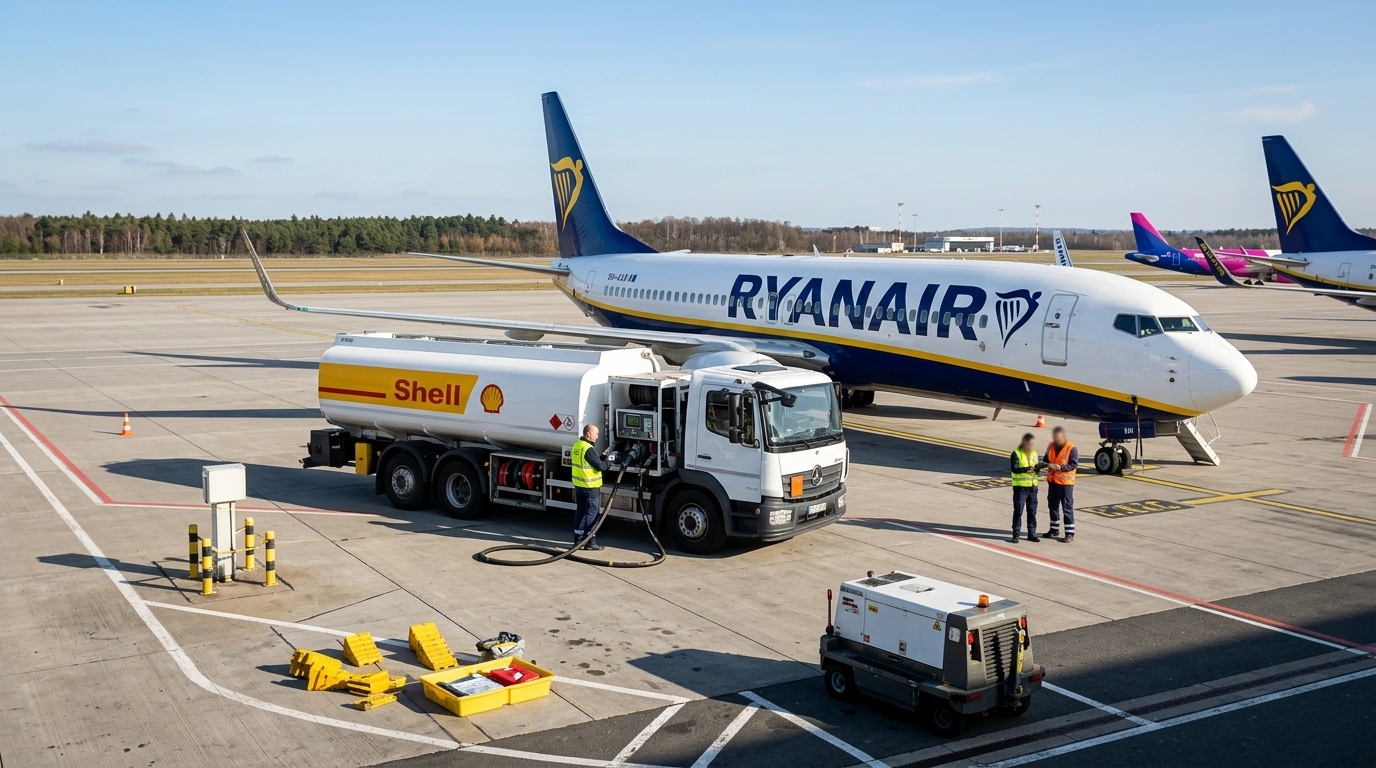
The primary driver of Ryanair's concern lies in the fragile balance of the oil market. The escalation of conflict in the Middle East has created a climate of uncertainty that translates directly into higher costs for jet fuel. For airlines, fuel is the single largest operating expense, often accounting for 30% to 40% of total costs. A sustained rise in oil prices above $100 per barrel could prove fatal for companies lacking sufficient capital reserves or effective hedging strategies.
O'Leary argues that many European airlines, already struggling with debt from the pandemic era and rising labor costs, are on the brink of collapse. Ryanair's 'Armageddon' scenario envisions a wave of bankruptcies or forced mergers, leaving the market in the hands of a few powerful players. According to the company's analysis, the market is heading toward an inevitable consolidation, similar to what occurred in the United States a decade ago.
Hedging as a Shield and the Survival of the Fittest
In this turbulent environment, Ryanair presents its own strategy as a model of resilience. The airline has already 'locked in' the majority of its fuel requirements for the coming year at prices significantly lower than current market rates. This financial armor allows it not only to survive a crisis but to go on the offensive, increasing its market share while competitors are forced to cut routes or hike ticket prices excessively.
"In every crisis, there is an opportunity for those who are prepared. While others fight for their survival, we will continue to expand," a company executive noted.
This strategy, however, raises questions about competition. If O'Leary's predictions come true, European consumers may find themselves facing an oligopoly, where choices are limited and prices are controlled by a few large groups, such as Lufthansa, Air France-KLM, and IAG (the parent company of British Airways and Iberia), alongside Ryanair.
Impact on Passengers and the Future of Travel
What does all this mean for the average traveler? The era of ultra-cheap fares of €10 and €20 seems to be setting permanently. Even Ryanair, the standard-bearer of low prices, warns that average fares will continue to rise due to fuel costs and new EU environmental taxes (such as the Emissions Trading System - ETS).
- Average fare increases of 5-10% annually.
- Cancellation of less profitable regional routes.
- Greater emphasis on ancillary charges (luggage, seats).
- Strengthening of major hubs at the expense of smaller airports.
The fuel crisis acts as a catalyst for a broader restructuring. The airlines that survive will be those that can manage risk with surgical precision. For countries like Greece, which depend heavily on tourism and air connectivity, these developments are particularly critical. A potential reduction in competition or the exit of smaller players from the market could affect island connectivity and the overall cost of vacations.
Conclusion: Prediction or Strategic Tactic?
Is the 'Armageddon' scenario a real threat or a tactic by O'Leary to pressure regulators and spook his competitors' investors? The truth likely lies somewhere in the middle. While the risks from fuel costs are real and tangible, Ryanair's rhetoric also serves the narrative of its own dominance. In a world where geopolitical instability is the new normal, the aviation industry must prove whether it can fly above the storms or if it will be swept away by them.