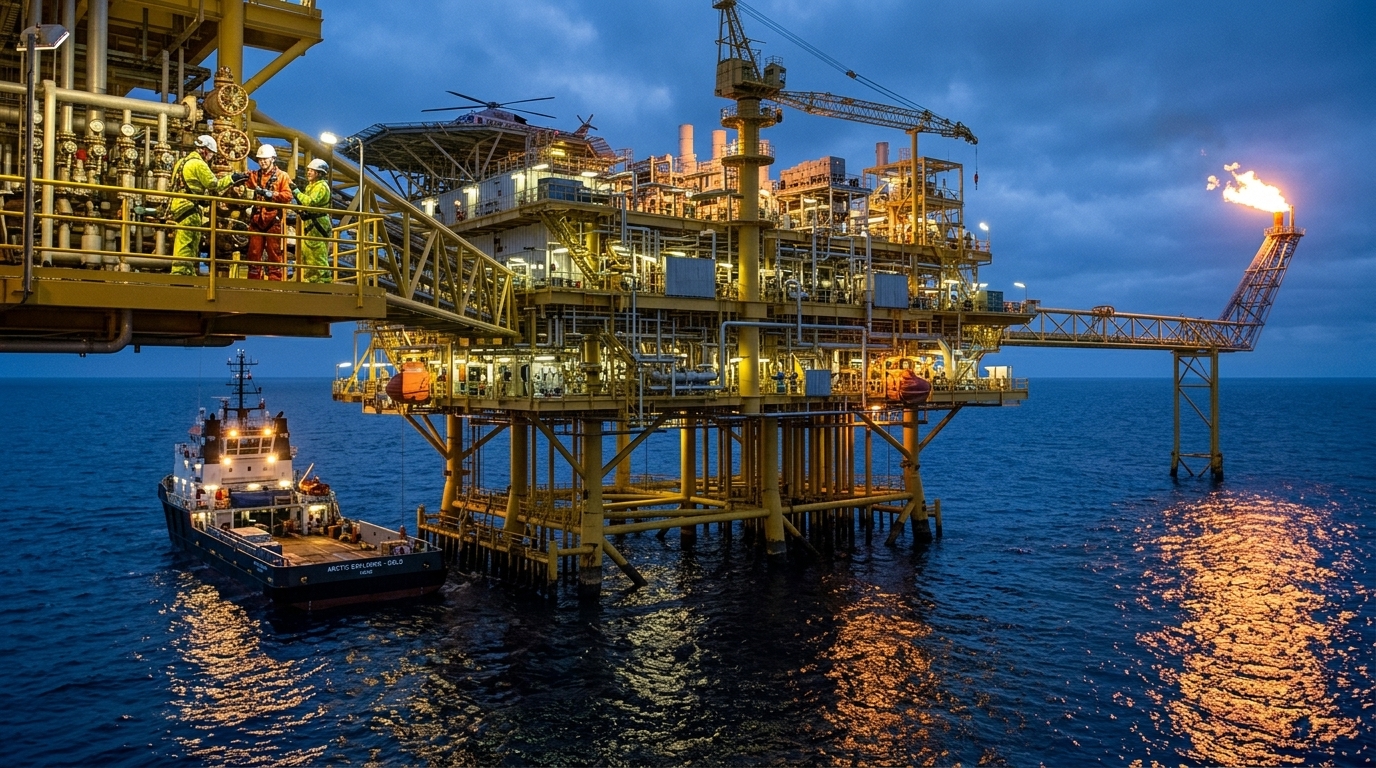
The global energy chessboard is once again at a critical crossroads. The recent preliminary agreement by OPEC+, the coalition comprising the Organization of the Petroleum Exporting Countries and its allies, to increase production by 188,000 barrels per day (bpd) starting in August, is more than just a technical adjustment. It is a clear signal to the markets that oil producers are attempting to navigate the turbulent waters between global demand and geopolitical tensions, while avoiding a sharp drop in prices that would devastate their national budgets.
The Strategy of 'Gradual Return'
This decision is part of a broader plan initiated earlier this summer. OPEC+, led by Saudi Arabia and including Russia, had imposed strict production cuts to support prices amid economic uncertainty in the West and a slower-than-expected recovery in China. The 188,000 bpd increase marks the beginning of the phase-out of voluntary cuts totaling 2.2 million bpd agreed upon by eight member states.
But why now? The timing is no coincidence. As we move through July 2026, demand for transportation fuels and air travel is at its peak. Simultaneously, the de-escalation of tensions in certain Middle Eastern sectors has reduced the 'risk premium' that kept prices elevated. Without this controlled increase in supply, there was a risk that the market would tighten excessively, leading to a violent price spike that could reignite inflation in the major economies of Europe and the United States.
Geopolitical Calculations and Internal Pressures
Behind the closed doors of video conferences, the situation is far more complex than a simple mathematical equation. Countries like the United Arab Emirates have been steadily pushing for higher quotas, having invested billions in expanding their production capacity and seeking immediate returns on investment. On the other hand, Russia, despite international sanctions, remains a key player using oil as a tool for diplomatic and economic survival.
The agreement for 188,000 barrels acts as a 'pressure relief valve.' It is small enough not to flood the market and cause a price collapse below the $75-$80 per barrel range—a level considered vital for Saudi Arabia's Vision 2030—yet significant enough to show that the organization is responsive to consumer needs. Furthermore, this move preempts further penetration by American shale oil, which often rushes to fill the gaps left by OPEC+.
The Broader Economic Impact
For the global economy, OPEC+'s decisions have a direct and tangible impact. As central banks worldwide struggle to bring inflation back to target levels, the cost of energy remains the primary variable. A stabilization of prices through increased production is welcome news for logistics, manufacturing, and consumer confidence.
- Fuel Costs: Increased supply can cap prices at the pump, providing relief for households during the high-demand summer months.
- Inflationary Pressures: Oil is the foundation for the production cost of many goods. Stability here translates to stability on retail shelves.
- Market Sentiment: A predictable OPEC+ policy reduces volatility, allowing businesses to plan long-term investments with greater certainty.
However, complacency would be a mistake. History has shown that OPEC+ can reverse its decisions overnight if market conditions shift. While the transition to green energy remains the long-term objective, the prosperity of the global economy for the foreseeable future remains tightly linked to decisions made in Riyadh and Vienna. The August agreement is a step toward normalization, but the path remains as slippery as the commodity itself. The balance of power is shifting, and every barrel added to the market is a calculated move in a much larger game of economic survival.