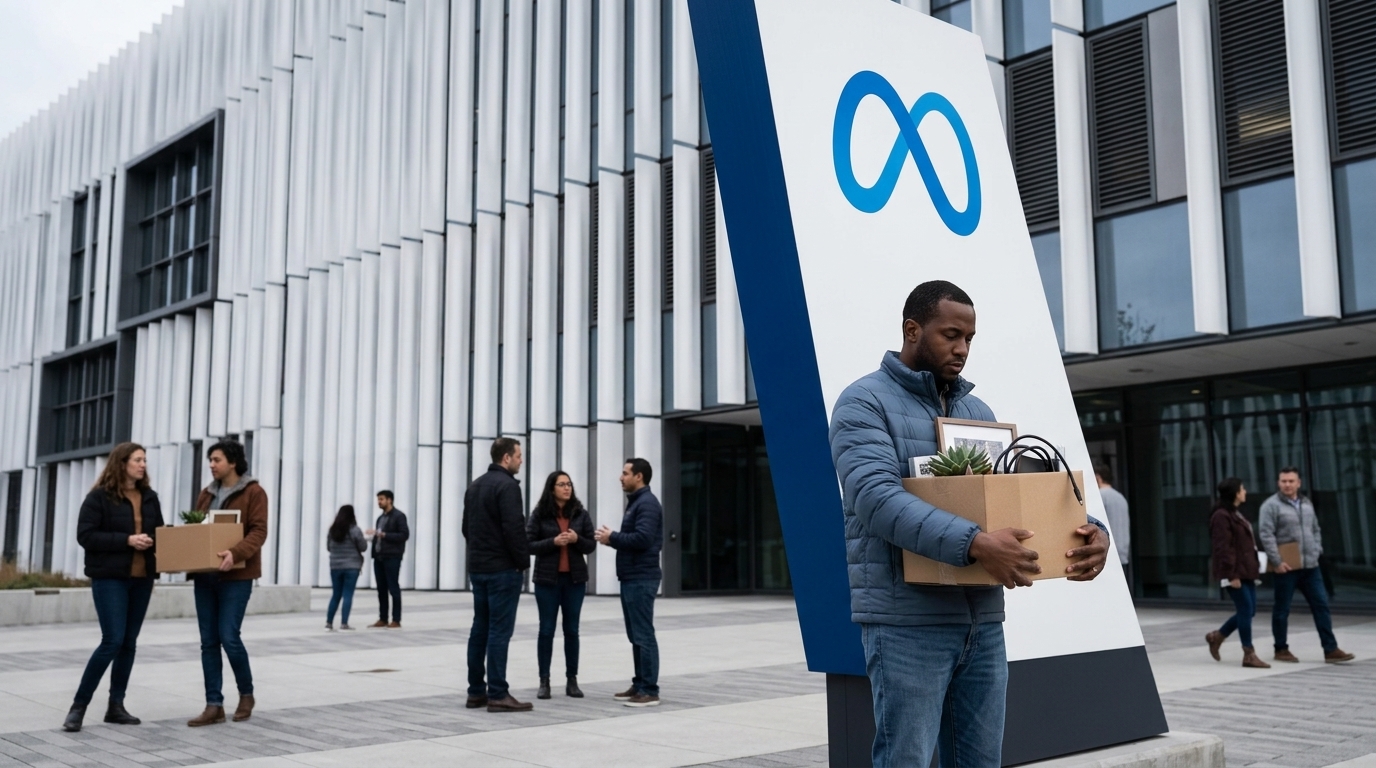
The brilliance of large language models and generative artificial intelligence often blinds the public, obscuring the army of humans working in the shadows to make these systems functional. Recent reports, led by an investigation from Wired, have revealed that more than 700 workers at Covalen, a Meta contractor in Ireland, are at risk of losing their jobs. These individuals are not mere office clerks; they are the 'trainers' of AI, those who teach the algorithm the difference between right and wrong, safe and dangerous.
The Digital Assembly Line
The work performed by Covalen employees falls under the category of RLHF (Reinforcement Learning from Human Feedback). It is an arduous process where humans evaluate AI responses, correct mistakes, and guide it to ensure it does not produce offensive or illegal content. Despite the criticality of their role, these workers are often treated as disposable resources. The news of layoffs in Ireland, a traditional tech hub for Europe, underscores a broader shift in the AI economy.
Workers describe the situation as 'undignified.' After years of contributing to the refinement of Meta’s models, they suddenly find themselves sidelined as the company seeks to reduce costs, likely moving these operations to lower-cost regions such as Kenya, the Philippines, or India. This geographical shift is not just a business decision; it is a strategic choice that devalues the human contribution to technological progress.
The Paradox of Automation
There is a tragic irony at the heart of this case: these workers are essentially training the system that will replace them. As Meta’s AI (Llama) becomes more capable, there is less need for constant human oversight at certain levels—or so the Silicon Valley accountants argue. However, reality is more complex. AI never 'finishes' learning; it requires a constant feed of new data and human judgment to remain relevant and safe.
- Meta continues its 'Year of Efficiency' policy, slashing operational costs across the board.
- Ireland, despite its favorable tax regime, is becoming 'too expensive' for low-skill AI labeling tasks.
- Working conditions at contractors are often significantly worse than those at Meta’s headquarters.
- A lack of transparency in labor contracts leaves workers vulnerable to sudden shifts in corporate strategy.
The Ethical Dimension and the Future
The Covalen case is not an isolated incident. It reflects a global trend where Big Tech companies divest themselves of responsibility for the workers at the base of their supply chain. By using contractors, Meta can claim that the layoffs are not 'theirs,' even though its own decision to terminate or reduce the contract is the root cause. This 'gig economy' model for high-tech development creates a new class of workers who lack the benefits and security of permanent Silicon Valley employees, while performing the most psychologically taxing labor.
The European Union, through the AI Act, is trying to set rules, but the focus remains on product safety rather than the rights of those who build it. If the AI industry wants to be considered ethical, it must start by recognizing the dignity of the people who form its backbone. 'Dignity' is not just a word; it is the commitment that the progress of the few will not be built upon the misery and uncertainty of the many.
Conclusion
The layoffs in Ireland serve as a warning. As AI integrates into the economy, the battle for labor rights moves to new frontiers. The workers at Covalen are asking for the obvious: respect for the work that allowed Meta to emerge as a tech leader. Without them, Llama would be just a confused algorithm. Dismissing them as 'unnecessary costs' is a short-sighted approach that may undermine the very quality of the technology Meta seeks to dominate.