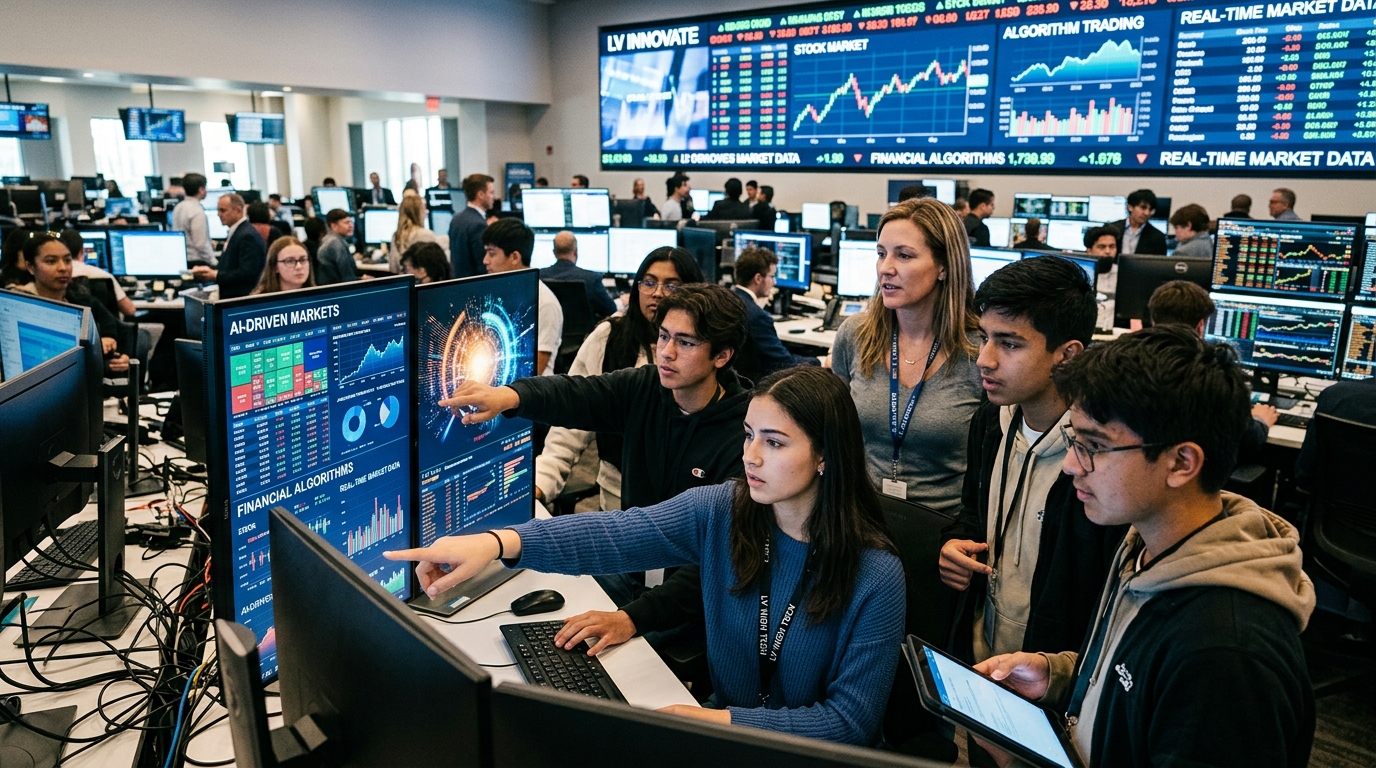
In the heart of the Nevada desert, where the neon lights of Las Vegas have traditionally symbolized luck and risk, a new generation of students is facing a challenge that cannot be solved with a simple roll of the dice. The rapid proliferation of Artificial Intelligence (AI) is no longer just changing how students write their essays; it is fundamentally reshaping the entry-level job market awaiting them after graduation. Within the Clark County School District (CCSD), the fifth-largest school district in the United States, the conversation has shifted from banning AI tools to the urgent necessity of integrating them into the curriculum.
The Disappearing Bottom Rung
For decades, entry-level jobs served as the "first rung" on the professional ladder for young people: filing, basic data analysis, drafting simple reports, or basic customer service. However, these are precisely the tasks that Generative AI can now perform at a fraction of the cost and with maximum speed. Students in Las Vegas are expressing growing concern that traditional "gateways" to the workforce are closing. Without these roles, how will they gain the foundational experience necessary to move into senior management positions?
The Las Vegas economy, heavily reliant on hospitality and tourism, is experiencing this transition with particular intensity. From automated check-in kiosks in major casino-hotels to algorithms managing reservations and guest communications, the demand for human labor in basic operational roles is diminishing. UNLV (University of Nevada, Las Vegas) students observe that companies are now seeking "hybrid" employees: individuals who not only understand their field but can also direct and supervise the AI systems performing the manual or repetitive work.
Educational Reform: From Rote Learning to Critical Thinking
Educational authorities in Nevada recognize that the old recipe for education is now obsolete. CCSD has begun implementing programs that teach students "prompt engineering" and the ethical use of AI. The goal is not for students to compete with the machine, but to learn how to master it. The focus is shifting from task execution to problem-solving and strategic thinking.
- Integrating AI tools in classrooms as learning assistants.
- Focusing on "soft skills" that AI struggles to replicate, such as empathy and complex negotiation.
- Partnering with local businesses to create technology-focused internships.
However, there is a risk that analysts are highlighting: the digital divide. Students from underserved areas who lack access to the latest technologies risk being left behind in a job market that demands high digital literacy. Equity in access to AI education is emerging as a major political and social issue for the state of Nevada.
The Future of Work on the "Silicon Strip"
Despite the challenges, many see AI as an opportunity for Las Vegas to diversify its economy beyond gaming and tourism. The city aspires to become a technology hub, a so-called "Silicon Strip." For students, this means that the new jobs being created may be more creative and less monotonous than those being replaced.
"We aren't afraid that AI will take our jobs; we are afraid that someone who knows how to use AI better than us will take our job," says a high school senior in Las Vegas.
In conclusion, the transition to the AI era for the youth of Las Vegas is an exercise in adaptability. Schools and employers must collaborate to ensure that technology acts as an accelerator of human potential rather than a barrier. The success of this effort will determine whether the next generation will be the architects of the digital future or mere observers of an automated economy.