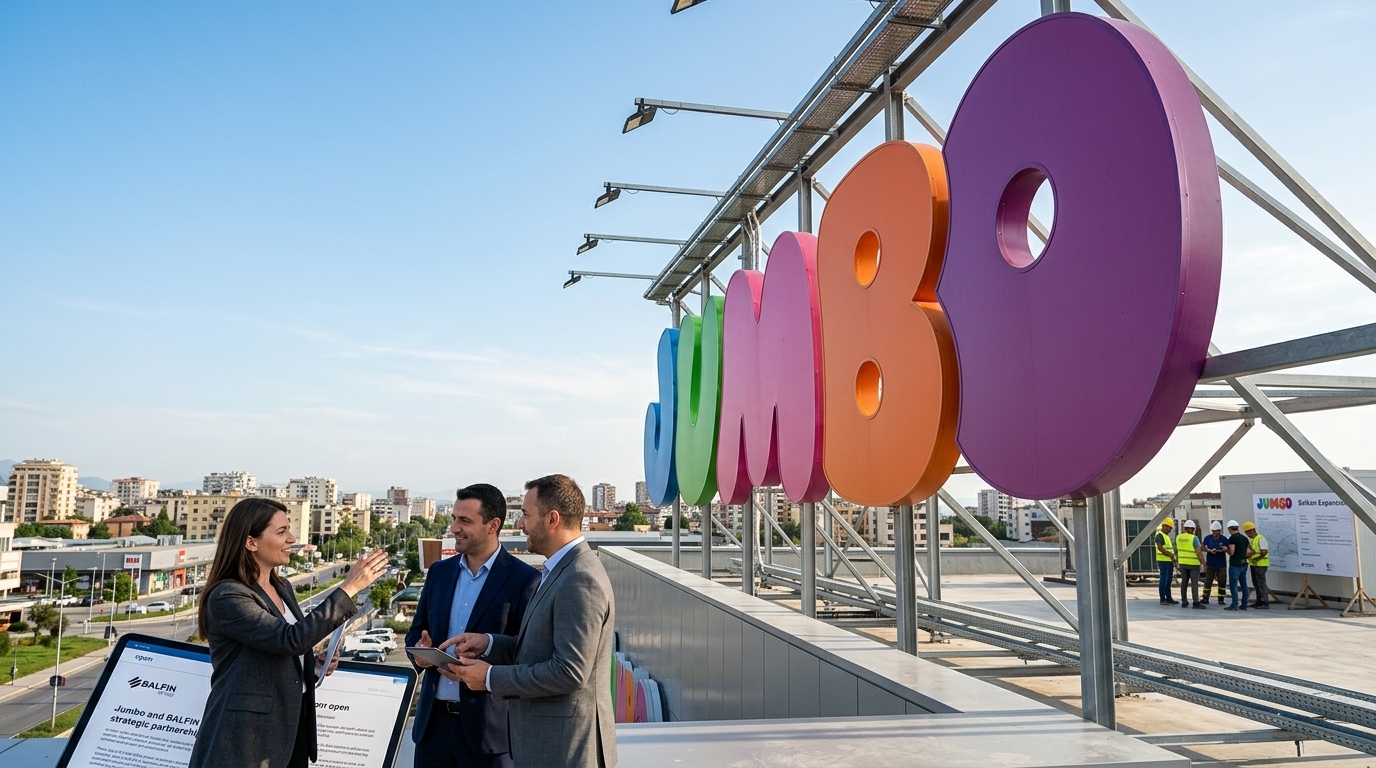
In a move that redraws the retail map of Southeast Europe, the Jumbo Group, under the leadership of Apostolos Vakakis, is embarking on a strategic expansion that transcends its traditional operational borders. The recent agreement with the BALFIN Group (Balkan Finance Investment Group), one of the most powerful investment entities in the Western Balkans, signals the company's entry into six new markets, reinforcing a franchise model that has proven exceptionally lucrative for the Greek multinational.
The Strategic Significance of the BALFIN Alliance
BALFIN Group, led by Samir Mane, is no stranger to Jumbo. Their partnership spans years of successful operations in countries such as Albania and Kosovo. However, this new agreement raises the stakes, planning for expansion into six additional geographical areas where demand for affordable consumer goods is growing exponentially. The choice of BALFIN as a strategic partner is deliberate: the group possesses deep knowledge of local markets, a strong real estate presence, and the necessary expertise to manage complex retail networks.
Through this partnership, Jumbo manages to expand its brand name without bearing the full cost and risk of direct capital expenditure (CAPEX) in new countries. Instead, it collects royalties and supplies the stores with its merchandise, maintaining high profit margins while focusing on central procurement strategy.
The China Hub: Redesigning the Supply Chain
Perhaps the most intriguing element of the new deal is the creation of a central logistics hub in China by the BALFIN Group. This move is a response to the challenges facing global trade in recent years, from the pandemic to geopolitical tensions in the Red Sea. The hub in China will serve as a collection and sorting point for products manufactured in Asia before they are shipped directly to the new markets in SE Europe.
- Reduction in lead times for products reaching the shelves.
- Optimization of transportation costs through economies of scale.
- Better quality control at the source of production.
- Independence from intermediate delays at European ports.
This infrastructure will allow Jumbo and BALFIN to maintain price competitiveness—the brand's core comparative advantage—despite the inflationary pressures hitting the global economy.
Market Analysis and Outlook
The expansion into six new markets comes at a time when Jumbo is recording strong financial performance. The new markets, although not fully named in the official announcement, are expected to include regions with an emerging middle class and increasing purchasing power. Vakakis's strategy is based on the "economy of joy"—providing inexpensive yet essential home and children's products that remain in demand even during economic downturns.
"Jumbo doesn't just sell products; it sells a shopping experience that is crisis-resilient," market analysts note.
The agreement with BALFIN is expected to boost Jumbo Group's international revenues, which already constitute a significant portion of total profitability. Furthermore, the creation of the logistics hub in China demonstrates maturity in planning, transforming a Greek company into a true global player that controls its supply chain from the source to the end consumer.
Challenges and Risks
Despite the optimism, the expansion is not without challenges. Balkan markets and the broader region are often characterized by political instability and bureaucratic hurdles. Additionally, the reliance on China for supplies remains a risk factor, given the ongoing trade frictions between the West and the East. However, the alliance with a local giant like BALFIN provides Jumbo with the necessary protective shield and the flexibility to adapt to local particularities.
In conclusion, Jumbo continues to surprise the investment community with its ability to grow during periods of uncertainty. The partnership with BALFIN and the investment in logistics infrastructure in Asia are the next pawns on Apostolos Vakakis's chessboard, aiming for retail dominance in the wider region.