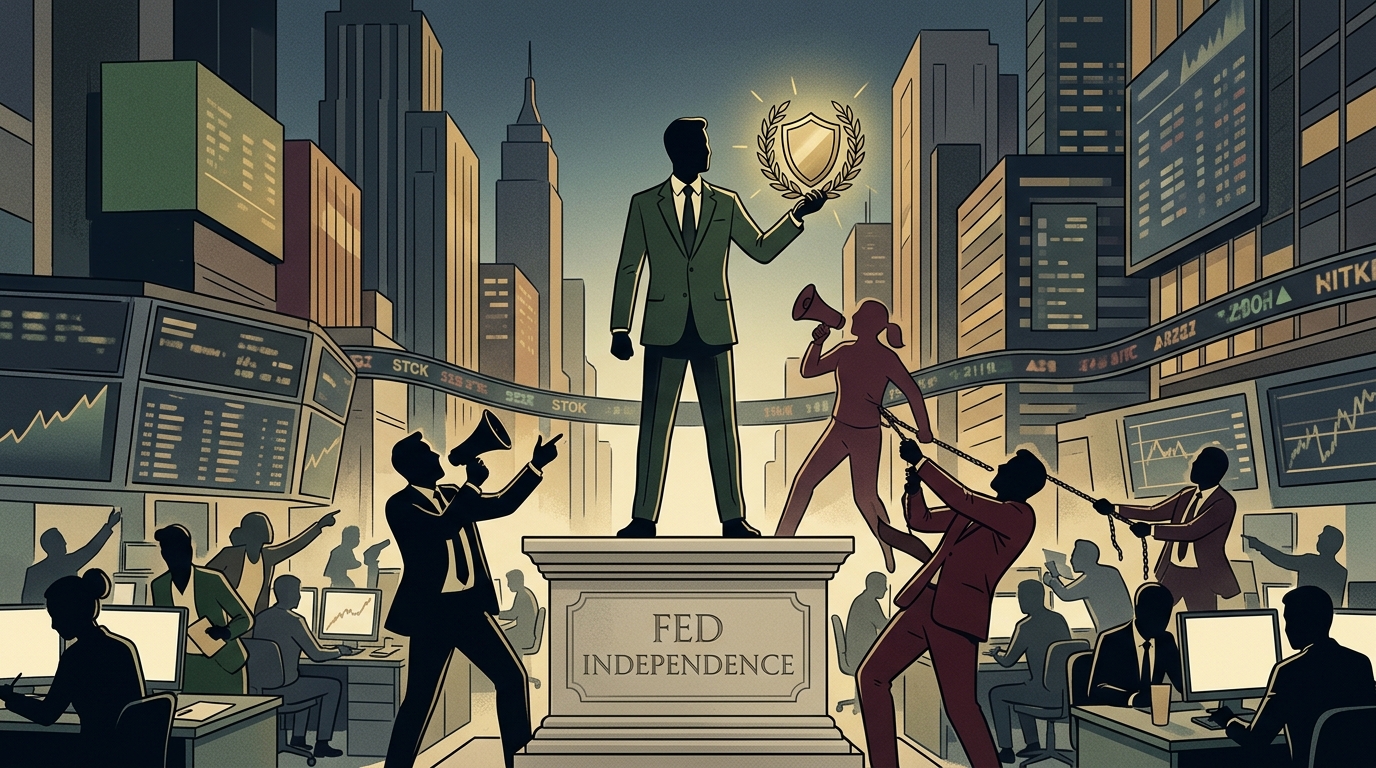
In an era where democratic institutions are being tested globally by the rising tide of populism and skepticism, awarding the "Courage Award" to Federal Reserve Chair Jerome Powell takes on a significance that extends far beyond the realm of economics. This recognition, honoring his steadfastness against unprecedented attacks from Donald Trump, serves as a powerful message on the necessity of preserving institutional integrity during times of crisis.
A Historical Clash of Institutions
Jerome Powell’s tenure at the helm of the world’s most powerful central bank has been anything but smooth. However, the period of Donald Trump’s presidency marked a historic rupture in the relationship between the White House and the Fed. Trump, breaking a decades-old unwritten tradition of presidents refraining from commenting on interest rate decisions, launched a series of public assaults on Powell, labeling him an "enemy" and openly questioning his competence.
The pressure was not merely verbal. There were repeated reports of Trump exploring the possibility of firing Powell, a move that would have sent shockwaves through global markets. Despite this climate of intimidation, Powell remained committed to the Fed’s "dual mandate": maintaining price stability and maximizing employment. His refusal to bow to demands for artificially low interest rates—intended to boost short-term growth for political gain—is now viewed as an act of institutional heroism.
Why Fed Independence is Non-Negotiable
Why is the "courage" of a central banker considered so vital? The answer lies in the very nature of the economy. Political leaders operate on a timeline dictated by the next election, often driving them toward decisions that favor immediate consumption but undermine long-term stability. If the Fed were under the direct control of the executive branch, the risk of hyperinflation would be constant, as money printing could be used as a tool for political survival.
- Market Credibility: Investors trust the US Dollar because they know its value is not determined by political expediency.
- Inflation Control: Fighting inflation often requires painful decisions, such as raising interest rates, which no politician wants to endorse.
- Institutional Continuity: The Fed acts as a stabilizer that transcends electoral cycles.
"Central bank independence is not a privilege for bankers, but a guarantee for the prosperity of citizens," the award committee noted.
The Message of the Award and the Road Ahead
Powell’s recognition comes at a time when the debate over central bank independence is intensifying once again. As the US moves toward new election cycles and the specter of interventionism looms over many Western economies, Powell’s example serves as a blueprint. Through his moderate yet unwavering stance, he demonstrated that respect for rules and adherence to data are the best defenses against authoritarianism.
Analysis by Fortune suggests that the "Courage Award" is not just about Jerome Powell the individual, but about fortifying the system itself. In a world where truth is often sacrificed at the altar of optics, insisting on technocratic correctness and moral integrity is indeed an act of courage worthy of honor. Powell’s legacy will be the reminder that institutions are only as strong as the individuals called to serve them.