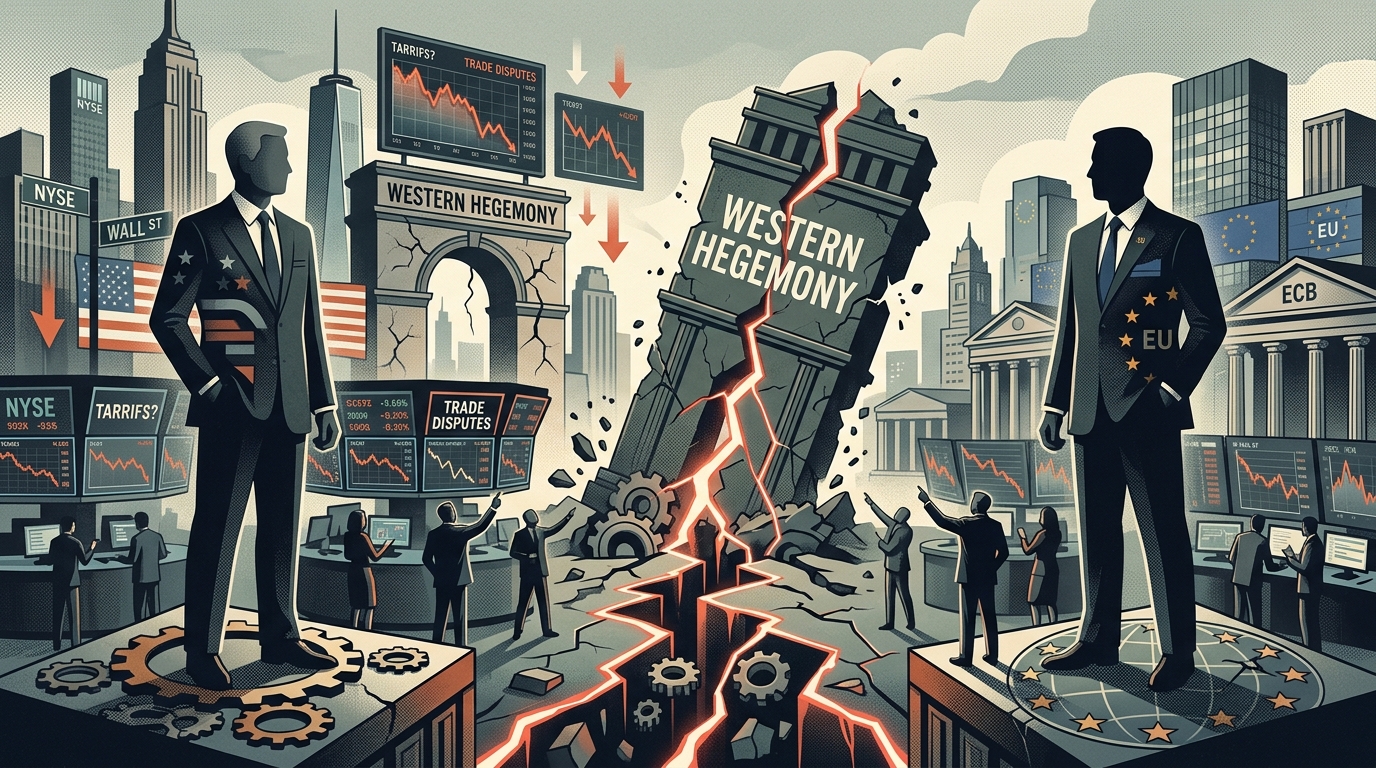
In an era where geopolitical instability and economic fragmentation seem to be the new norm, Jamie Dimon, the iconic CEO of JPMorgan Chase, has stepped forward with a clear and resonant warning. During recent statements, the Greek-American banker characterized the current trade disputes between the United States and the European Union as "silly," emphasizing that their resolution is the ultimate key to global economic growth and the stability of the West.
Dimon's rhetoric is not merely a plea for less bureaucracy. It is a strategic analysis of the West's position in a rapidly changing world. With the rise of China and the challenges posed by the Global South, Dimon argues that the US cannot afford a weakened or fragmented Europe. On the contrary, American foreign policy should prioritize strengthening the European project by eliminating barriers that hinder trade and investment.
The Cost of Protectionism
The trade frictions cited by Dimon are not new, but they have intensified in recent years. From disputes over aerospace subsidies (Boeing-Airbus) to tariffs on steel and aluminum, and from digital taxes to the recent tensions surrounding the US Inflation Reduction Act (IRA), the atmosphere is often confrontational. Dimon believes these disputes are of secondary importance compared to the risk of deindustrialization and the loss of technological leadership.
According to the powerful banker's analysis, protectionism acts as a brake on innovation. When the two largest economic powers of the democratic world expend energy on legal battles over tariffs, they lose valuable time and resources that could be directed toward developing artificial intelligence, green energy, and securing supply chains. Europe, in particular, is at a critical juncture, trying to balance the energy transition with the need for economic survival in a high-interest-rate environment.
A Strong Europe as an American Interest
One of the most compelling points of Dimon's position is the admission that a strong Europe directly serves US national interests. "If you asked me what the goal of our economic relationship with Europe should be, I would say it should be a stronger Europe," he stated. This approach stands in contrast to the isolationist tendencies that have surfaced in parts of the US political system over the last decade.
Dimon views the EU not as a competitor to be constrained, but as an essential partner for maintaining global order. The unification of capital markets in Europe, the reduction of regulatory hurdles, and a common stance toward authoritarian regimes are pillars of this strategy. For the CEO of JPMorgan, economic power is the foundation of military and diplomatic power. Without a robust economic relationship based on trust, the Western alliance risks sliding into a state of permanent stagnation.
The Challenge of Regulation and Technology
At the heart of these "silly" disputes is often regulatory divergence. Europe leads in regulating the digital economy and artificial intelligence (AI Act), while the US follows a more market-driven approach. Dimon argues that these differences should not be turned into trade walls. Instead, a "grand bargain" is needed to allow businesses to operate seamlessly on both sides of the Atlantic.
JPMorgan, as a global financial giant, directly experiences the consequences of these frictions. The fragmentation of rules for data transfer and financial services increases costs and reduces efficiency. Dimon calls on leaders in Washington and Brussels to demonstrate real political will, setting aside petty political calculations in favor of a long-term vision for Western prosperity. In a world where 2026 finds the global economy on a tightrope, Dimon's advice sounds more like a warning than a mere suggestion.