The Fourth Industrial Revolution (Industry 4.0) introduced us to the concept of connectivity. However, as we move through 2026, we stand on the threshold of an even more radical shift: Industry 5.0. In this new paradigm, the factory ceases to be merely a space where raw materials are processed into finished goods. It is transforming into a living, breathing data production hub, where every movement of a robotic arm, every temperature fluctuation, and every milliwatt of energy consumption is recorded, analyzed, and optimized in real-time by Artificial Intelligence (AI).
From Assembly to Prediction
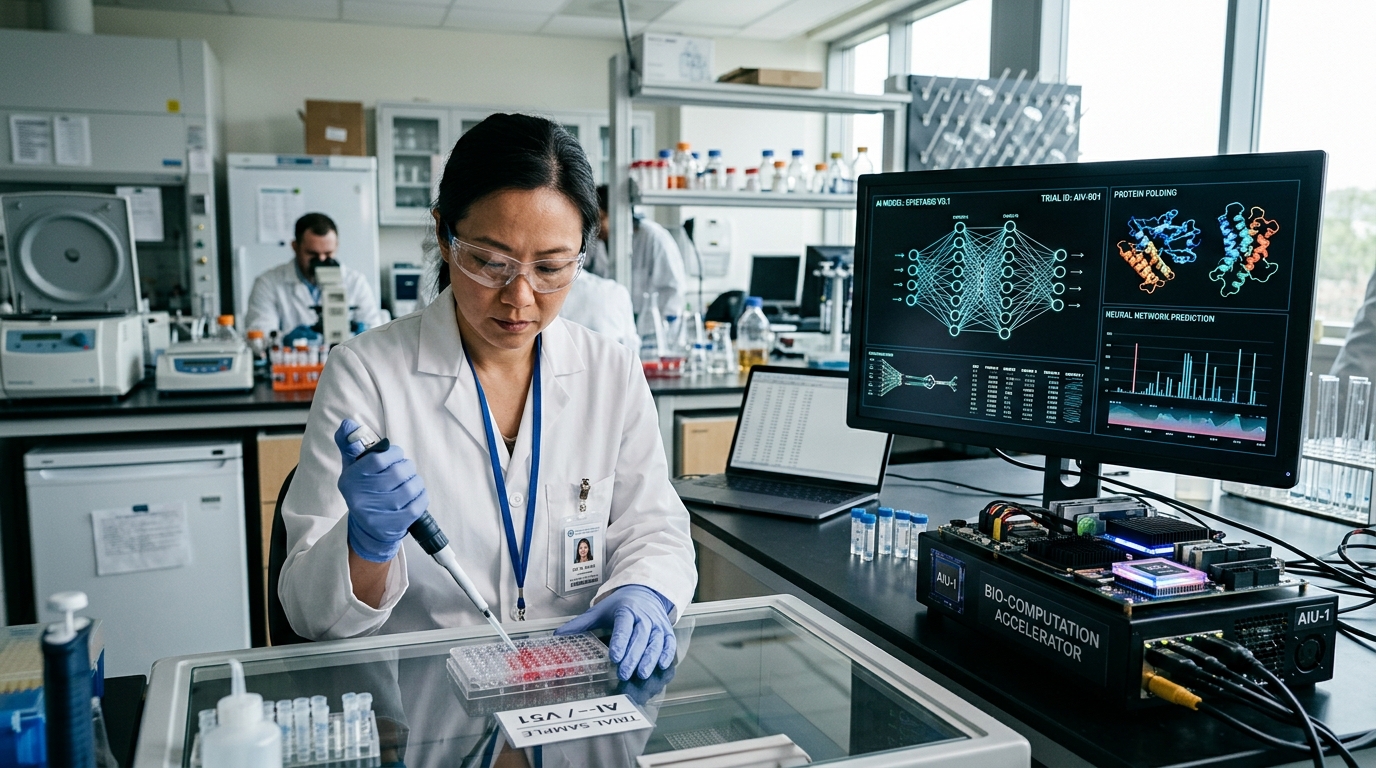
Traditional manufacturing relied on reactive maintenance: something broke, and then we fixed it. Today, the integration of IoT (Internet of Things) sensors at every stage of production allows AI systems to perform 'predictive maintenance.' By analyzing billions of data points, AI can predict a failure weeks before it occurs, saving millions of euros in unplanned downtime. This transition from 'fixing' to 'predicting' is at the heart of the new industrial strategy.
According to recent reports from leading market analysts, factories that fully embrace AI see productivity increases of up to 30%, while simultaneously reducing their carbon footprint. Energy is no longer just a cost but a variable that AI manages with surgical precision, selecting peak hours and energy sources that minimize emissions.
Digital Twins and the Industrial Metaverse
One of the most impressive tools of this era is the 'Digital Twin.' This is a complete, virtual representation of a physical factory. Before a single bolt is placed in reality, engineers can simulate entire production lines in a digital environment. NVIDIA and Siemens are pioneers in this field, creating platforms where AI is trained to solve logistics and workflow problems before they ever manifest in the physical world.
This 'Industrial Metaverse' enables remote collaboration. An expert in Munich can fix a malfunction in a factory in Patras or Shanghai using Augmented Reality (AR) glasses fed with real-time data. Geography is no longer a constraint for technical expertise.
The Human Element: Collaborative Robots (Cobots)
Despite fears of total automation and job losses, Industry 5.0 emphasizes the collaboration between humans and machines. 'Cobots' (Collaborative Robots) are designed to work alongside humans, taking over dangerous, repetitive, or physically taxing tasks, while workers focus on oversight, creativity, and decision-making based on the data provided by AI.
The challenge for Europe and the global market is the reskilling of the workforce. The workers of the future must be familiar with data analysis and system interfacing. Upskilling is no longer an option but a necessity for survival in global competition.
Geopolitics and the Supply Chain
The transformation of factories into data centers also has a profound geopolitical dimension. With AI, production costs in developed nations are decreasing, making 'reshoring' (bringing production back to home countries) economically viable. Dependence on long and unstable supply chains is reduced, as production can now happen closer to the consumer with greater flexibility and speed.
In conclusion, industry is no longer a 'heavy' and 'dirty' activity of the past. It is the new arena of information technology, where data mastery defines economic power. The factories of 2026 are the new server rooms of the global economy.