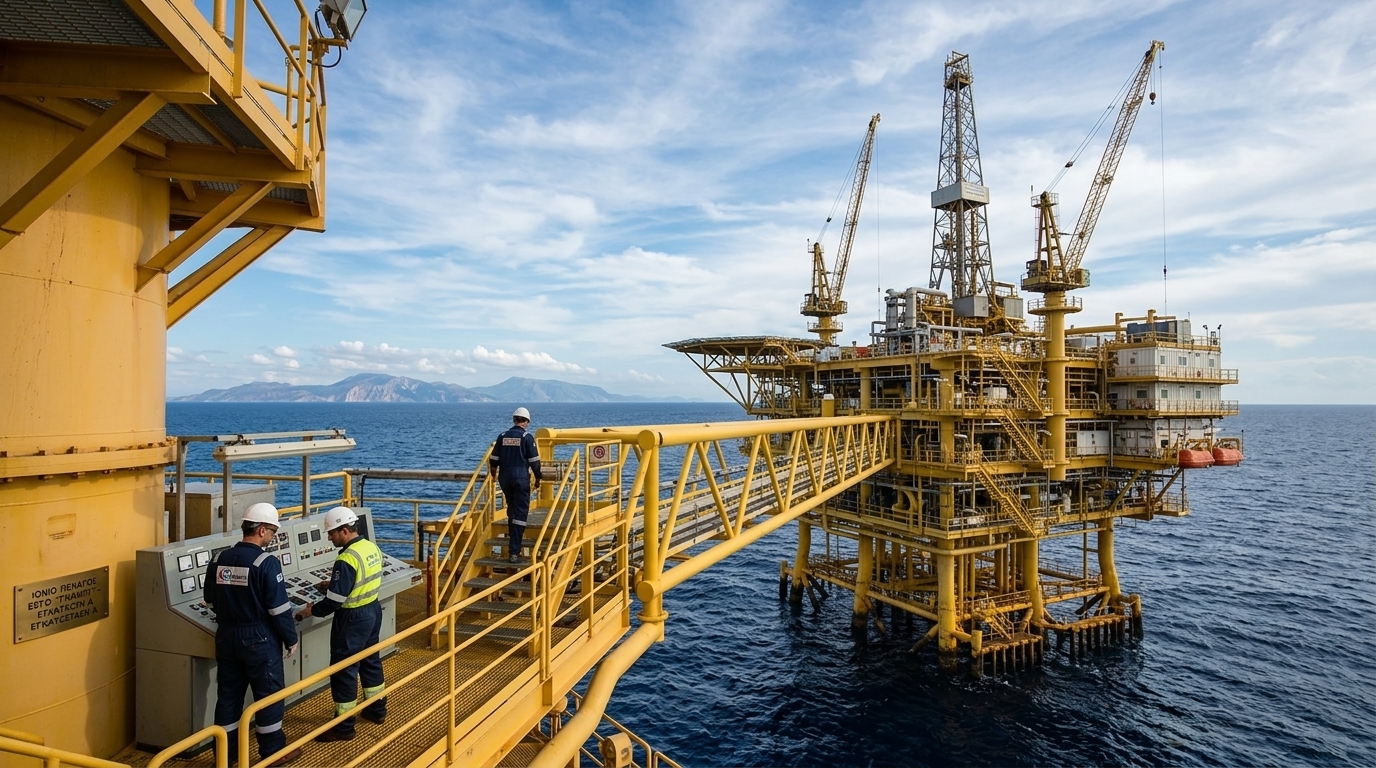
The geopolitical chessboard of the Eastern Mediterranean is entering a new, decisive phase, with the Ionian Sea transforming from a tranquil tourist destination into a theater of intense energy competition. The recent mobility of giants such as ExxonMobil and Chevron, combined with the domestic strategies of Helleniq Energy and Energean, marks a historic pivot. For decades, hydrocarbon exploration in Greece remained stalled by bureaucratic red tape and environmental concerns. Today, in 2026, the urgent need for energy security and the decoupling from volatile suppliers have turned Greek offshore blocks into prime real estate on the global exploration map.
The Strategic Pivot of Global Majors
ExxonMobil's presence south and west of Crete was the first loud signal. However, the focus on the Ionian Sea and Block 10 (Kyparissiakos Gulf) highlights a different dynamic. Oil majors are not just looking for deposits; they are looking for stability. In a world rocked by conflicts in Ukraine and the Middle East, Greece offers a secure European environment with a clear legal framework. Chevron, seriously considering entry into Greek blocks, brings not only billions in capital but also the deep-water drilling expertise that was previously considered technically and economically prohibitive.
Analysis of seismic data collected in previous years reveals geological structures similar to those in the Adriatic and North Africa, where significant natural gas deposits have already been identified. Experts estimate that potential reserves could not only cover domestic needs but also transform Greece into a net energy exporter to the rest of Europe via existing and future interconnectors.
Economic Stakes and the Green Transition
The question looming over the drilling rigs is how these investments align with the European Green Deal. The response from Athens and Brussels is now pragmatic: natural gas is the indispensable "bridge fuel." Without domestic production, the transition to Renewable Energy Sources (RES) remains vulnerable to import price fluctuations. Economically, commencing production in the Ionian could add points to the country's GDP, create thousands of high-skill jobs, and boost state revenues through royalties and taxation.
- Reduction of the trade deficit by limiting fuel imports.
- Boosting local economies in Western Greece and the Ionian Islands.
- Funding the Energy Transition Fund through hydrocarbon revenues.
Environmental Challenges and Geopolitical Power
However, the path is not without obstacles. Environmental organizations warn of risks to the sensitive ecosystems of the Ionian, such as the Hellenic Trench, a critical habitat for marine mammals. The pressure for stringent safety protocols is higher than ever. Simultaneously, the energy upgrade of the Ionian serves as a bulwark against the geopolitical claims of third countries. The presence of American and European interests in Greek waters creates a "shield" of protection, as the security of energy infrastructure is now synonymous with the security of Europe itself.
"Greece is no longer a passive energy consumer, but a potential producer guaranteeing the stability of Southeast Europe," industry executives note.
In conclusion, the Ionian gamble is multi-layered. It is a bet on economic survival, energy sovereignty, and technological leadership. The coming months, with scheduled exploratory drillings, will reveal whether the hopes for "Greek wealth" beneath the sea will materialize or remain an unfulfilled promise in a world racing toward decarbonization.