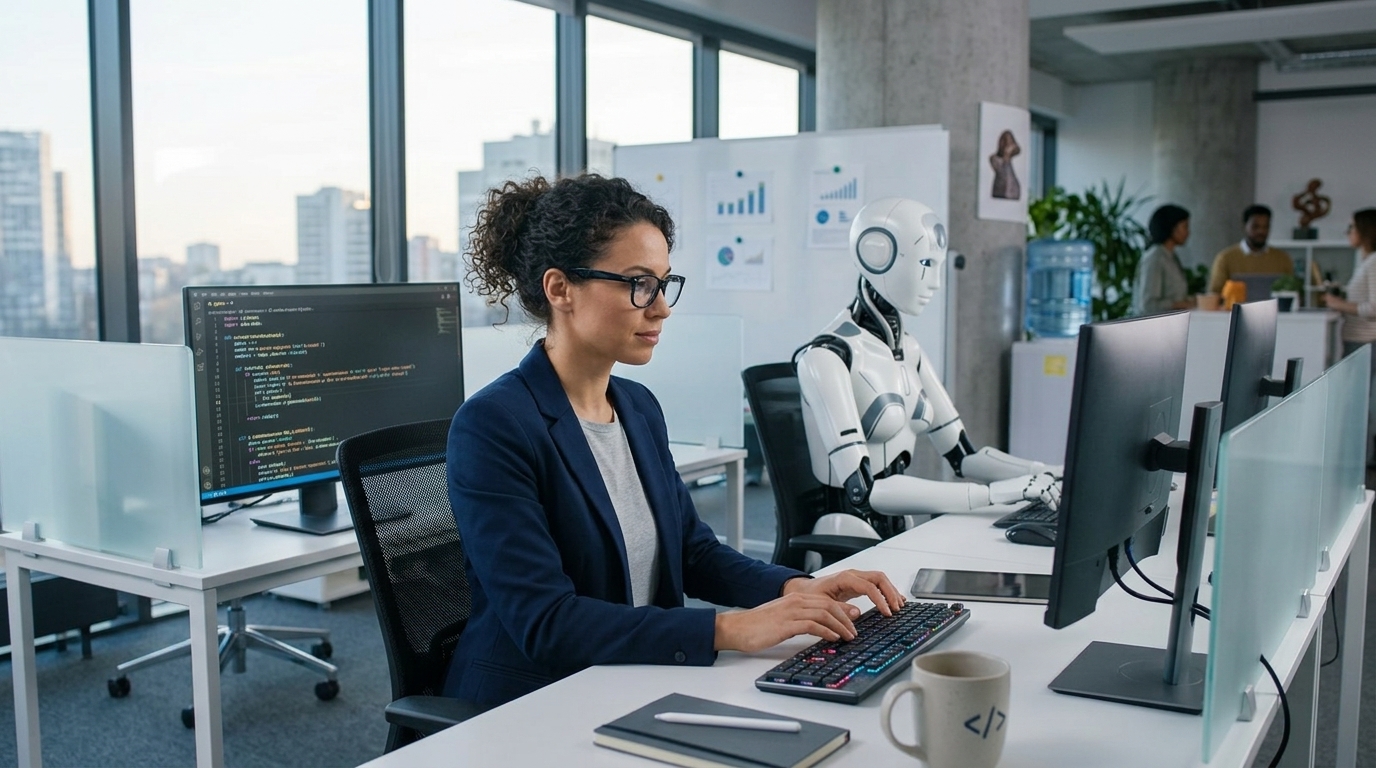
The rise of Generative AI is not merely a technological milestone; it is a seismic shift reshaping the very foundations of the global economy. However, as the dust settles from the initial rollout of tools like ChatGPT, a troubling reality is emerging: the impact of this revolution is not being distributed equally. New data from international organizations and recent studies in London emphasize that female workers are in a position of particular vulnerability, as the roles in which they are traditionally overrepresented are those most susceptible to automation.
The 'Pink-Collar' Automation Zone
Historically, previous waves of automation—such as industrial robotics—primarily affected manual labor roles held mostly by men. Generative AI, however, flips this script. Today, the threat has moved into the office. Occupations involving administrative support, secretarial tasks, customer service, and data management are directly in the crosshairs of algorithms. According to a report by the International Labour Organization (ILO), 7.9% of female employment worldwide is at risk of automation, compared to just 2.9% for men.
This disparity stems from labor market segregation. Women tend to hold positions that require high routine cognitive processing—tasks that Large Language Models (LLMs) can now perform with impressive speed and at a fraction of the cost. In London, one of the world's most technologically advanced markets, data shows that demand for administrative staff has already begun to wane, with women making up 70% of this category.
The Risk of a Widening Gender Pay Gap
Beyond potential job losses, AI threatens to solidify or even widen the gender pay gap. If women are forced to move from mid-level administrative roles to lower-paid service sector jobs—where human presence is still necessary but financial rewards are smaller—decades of progress toward economic equality could be reversed.
"AI won't replace women, but women who use AI will replace those who don't," market analysts frequently remark.
However, access to reskilling is not a given. Women often face the "double burden" of professional work and domestic responsibilities, which limits their free time for learning new technological skills. Furthermore, biases embedded within AI systems themselves—often trained on data reflecting historical inequalities—can create barriers in hiring and promotions through automated evaluation systems.
Policy Intervention and the Opportunity for Augmentation
Despite these challenges, AI also offers a unique opportunity. If utilized correctly, it can liberate workers from repetitive tasks, allowing them to focus on strategic and creative aspects of their roles. For this to happen, a coordinated effort from governments and corporations is required:
- Targeted Reskilling Programs: Investing in digital literacy specifically for sectors with high female employment.
- Anti-Discrimination Regulatory Frameworks: Ensuring that hiring algorithms are transparent and free from gender bias.
- Flexibility and Support: Policies that facilitate work-life balance, allowing for continuous lifelong learning.
The transition to the AI era must not leave anyone behind. Focusing on the gender dimension of technological change is not just a matter of social justice; it is a matter of economic necessity. A labor market that marginalizes half of its workforce is a market destined for stagnation.