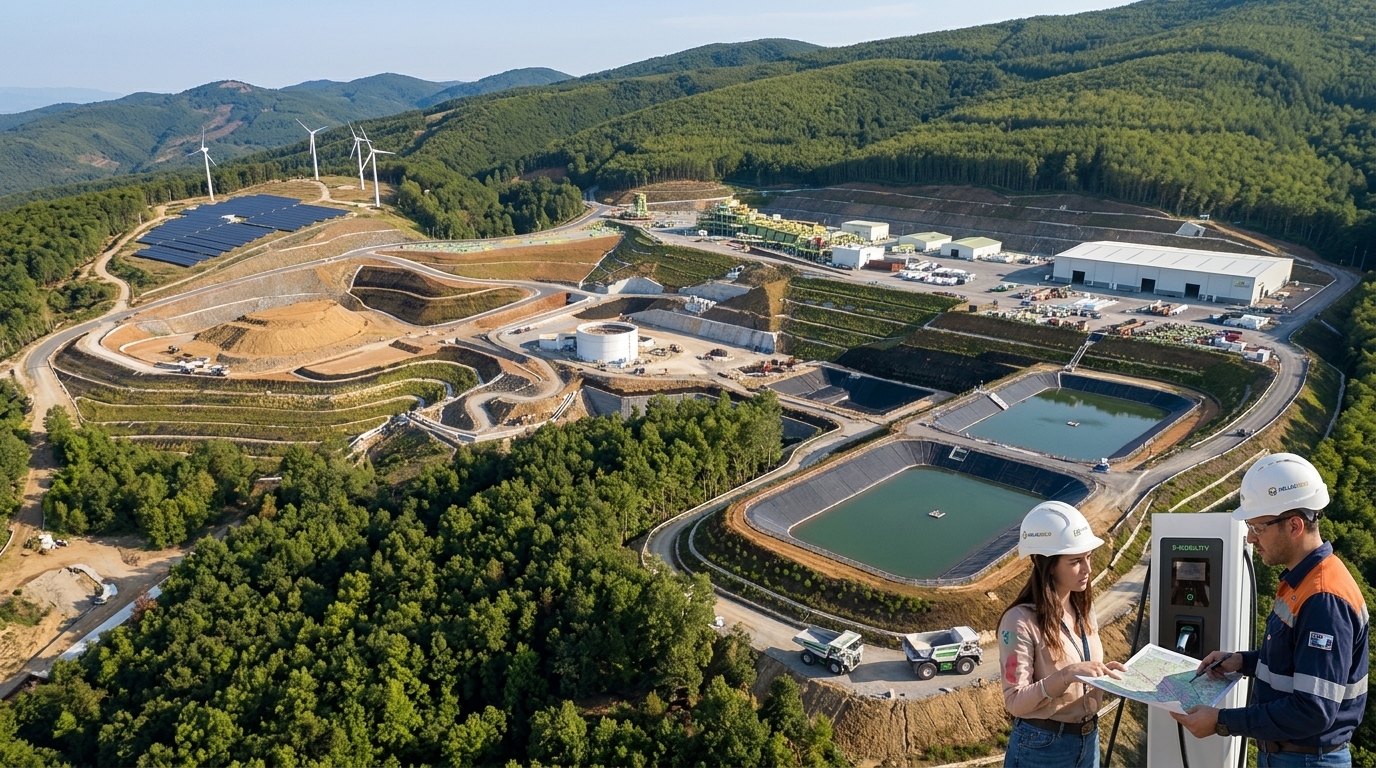
In the heart of Halkidiki, where mining tradition meets the demands of the Fourth Industrial Revolution, Hellas Gold is moving forward with a project that aims to redefine the industry's environmental footprint in Greece. The recent announcement of investment in the electrification of heavy ore transport is not merely a technological upgrade; it is a strategic choice aligned with the European Green Deal and the imperative for sustainable extraction of critical raw materials.
Copper as the Catalyst for Energy Transition
The significance of the Skouries and Olympias projects transcends the narrow confines of the Greek economy. In an era where the European Union is desperately trying to reduce its dependence on third countries—primarily China—for the supply of metals essential for green technology, copper emerges as "strategic gold." Copper is the foundation of electric mobility, renewable energy sources, and smart grids. Without it, the transition to a net-zero economy is practically impossible.
Hellas Gold, a subsidiary of Eldorado Gold, recognizes that the social license to operate in the 21st century is not earned solely through job creation, but by proving that heavy industry can operate under the terms of a circular economy and low carbon emissions. The investment in electric haul trucks and charging infrastructure within the mines aims to drastically reduce Scope 1 and 2 emissions, which traditionally burden the environment through diesel combustion.
Technological Innovation and Operational Efficiency
Transitioning to e-mobility for vehicles transporting dozens of tons is no simple task. It requires a complex energy ecosystem including fast-charging stations, regenerative braking systems, and real-time digital fleet monitoring. According to company executives, the use of electric vehicles in underground tunnels not only improves the environmental profile but also enhances working conditions by reducing heat and pollutants released into the air that workers breathe.
- Significant reduction of noise in mining and transport areas.
- Long-term maintenance cost savings due to the simpler nature of electric motors.
- Enhanced safety through advanced automation systems accompanying the new vehicles.
This strategy is part of the company's broader investment plan, which includes modernizing facilities with cutting-edge technologies such as dry stack tailings—a method that reduces the environmental footprint and conserves water. The combined effect of these technologies places the Kassandra Mines on the map of the most modern mining centers worldwide.
The Geopolitical Dimension and the Critical Raw Materials Act (CRMA)
Hellas Gold's move comes at a time when the EU has implemented the Critical Raw Materials Act. The goal is clear: by 2030, at least 10% of the EU's annual consumption of strategic raw materials should be mined within the Union. Greece, possessing rich deposits, is called upon to play a leading role.
"Investing in electrification is not just an environmental necessity; it is the answer to the need for a sustainable and competitive European metallurgy," industry circles report.
However, challenges remain. Financing such large-scale projects requires a stable legislative framework and the support of local communities, which have expressed strong concerns in the past. The shift to "green mining" is the company's strongest argument to convince stakeholders that development and environmental protection can coexist.
Conclusion: A New Model of Growth?
Hellas Gold’s investment in e-mobility serves as a test case for whether heavy industry can truly be transformed. If successful, it will serve as a model for other mining activities in Greece and Europe. The stakes are high: securing the materials for our future without sacrificing the environment of the present. Halkidiki thus becomes the testing ground for a new balance between industrial power and ecological responsibility.