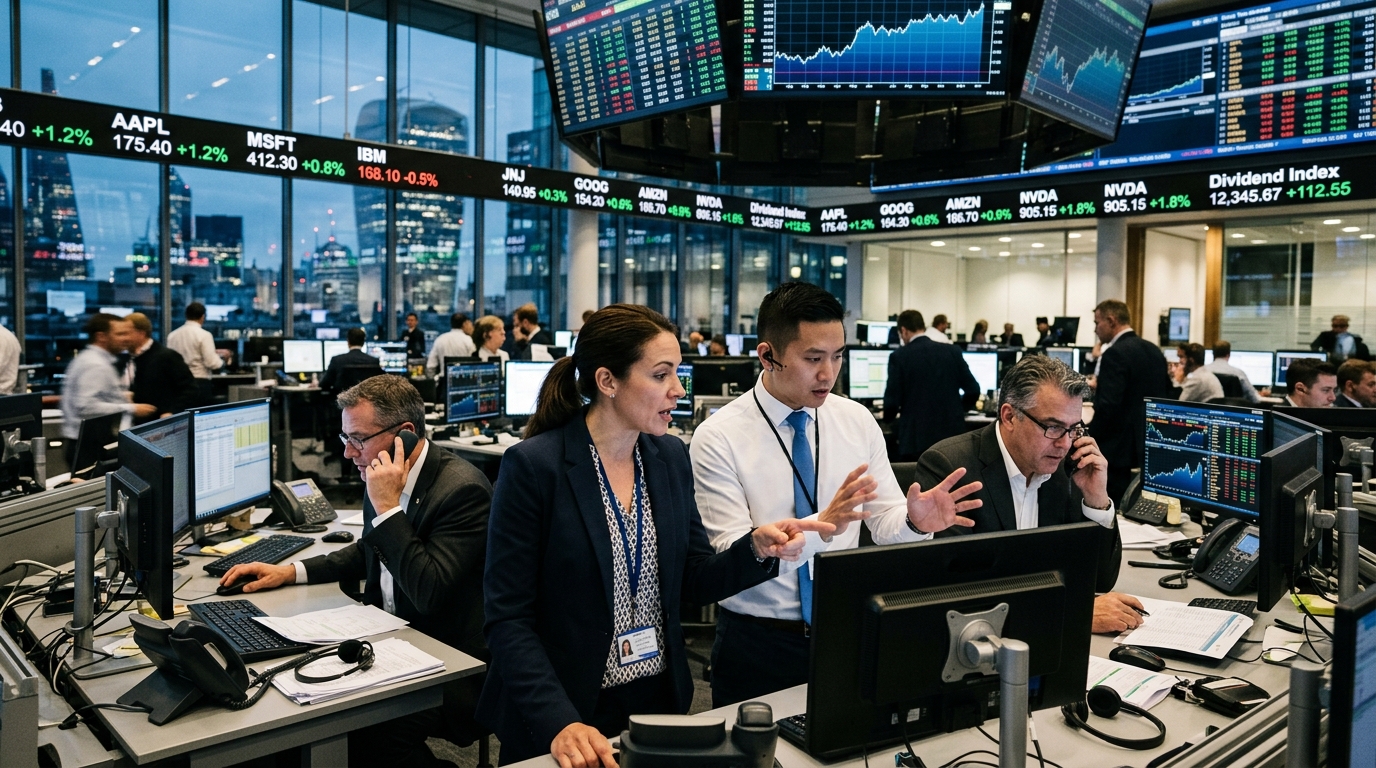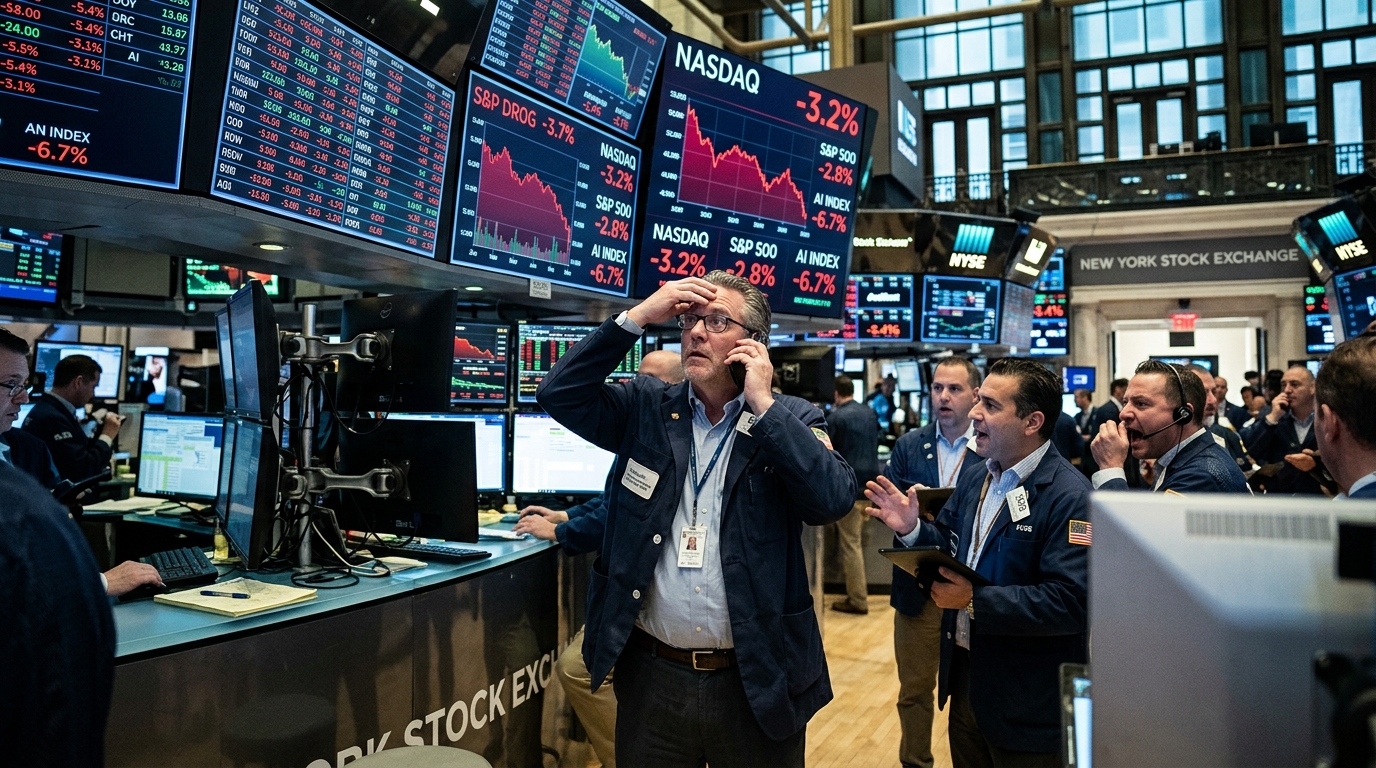
For decades, the global financial order resembled a well-choreographed ballet with clearly defined roles. Wall Street held primacy, Europe offered stability through its traditional industrial base, and emerging markets promised rapid growth. However, June 2026 finds this map unrecognizable. The advent and rapid commercialization of Artificial Intelligence (AI) has not merely been a technological evolution; it is a seismic shift reshuffling the deck of global wealth in a manner unseen since the Industrial Revolution.
The Semiconductor Empire and the Eclipse of Traditional Powers
The most striking feature of this upheaval is the extreme concentration of market capitalization. NVIDIA, once considered a niche company for gamers, now boasts a valuation exceeding the entire stock markets of several G7 nations. The comparison is staggering: the market value of a single American semiconductor giant now equals the combined weight of Germany’s and France’s largest listed companies. This is not just a statistic; it is proof that the market is no longer pricing the present, but a future where computational power is the new oil.
Wall Street, fueled by the "Magnificent Seven" and their successors, now represents over 65% of the MSCI World index. This level of dominance is historically unprecedented. While previous US bull markets were built on consumption and services, today’s is built on the infrastructure of the next phase of human civilization. Investors are fleeing European banks and automakers en masse, viewing them as "analog fossils" in an increasingly digital world. The capital flight from the Old World to the New is accelerating, creating a self-fulfilling prophecy of American exceptionalism.
Europe’s Identity Crisis in the Age of Silicon
The Old Continent stands at a critical crossroads. While the European Union led the way in regulating AI with the AI Act, it has largely failed to foster the ecosystem necessary to birth a "European champion" in the field. The lack of venture capital at a scale comparable to the US and the fragmentation of the internal market have led to a unique form of financial marginalization. European exchanges, such as Euronext and the DAX, are watching their most promising tech firms seek listings on the Nasdaq in search of higher valuations and deeper liquidity pools.
The result is a Europe transforming into a "museum" of the old economy. Luxury sectors (LVMH, Hermes) remain the only holdouts of global relevance, yet even they depend on the purchasing power of new tech millionaires from Palo Alto and Shenzhen. The decoupling between the real economy and stock market valuations in Europe is now chaotic, generating political pressure for state interventions that often further complicate the investment landscape.
Asia and the China Dilemma
On the other side of the globe, Asia is experiencing its own turbulence. China, which five years ago seemed poised to challenge American hegemony, is currently trapped in a real estate crisis and a period of stringent state oversight that has clipped the wings of its tech giants like Alibaba and Tencent. Conversely, Japan is witnessing an unexpected renaissance, with the Nikkei breaking historical highs as investors seek a safe, democratic alternative to the Chinese market with a strong foothold in the microchip supply chain.
India is also emerging as a major magnet for capital, but its stock market is viewed by many as "overheated." The question arises: can emerging markets survive in an environment where capital flows unilaterally toward Silicon Valley? The answer appears to be negative unless these nations can integrate AI into their own production processes faster than the West. The "digital divide" is no longer about internet access; it is about the ownership of the algorithms that drive productivity.
Systemic Risks and the Road Ahead
However, this new order is not without its perils. The extreme concentration of wealth in a handful of companies creates a systemic "single point of failure" risk. If the promise of AI-driven productivity gains fails to materialize at the expected scale, the market correction will be violent and global. Furthermore, the geopolitics of AI—the race for control over high-end chips and data centers—is turning the stock market into a battlefield for a new kind of Cold War.
In conclusion, the global stock market map is not just changing; it is being rewritten from scratch. Wall Street’s dominance in the AI era is not merely financial; it is structural. For investors, the challenge is no longer just picking the right stocks, but understanding the new hierarchy of power in a world where code and silicon hold more value than factories and oil. The question remains: will the rest of humanity be able to keep up with this pace, or are we heading toward a digital feudalism under the hegemony of a few tech titans?