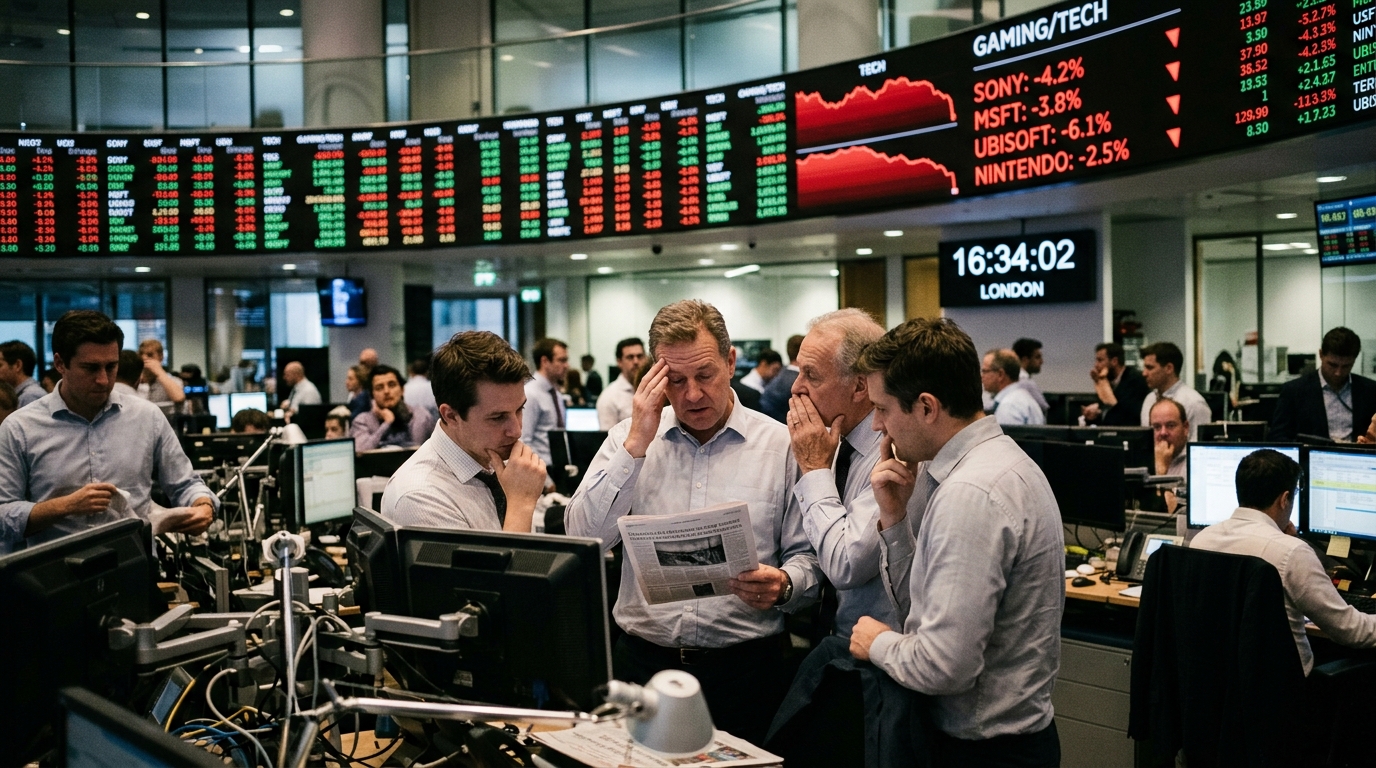
The golden era of reckless expansion in the gaming industry appears to be giving way to a chilling reality. As we navigate through June 2026, the final chapters of the 'easy growth' period have been written in bold. According to recent reports from Bloomberg Tech, the two largest players on the global stage, China's Tencent and America's Microsoft, are taking drastic steps that suggest the industry's 'cleansing' is far from over.
Tencent's Strategic Retreat
Tencent, the world's largest game publisher, is in the midst of re-evaluating its entire portfolio. For years, the Chinese giant's strategy relied on acquiring minority stakes in hundreds of studios worldwide, acting as a 'silent giant' behind hits like League of Legends and Fortnite. However, pressure from the domestic Chinese market and a slowdown in global consumption are forcing it to pull investments from non-profitable projects.
Tencent management is now discussing halting funding for experimental titles, focusing exclusively on 'sure bets' and established franchises. This shift toward conservatism is a blow to innovation, as many independent studios that relied on Tencent's capital now find themselves in a vacuum. This move is not merely a financial decision but an admission that the 'hyper-growth' model is no longer sustainable in a high-interest-rate environment.
Microsoft's Dilemma and the Post-Activision Syndrome
On the other side of the Pacific, Microsoft is still struggling to digest its massive acquisition of Activision Blizzard. Despite acquiring iconic titles like Call of Duty, the company faces serious integration and profitability issues. Recent layoffs at studios like Bethesda and the closure of historic development teams show that Microsoft is now prioritizing profit margins over content production for Game Pass.
The problem is structural: the cost of developing a AAA-level game has skyrocketed to $300 million or more, while development time now exceeds six years. With audiences becoming increasingly selective and competition for user leisure time (from TikTok to Netflix) intensifying, Microsoft is forced to make decisions that would have been unthinkable three years ago. The 'Xbox everywhere' strategy seems to be faltering as the need for immediate Return on Investment (ROI) outweighs long-term vision.
Artificial Intelligence: A Double-Edged Sword
Amidst this climate of uncertainty, Artificial Intelligence (AI) is emerging as the great catalyst. Companies are rushing to integrate Generative AI tools into the production process—not necessarily to improve game quality, but to cut labor costs. Automation in asset creation, coding, and dialogue writing promises faster development cycles, but simultaneously threatens thousands of creative jobs.
Ethical and artistic questions arise: Can a game built on algorithms maintain its 'soul'? The industry seems to be betting on efficiency, hoping that AI will be the lifeline that mitigates the risks of massive budgets. However, the backlash from workers and unions, which are beginning to organize dynamically, portends a period of intense social conflict within tech giants.
Conclusion: A New Equilibrium
2026 will go down in history as the year of the great adjustment. The $200 billion industry is not collapsing, but it is mutating. The era of 'experimenting with other people's money' is over. What remains will be a more concentrated market, where a powerful few control the landscape, and smaller creators must find radical ways to survive outside traditional distribution networks. The pain of the coming months is the necessary price for an industry that lost touch with economic reality during the pandemic-induced euphoria.