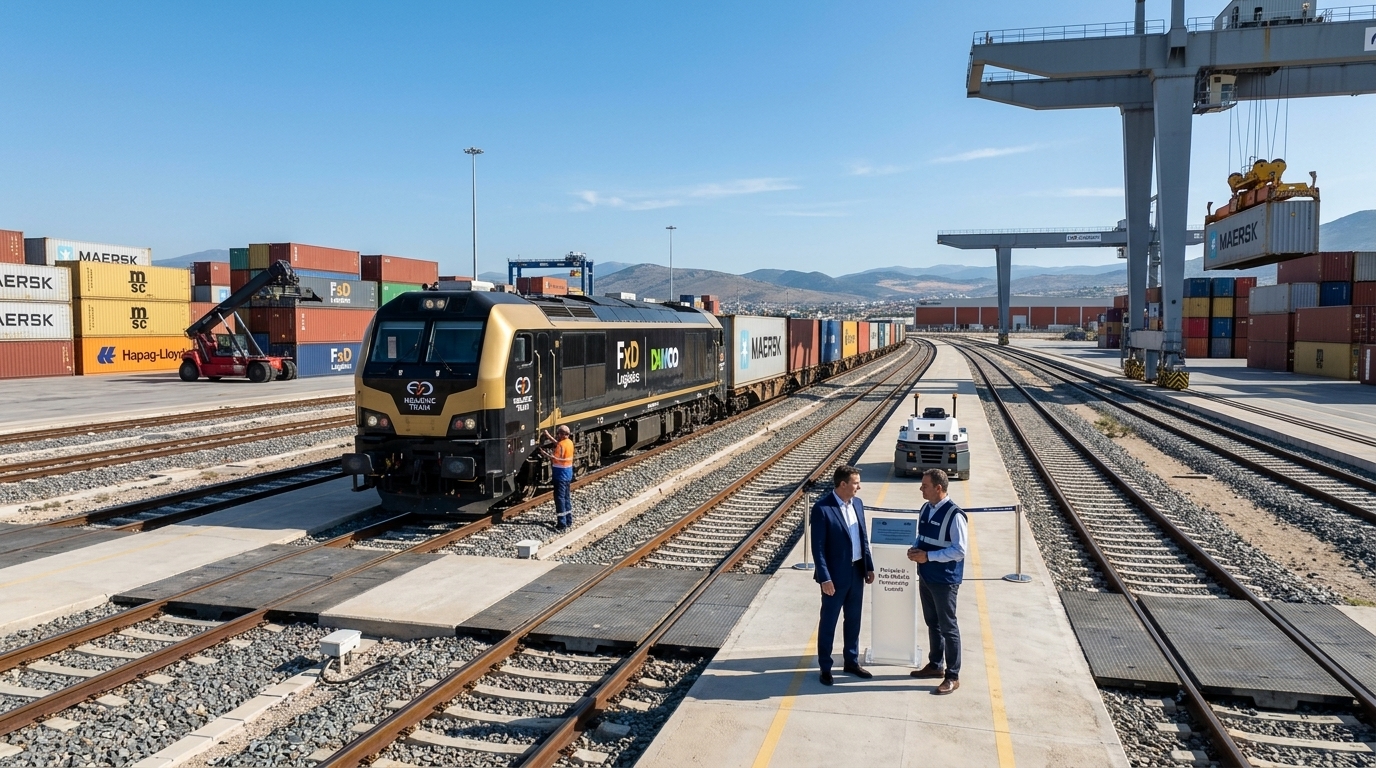
In a move destined to reshape the freight transport landscape of Southeast Europe, Hellenic Train (a subsidiary of Italy's Ferrovie dello Stato Italiane) and DAMCO Energy of the Copelouzos Group have formalized their partnership through the establishment of FxD Logistics S.A. This development marks the culmination of a lengthy tender process for the operation of Thriasio II, the freight and sorting station considered the "heart" of the country's rail logistics.
The Strategic Significance of Thriasio II
Thriasio II is not just another storage facility. It is a sprawling 300-acre (1,200-hectare) site in Aspropyrgos, featuring rail tracks, loading docks, administrative buildings, and infrastructure capable of handling massive container volumes. Its geographical location is pivotal: situated at the intersection of the Piraeus-Thessaloniki-Border rail axis and the Attiki Odos motorway, it offers direct access to the Port of Piraeus.
Its operation by FxD Logistics is expected to accelerate the shift from road to rail transport, a direction mandated by the European Green Deal. With the full development of the center, Greece can aspire to a place among Europe's top logistics hubs, competing with Northern ports like Rotterdam and Hamburg by offering a faster gateway for goods arriving from Asia.
A Synergy of Two Giants
The collaboration between Hellenic Train and the Copelouzos Group brings two distinct but complementary advantages to the table. On one hand, Hellenic Train possesses the expertise of its parent company, FS, which manages one of Europe's most advanced rail networks. Their experience in freight management and scheduling is essential for the smooth operation of such a complex project.
On the other hand, the Copelouzos Group, through DAMCO Energy, offers deep knowledge of the Greek market, experience in large-scale infrastructure projects, and a strong presence in the energy sector, which will play a role in the center's energy upgrading and autonomy. The founding of FxD Logistics is not merely a corporate act but a vote of confidence in the prospects of the Greek economy, despite the challenges the railway has faced in recent years.
Economic Implications and Challenges
The investment in Thriasio II is expected to create hundreds of jobs, both during the preparation phase and throughout its operation. However, the path is not without obstacles. The state of the national rail network remains a critical issue. For Thriasio II to operate at its maximum potential, a network that is safe, modern, and reliable is required.
- Creation of new jobs at local and national levels.
- Increased state revenue through concession fees.
- Reduction of the environmental footprint of transport.
- Enhancement of the competitiveness of the Port of Piraeus.
Furthermore, competition from neighboring countries such as Bulgaria and Turkey, which are also investing in freight hubs, means that FxD Logistics must move with speed and efficiency. Bureaucracy and licensing delays are chronic ailments that the joint venture will need to address in cooperation with the state.
"The establishment of FxD Logistics is the first step toward transforming Greece into a true Mediterranean transit hub," market insiders noted.
In conclusion, Thriasio II under the management of FxD Logistics has the potential to become the catalyst for the rebirth of the Greek railway. If the venture succeeds, Greece will no longer be just a tourist destination but a critical link in the global supply chain, offering added value and geopolitical influence.