The story of the Public Power Corporation (PPC) in recent years is perhaps the most characteristic example of corporate transformation in modern Greece. From the brink of bankruptcy and the ghost of 'Little PPC'—a plan that involved carving out and selling generation assets to third parties—the company moved into the phase of 'Double PPC.' This is a vision based not on subtraction, but on the multiplier power of investment, green transition, and international expansion.
The Capital Increase Strategy
The General Assembly of April 14th served as the institutional culmination of a journey that began when Georgios Stassis took the helm. The decision to raise capital amounting to 4 billion euros (including bond issues and proceeds from the sale of HEDNO/DEDDIE) fundamentally changed the landscape. The share capital increase was not merely a cash injection; it was the company's 'declaration of independence' from state embrace, allowing it to operate on purely private-economic criteria.
Minority shareholders faced a dilemma but also an opportunity. The ability to participate in the increase to maintain their stake acted as a safeguard for the dispersion of the shareholder base. The entry of powerful institutional investors, such as CVC Capital Partners, provided PPC with the necessary prestige in international markets, transforming it from a sluggish state-owned enterprise into an attractive investment destination.
From Lignite to Renewable Energy Sources (RES)
The core narrative of 'Double PPC' is rooted in decarbonization. The corporation managed to turn its greatest disadvantage—dependence on polluting and increasingly expensive lignite—into a driving force for change. With the funds raised, PPC accelerated the closure of old units and invested massively in solar and wind farms, primarily in Western Macedonia and Megalopolis.
- Aggressive development of the RES portfolio with a target of 9GW by 2026.
- Modernization of the distribution network through the digitalization of HEDNO.
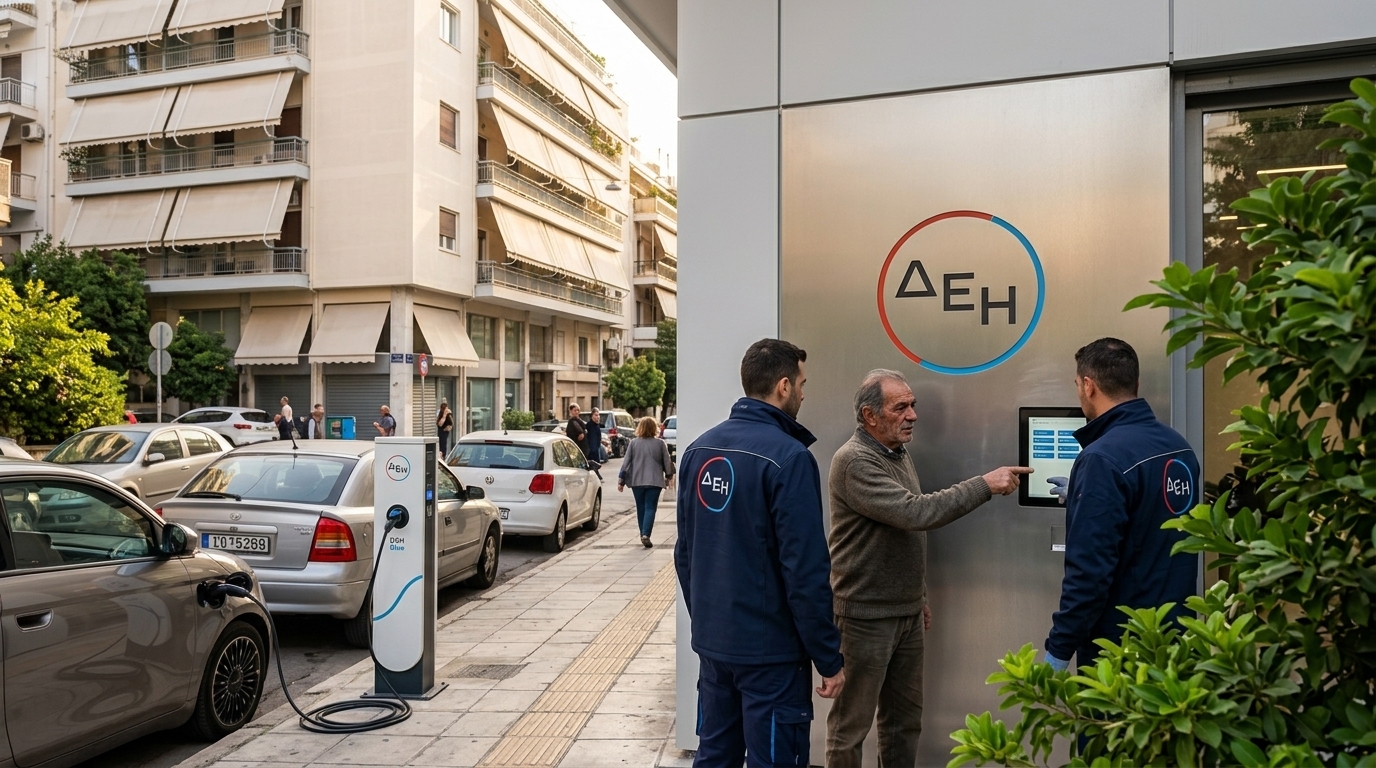
- Entry into the e-mobility market with the PPC blue network.
- Strategic expansion into telecommunications via fiber optics.
This strategy is not just about the environment; it is about economic viability. In the new energy environment, where carbon prices are skyrocketing, 'green' production is the only way to maintain competitive tariffs for consumers and ensure profitability for shareholders.
Balkan Expansion: The Acquisition of Enel Romania
The crowning achievement of this new era was the expansion beyond Greek borders. The acquisition of Enel's operations in Romania marked the birth of a regional player. PPC is no longer just the dominant player in Greece, but an energy hub in Southeast Europe. This move offers economies of scale, risk diversification, and access to a market with significant growth prospects.
"PPC is no longer defending to survive; it is attacking to dominate the broader region, securing the country's energy sufficiency through extroversion," market analysts note.
However, this transformation is not without challenges. Managing the energy crisis, geopolitical turbulence, and the need for continuous innovation require constant vigilance. 'Double PPC' must prove it can balance its social role as a provider of a basic good with the demands of international markets for high returns.
Conclusions and Outlook for 2026
Looking back from 2026, the 2021 capital increase and the decisions of that General Assembly appear as 'ground zero.' PPC managed to avoid the fate of other European utilities that shrank. Instead, it grew, modernized, and made Greece an exporter of energy and expertise. The challenge now is maintaining this momentum in an environment rapidly changing due to the climate crisis and the role of AI in grid management.