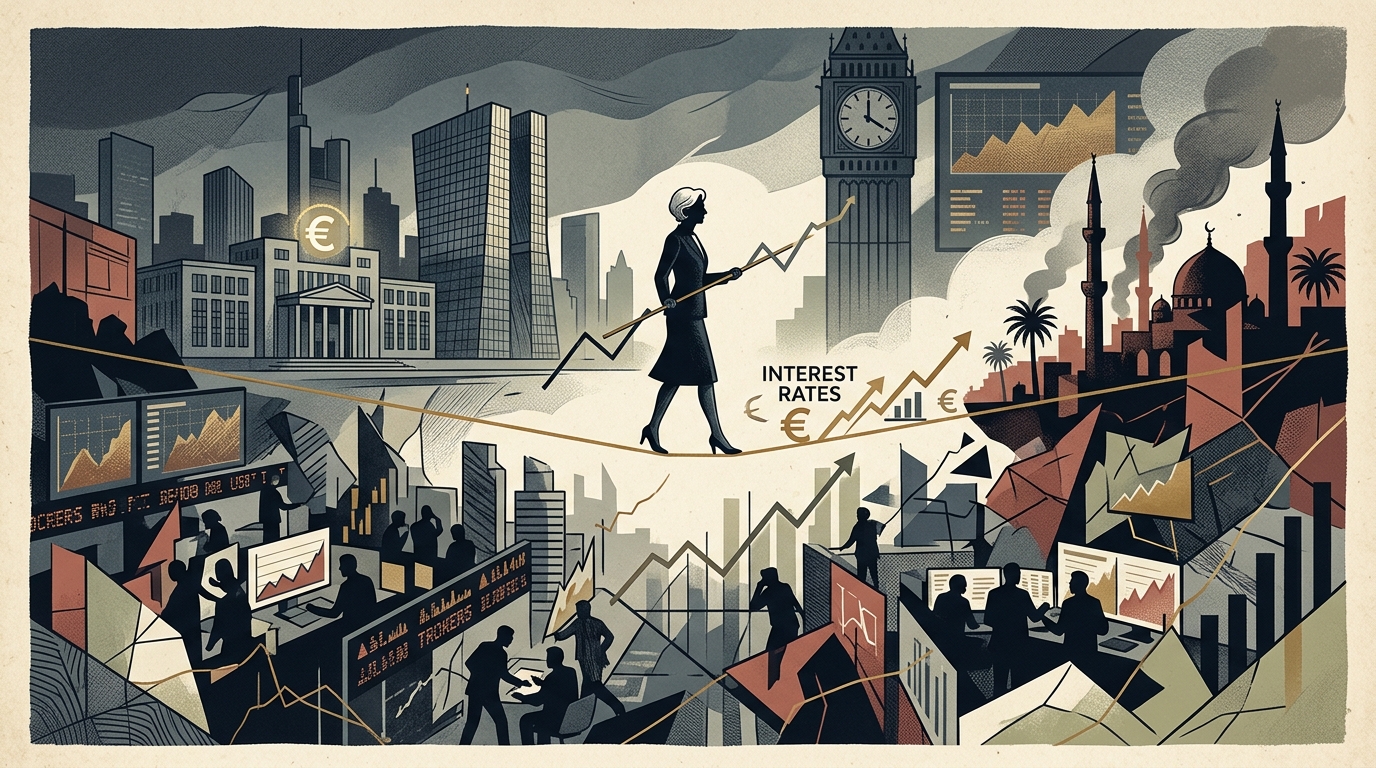
At a time when the Eurozone is struggling to recover from the successive crises of the last five years, Christine Lagarde is called upon to balance on an extremely thin line. The recent escalation in the Middle East is no longer just a humanitarian and geopolitical drama; it is transforming into a critical economic factor that could overturn the European Central Bank's (ECB) planning for 2026. Frankfurt is watching developments with bated breath, knowing that price stability is inextricably linked to the security of energy routes.
The Geopolitical Factor as an Economic Variable
The Middle East remains the 'regulator' of global energy markets. Any disruption in the Strait of Hormuz or to the region's oil-producing infrastructure has an immediate impact on crude oil and natural gas prices. For the ECB, this translates into 'imported inflation' that escapes the control of monetary tools. Lagarde, in recent statements, made it clear that the bank is 'weighing these risks with extreme caution,' as a new spike in energy prices could reignite inflationary pressures that have only just begun to be tamed.
The concern is not limited to fuel costs. Geopolitical tensions affect supply chains, increasing the cost of transporting and insuring goods. This creates a 'domino effect' that hits industrial production in Germany and France, making the European economy even more vulnerable. In this context, the ECB is hesitant to proceed with aggressive interest rate cuts, fearing that premature easing, combined with an energy shock, would lead to stagflation.
The Strategy of the 'Data-Dependent' Approach
The phrase 'data-dependent' has become Christine Lagarde's mantra. However, in 2026, these data are more unpredictable than ever. The ECB must decide whether to continue the path of rate cuts to stimulate the Eurozone's anemic growth or to maintain rates at high levels as a 'buffer' against uncertainty. The 'thin line' the ECB head refers to concerns exactly this dilemma: excessive strictness could strangle the economy, while excessive easing could allow inflation to take root again.
- The risk of secondary inflation through wage increases.
- The need for fiscal discipline from EU member states.
- The impact of the euro-dollar exchange rate on energy imports.
- Market psychology reacting spasmodically to every news headline from the Middle East.
The Challenge for European Cohesion
The crisis in the Middle East also tests the political cohesion of the Eurozone. Southern countries, which are more vulnerable to borrowing costs, are pushing for faster rate cuts. Conversely, Northern countries remain focused on fighting inflation, fearing the erosion of their citizens' purchasing power. Lagarde must act not only as an economist but also as a diplomat, bridging these diverging national needs under a single monetary policy.
"We are not committed to a predetermined path for interest rates. Our compass remains the 2% target, but visibility is limited due to exogenous shocks," Lagarde stated characteristically.
In conclusion, the trajectory of European interest rates in the coming period will be decided less in the meeting rooms of Frankfurt and more on the battlefields and through diplomatic contacts in the Middle East. The ECB is called upon to manage a crisis it did not create, but the consequences of which will determine the economic future of the Old Continent for years to come.