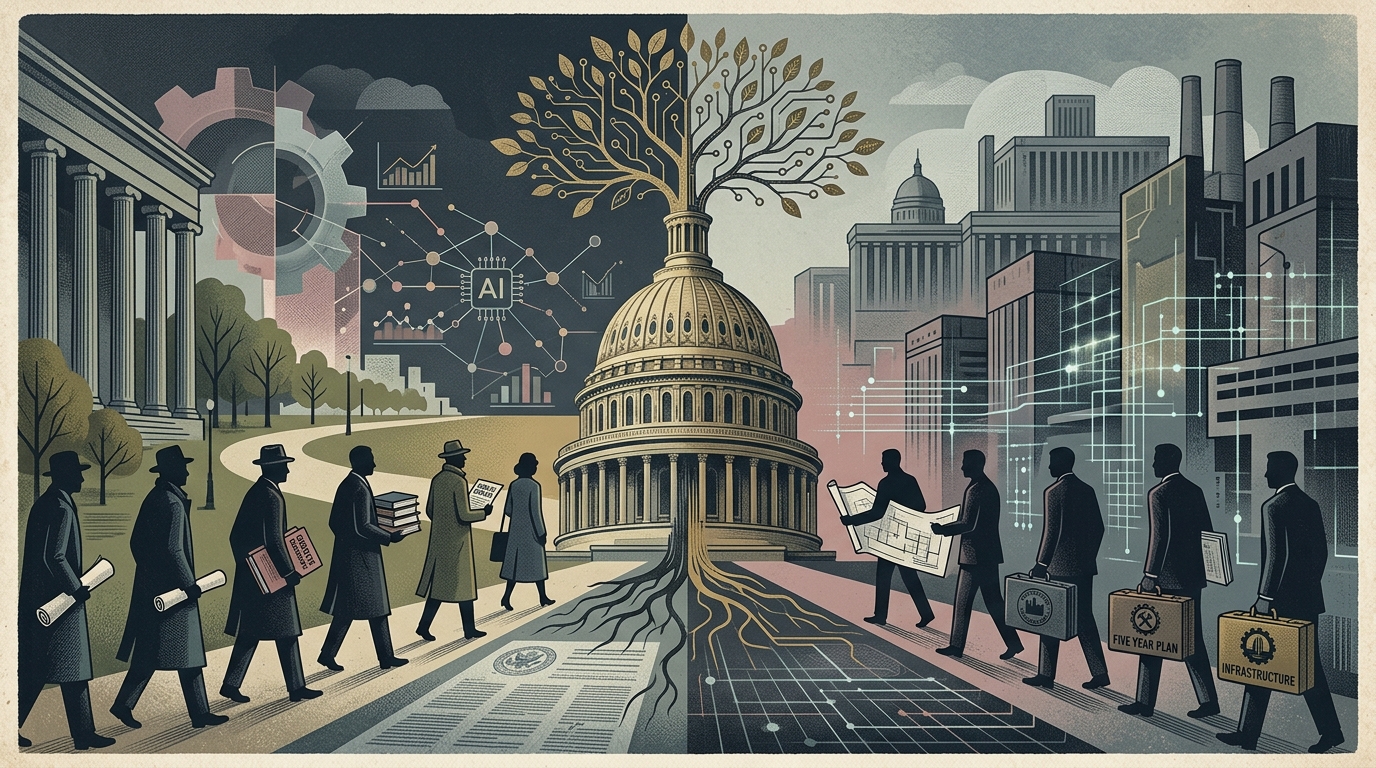
The banking industry, long a bastion of traditional career progression and high-intensity cognitive labor, is currently facing an existential crisis. Recent statements from top executives at global giants like JPMorgan Chase and Goldman Sachs leave little room for misinterpretation: Artificial Intelligence (AI) is no longer just a productivity tool, but a catalyst redefining the very "value" of the employee. The rhetoric regarding "lower-value human capital" is not merely an economic assessment; it is a harbinger of the upcoming restructuring of the global economy.
The Erosion of Entry-Level Roles
For decades, the financial services sector relied on an army of junior analysts who dedicated countless hours to data collection, spreadsheet modeling, and pitch deck creation. This "apprenticeship" was considered an essential stage in shaping the industry's future leaders. However, the advent of Generative AI is rendering these skills obsolete. When an algorithm can synthesize a report in seconds, the market value of an entry-level employee—once billed at high rates to clients—plummets.
The issue is not just quantitative (fewer jobs) but qualitative. If foundational tasks are automated, how will young professionals acquire the necessary experience to later assume roles requiring nuanced judgment and strategic thinking? Banks seem to be favoring a model where "value" shifts from execution to oversight, yet this leaves a massive gap in the professional developmental chain.
The Economic Logic of Devaluation
From a purely fiscal perspective, the shift is logical. Financial institutions operate on margins, and labor is often the largest variable cost. By integrating AI, banks can achieve a level of scalability that was previously impossible. However, this cold economic logic ignores the social externalities. When leaders speak of "lower value," they are effectively signaling a downward pressure on wages and a shift in power dynamics between capital and labor.
- Automation of back-office processes significantly reduces operational overhead.
- AI-driven credit risk assessment changes the banker's role from decision-maker to intermediary.
- The drive for ROI accelerates the replacement of human interaction with sophisticated chatbots.
The Paradox of Expertise
There is, however, a risk that bankers often overlook in their enthusiastic presentations to shareholders: the loss of "institutional memory." If the next generation of executives has not spent time in the "trenches" of data analysis, their ability to spot algorithmic errors or understand market nuances will be severely compromised. The "lower value" assigned to humans today could very well translate into "higher systemic risk" tomorrow.
"Technology is not just replacing labor; it is replacing the learning process. If we are not careful, we will create a generation of executives who know how to press buttons but don't understand the underlying mechanics."
In conclusion, the anxiety felt by employees is entirely justified. This is not a simple technological upgrade; it is a fundamental shift in the social contract of work. The challenge for the future is not merely the adoption of AI, but ensuring that human judgment, ethics, and creativity remain central, despite the mounting pressures for short-term profitability and cost reduction. The industry must decide whether it wants a workforce of compliant operators or a cadre of critical thinkers.