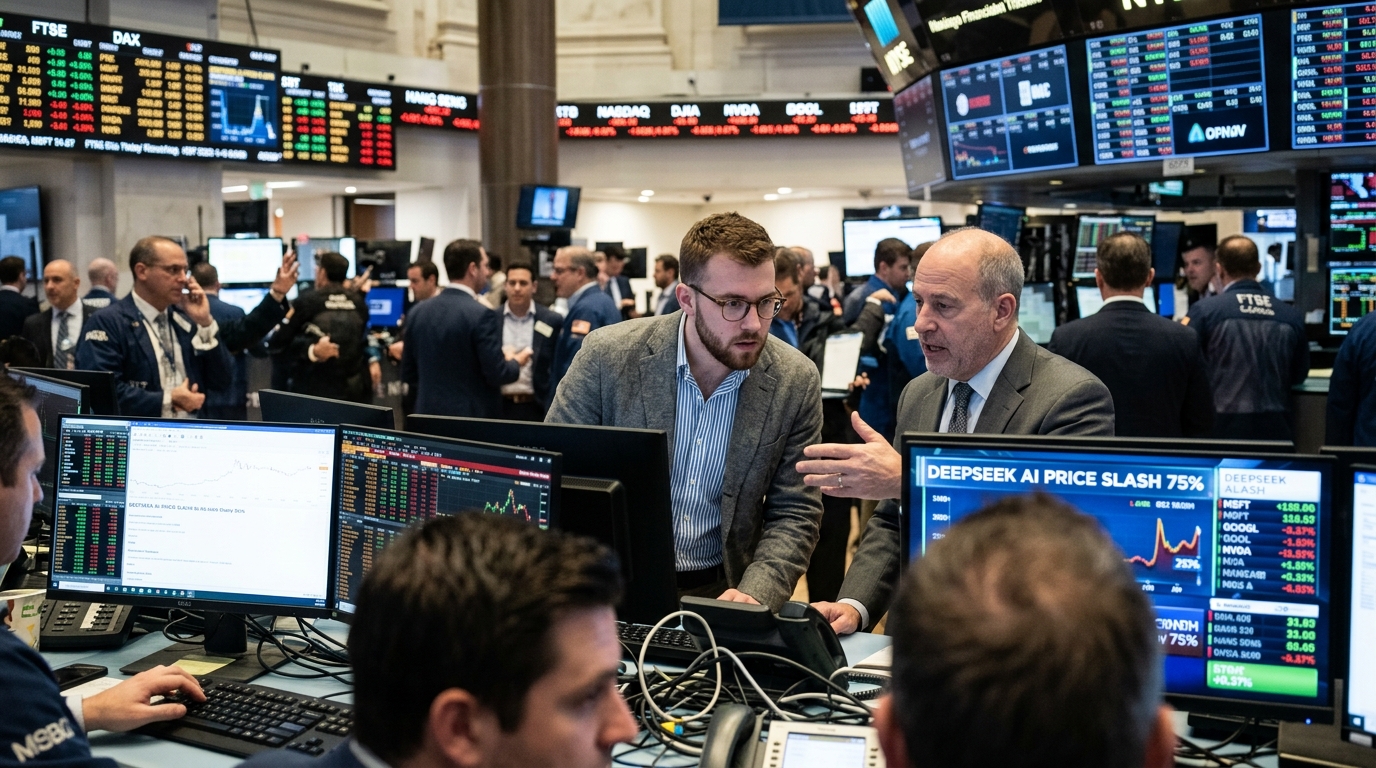
In a move that analysts are calling the "beginning of the end" for high margins in the Artificial Intelligence sector, Chinese AI firm DeepSeek has announced a drastic price cut for its models, reaching as high as 75%. This move is not merely a commercial promotion but a strategic assault on the heart of Silicon Valley, overturning the economic assumptions surrounding access to advanced Large Language Models (LLMs).
The Architecture of Efficiency
DeepSeek did not achieve these price reductions through subsidies alone, but through a radical overhaul of how AI models are trained and operated. Utilizing the Mixture-of-Experts (MoE) architecture and innovations such as Multi-head Latent Attention (MLA), the company has managed to slash computational overhead without sacrificing performance. The DeepSeek-V3 model, which directly competes with OpenAI’s GPT-4o, is now offered at a fraction of the cost, making high-end AI accessible to startups that previously found API expenses prohibitive.
DeepSeek’s efficiency is particularly notable given the restrictions China faces in accessing advanced semiconductors, such as Nvidia’s H100s. Rather than relying on raw compute power, DeepSeek invested in mathematical optimization, proving that software ingenuity can sometimes bypass hardware constraints. This lean approach to AI development is setting a new benchmark for the industry.
A Global Price War
The market reaction has been immediate. Western competitors are now under immense pressure to justify their premium pricing. While OpenAI and Anthropic focus on providing integrated ecosystems and brand reliability, DeepSeek is operating with a "commodity" logic—turning artificial intelligence into a utility like electricity or water, where price is the primary differentiator.
- Inference Costs: The 75% reduction makes DeepSeek-V3 the most cost-effective model in its class globally.
- Accessibility: New enterprises can now integrate AI at scale without exhausting their venture capital on tokens.
- Open Weights: By releasing the weights of their models, DeepSeek is empowering the open-source community against closed-wall systems.
This development creates a significant dilemma for Silicon Valley investors. If the price of intelligence trends toward zero, how will the billions of dollars invested in model training be recouped? DeepSeek’s strategy appears aimed at destabilizing the business models of its American rivals, forcing them into a "race to the bottom" regarding profit margins.
Geopolitical Implications
Beyond economics, DeepSeek’s move has profound political implications. China is demonstrating that it can lead in AI innovation despite US-led sanctions. The ability to produce world-class models at a lower cost is a powerful asset in digital diplomacy, as emerging economies may increasingly turn to Chinese solutions for their digital transformation needs.
"DeepSeek isn't just selling code; it's selling a new economic reality where AI dominance no longer requires the deep pockets of a Microsoft-sized entity," noted a senior market analyst.
In conclusion, DeepSeek’s drastic price cuts signal the transition of AI from an era of experimentation to an era of industrial scale. Competition will no longer be judged solely by who has the smartest model, but by who can deliver that intelligence at the lowest possible cost. The AI landscape has been permanently altered, and the incumbents must now adapt or face obsolescence in a world of commoditized intelligence.