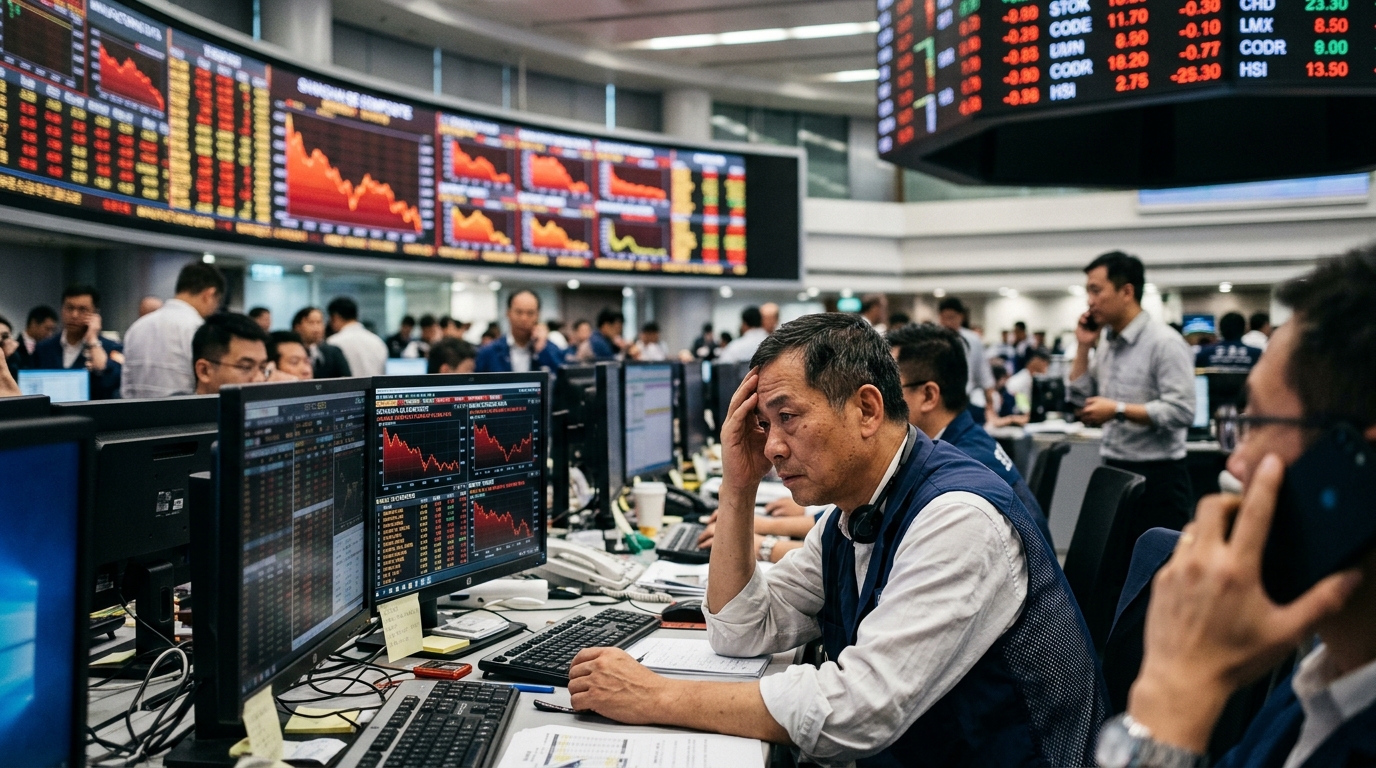
The image of China as the unstoppable engine of global growth is taking another hit. Official data for the Purchasing Managers' Index (PMI) released in late May 2026 reveals a worrying contraction in manufacturing activity, highlighting the deep structural challenges facing the world's second-largest economy. Despite Beijing's efforts to boost domestic consumption and promote 'smart manufacturing,' the reality in the factories of Shenzhen and Shanghai remains grim.
The Trap of Low Demand and Energy Costs
The dip in PMI below the critical 50-point threshold — which separates expansion from contraction — was not a bolt from the blue. Analysts point to a combination of factors that have created a 'perfect storm.' First, the ongoing instability in the Middle East has spiked raw material and energy costs, disproportionately burdening Chinese industries that rely on oil and gas imports. Second, major Western economies, facing their own inflationary pressures, have reduced orders for Chinese consumer goods.
Furthermore, the Golden Week holiday in May, while traditionally boosting tourism, appeared to disrupt supply chains more than expected this year. Labor shortages in specialized sectors, despite high youth unemployment, suggest a skills mismatch that the Chinese government is struggling to bridge.
Artificial Intelligence: Lifeline or Threat?
Amidst this economic slowdown, Beijing is betting everything on Artificial Intelligence and automation. The 'Made in China 2025' strategy, which has now evolved into a more aggressive plan for AI dominance by 2030, aims to replace an expensive and aging workforce with robotic systems. However, this transition is not without cost. The rapid automation of factories is creating social friction, as millions of unskilled workers find themselves marginalized, fueling the 'lying flat' (tang ping) phenomenon — a silent protest by youth against the exhausting demands of the modern labor market.
"China is not just facing a cyclical downturn, but an existential crisis of its growth model," says Dr. Li Wei, an economist at Peking University. "The old model of cheap exports is dead. The new high-tech model is not yet mature enough to carry the weight of the economy."
The Ghost of Real Estate and Shadow Banking
One cannot analyze the industrial decline without mentioning the real estate crisis. The construction sector, which once accounted for 25% of China's GDP, remains paralyzed. A lack of consumer confidence, as people see their property values evaporate, leads to a drastic reduction in domestic demand for manufactured goods, from household appliances to cars. Local governments, over-indebted from years of reckless infrastructure spending, no longer have the funds to subsidize local industries, creating a liquidity vacuum that threatens the stability of the financial system.
Conclusion: What Does This Mean for the World?
China's slowdown is not just an internal problem. For multinational companies relying on Chinese production, the risks are now visible. The shift toward 'friend-shoring' — moving production to Western-friendly countries like Vietnam, India, and Mexico — is accelerating. However, full decoupling from China remains a chimera, given the unique scale and efficiency of the Chinese ecosystem. The question for the remainder of 2026 is whether Beijing will opt for a bold fiscal stimulus or allow the economy to adjust to a 'new normal' of lower growth, with all that implies for the global geopolitical balance.