The announcement of BMW's financial results for the first quarter of 2024 was not merely a presentation of figures, but a reflection of the profound transformation and challenges facing European heavy industry. The decline in the EBIT (earnings before interest and taxes) margin in the automotive segment to 5%, down from 6.9% in the same period last year, serves as a loud warning signal. In an era where the transition to electromobility requires massive investments, shrinking profitability limits the Bavarian company's room for maneuver.
The 'China Syndrome' and the Loss of Dominance
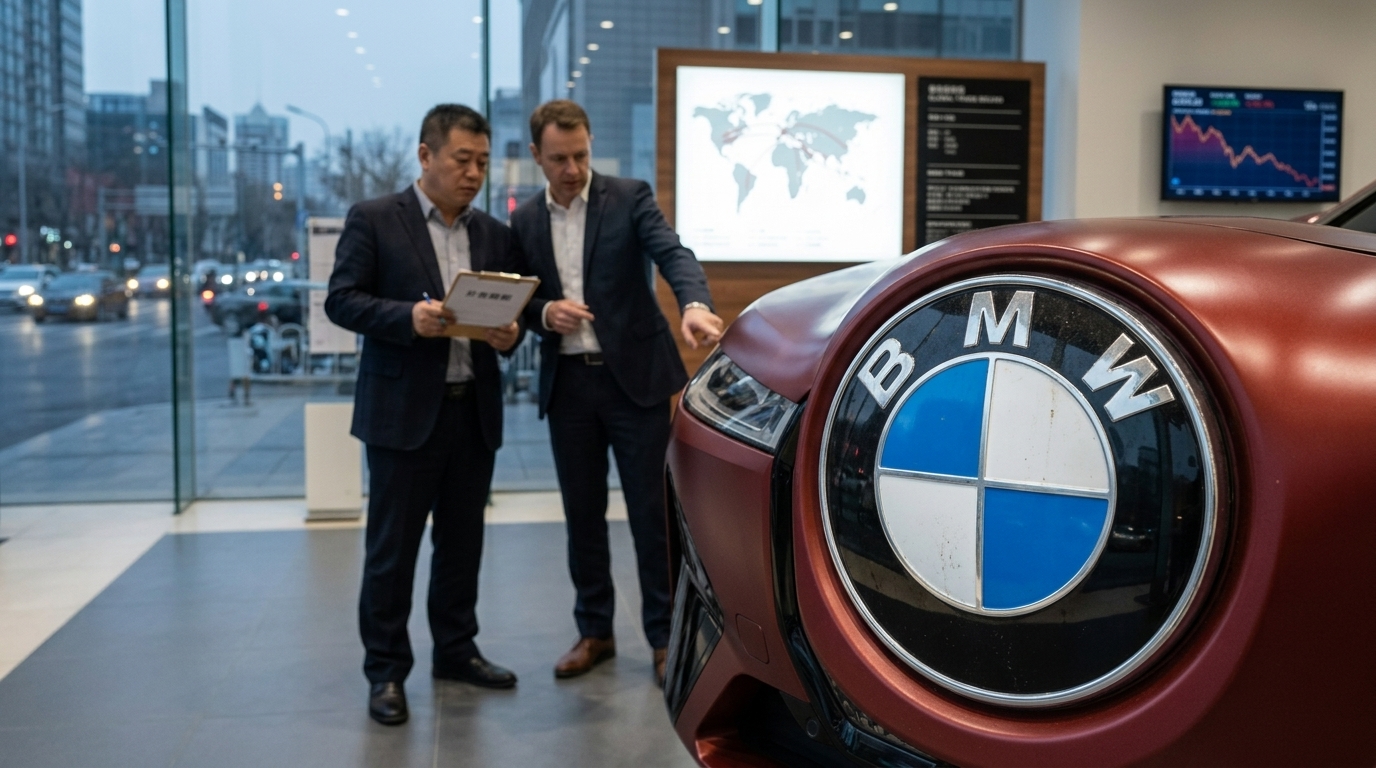
For decades, China was the 'goose that laid the golden eggs' for BMW and other German luxury carmakers. However, the landscape has changed dramatically. Chinese manufacturers like BYD, NIO, and Xiaomi are no longer producing cheap copies, but technologically advanced electric vehicles (EVs) that offer digital experiences European brands struggle to match. BMW faces a dual competitive threat: on one hand, Tesla's aggressive price cuts, and on the other, Chinese firms dominating their home market with state subsidies and vertically integrated battery production.
The slowdown in sales in China, which remains the world’s largest automotive market, directly impacts revenues. Chinese consumers, particularly younger generations, are no longer exclusively attracted by the prestige of a German badge. They seek advanced software, autonomous driving capabilities, and seamless integration into their smartphone ecosystems—areas where Chinese companies have invested billions.
The Tariff Trap and Geopolitical Protectionism
Escalating trade tensions between the European Union and China add another layer of uncertainty. Brussels’ decision to investigate imposing tariffs on Chinese electric cars, in response to unfair state subsidies, carries the risk of retaliation from Beijing. For BMW, this is a nightmare scenario. The company produces many of its models, such as the electric Mini and the iX3, on Chinese soil for global export. Any tariffs would make these models uncompetitive in Europe, while potential Chinese retaliatory tariffs on large-displacement German cars would hit the most profitable part of its lineup.
BMW’s 'Power of Choice' strategy—producing internal combustion, hybrid, and electric vehicles on the same assembly line—is being severely tested. While it offers flexibility, it also entails high fixed costs and prevents the full optimization offered by the pure-electric platforms of its competitors.
The Hope of the Neue Klasse and the Cost of Transition
BMW’s management is betting everything on the upcoming 'Neue Klasse,' the new generation of electric vehicles expected to launch in 2025. This platform promises 30% more range, 30% faster charging, and a 25% improvement in efficiency. However, the Research and Development (R&D) costs for this transition are staggering. The decline in profit margins indicates that the company is struggling to pass these costs onto consumers at a time when inflation and high interest rates are dampening purchasing power.
Furthermore, BMW must contend with rising raw material and energy costs in Europe. Germany’s deindustrialization, fueled by the energy crisis, makes domestic production less attractive compared to the US or Asia. If BMW fails to recover its profit margins, its ability to fund the digital and green transition will be seriously called into question.
Strategic Implications for the Future
The case of BMW is indicative of the entire European automotive industry. The era of easy profitability through internal combustion engines is ending. Competition from the East is no longer a distant threat but a daily reality on the streets of Munich and Paris. BMW must balance the tradition of driving pleasure with the need for digital sovereignty in an environment that is becoming increasingly protectionist and hostile to free trade.