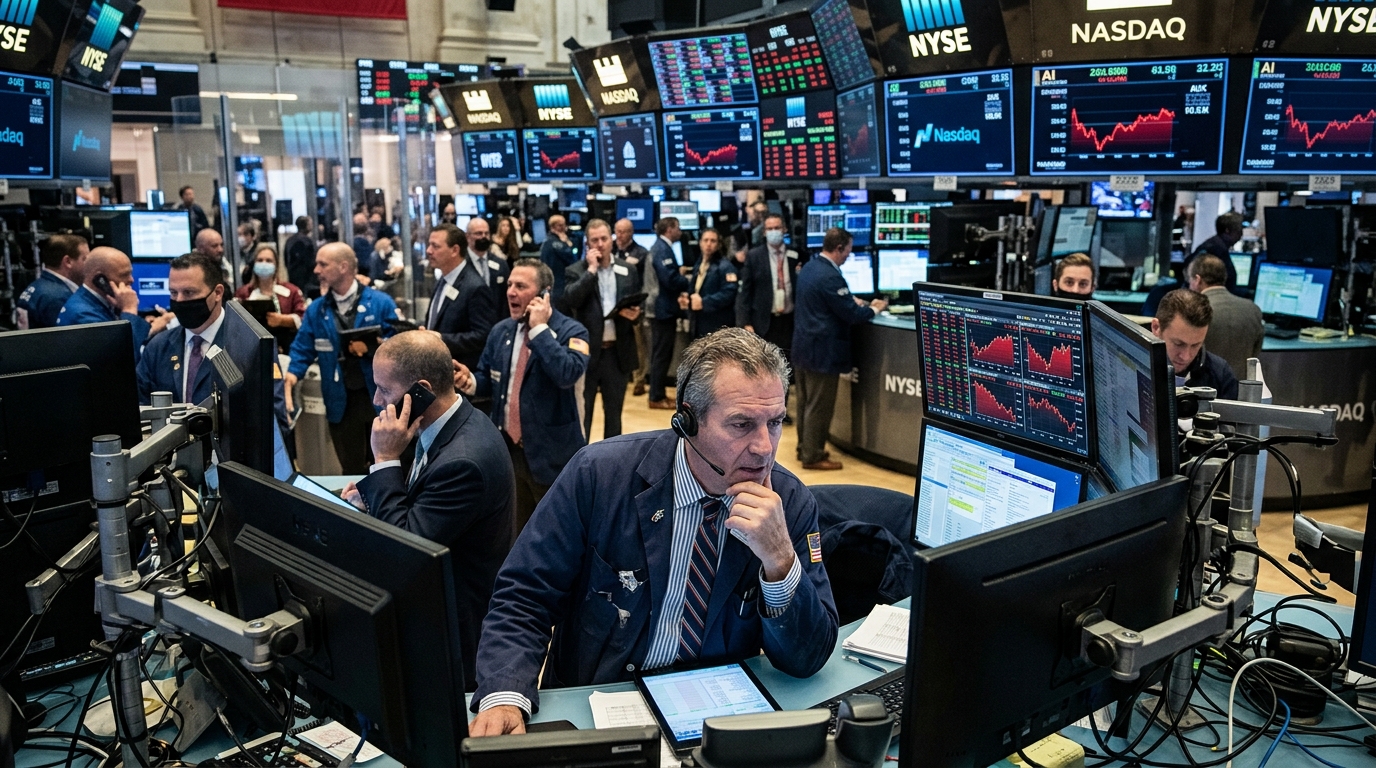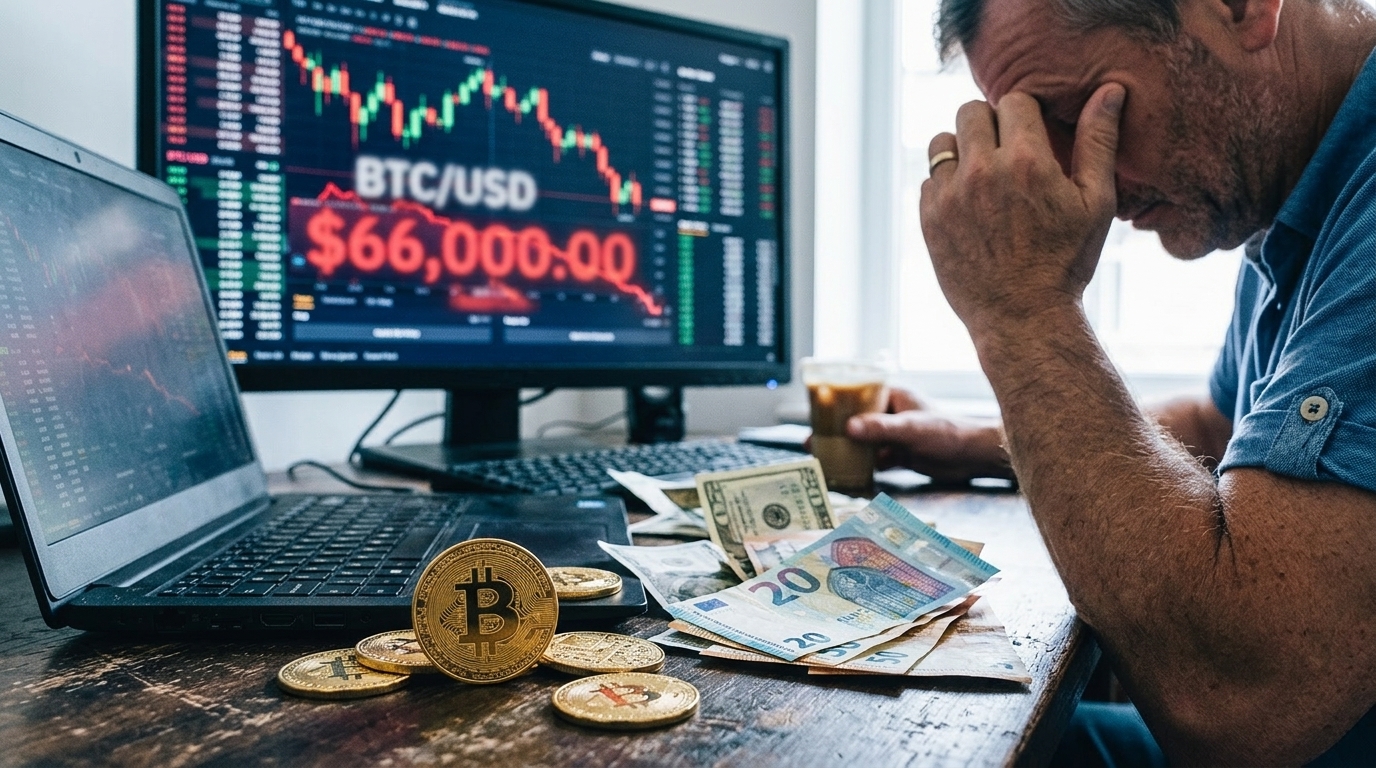
The cryptocurrency market is navigating one of its most volatile stretches of 2026, with Bitcoin (BTC) sliding below the psychological threshold of $66,000. This recent downturn, representing a 12% decline in just seven days, is more than a mere technical correction; it signals a profound structural shift in how investors manage risk. While the "digital gold" temporarily loses its luster, the "digital dollar"—in the form of stablecoins like USDC and USDT—is emerging as the undisputed sovereign of liquidity.
Anatomy of a Slump: Why is Bitcoin Retreating?
The recent tumble to $66,000 was triggered by a confluence of macroeconomic pressures and internal market realignments. Analysts point out that uncertainty surrounding the Federal Reserve's next moves on interest rates has dampened the appetite for high-risk assets. Despite lingering hopes for monetary easing, stubborn inflation in specific sectors of the U.S. economy is forcing investors to reassess their portfolios.
Furthermore, a massive liquidation of leveraged positions across major exchanges has exacerbated the slide. As the price began to drift from its recent highs of $75,000, automated sell orders were triggered, creating a snowball effect. Crucially, the liquidity exiting Bitcoin did not necessarily flee the digital asset ecosystem; instead, it migrated into stablecoins, accelerating the pivot toward digital dollars.
The Ascent of Stablecoins and Digital Dollar Hegemony
The most compelling aspect of the current market stress is the resilience and growing dominance of stablecoins. As Bitcoin retreats, the market capitalization of digital dollars is on the rise, suggesting that investors are seeking safety without exiting back into the traditional banking system. This "dollarization" of the crypto sphere reinforces the reality that the U.S. dollar remains the global reserve currency, even within the decentralized economy.
- Liquidity and Speed: Stablecoins allow investors to lock in profits or mitigate losses within seconds, bypassing the friction and delays of traditional wire transfers.
- Institutional Adoption: Major investment banks are now utilizing digital dollars for cross-border settlements, providing a level of legitimacy that Bitcoin still struggles to achieve fully.
- Regulatory Clarity: The implementation of MiCA in Europe and new guidelines in the U.S. have made stablecoins more transparent, attracting conservative capital that previously sat on the sidelines.
The Geopolitical Dimension and Central Banks
The shift toward digital dollars does not occur in a vacuum. Central banks worldwide, including the ECB and the Fed, are accelerating trials for their own Central Bank Digital Currencies (CBDCs). Bitcoin's drop to $66,000 provides regulators with ammunition to argue that unpegged cryptocurrencies are far too volatile to serve as a reliable medium of exchange or store of value for the general public.
"Bitcoin's volatility is its greatest asset for speculators, but its most significant hurdle for universal adoption," notes a leading market strategist.
In this environment, the digital dollar acts as a bridge between the legacy financial system and the new digital frontier. Its dominance ensures that, despite the rise of blockchain technology, geopolitical power remains firmly anchored to the American currency.
The Future: A Correction or a Paradigm Shift?
Is Bitcoin at $66,000 a buying opportunity or the beginning of a prolonged bear phase? History has shown that BTC tends to recover after such corrections, particularly as supply constraints remain a factor. However, the current dynamics suggest a maturing market. Investors are no longer buying blindly; they are seeking utility, stability, and regulatory compliance.
The acceleration of the pivot toward digital dollars suggests that the future of the digital economy may not be as "decentralized" as Bitcoin's early pioneers envisioned. Instead, a hybrid system is forming where Bitcoin functions as digital gold—a high-risk store of value—while the digital dollar serves as the primary medium of exchange. For the global economy, this evolution underscores the enduring strength of the dollar, reimagined for the age of the blockchain.