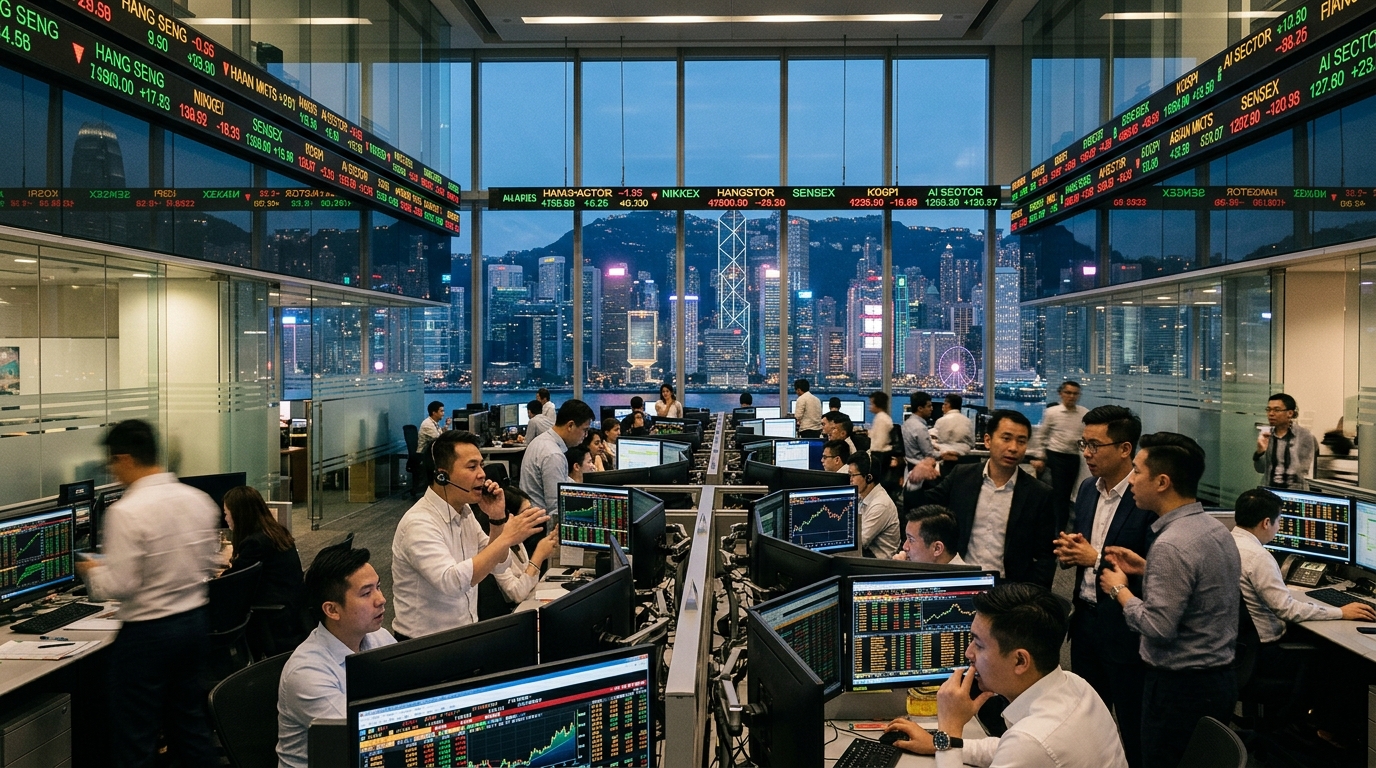
As the sun rises on May 7, 2026, Asian markets find themselves in a state that many analysts are calling a "digital gold rush." The report from Reuters regarding the relentless surge of AI-related stocks in Asia is not just a financial headline; it is the confirmation of a structural shift in the global economic center of gravity. From Taiwan and South Korea to Japan, the demand for AI infrastructure has created a virtuous investment cycle that seems to ignore traditional indicators of a slowdown.
The Bastions of Semiconductors: Taiwan and South Korea
At the heart of this frenzy lies the undisputed dominance of TSMC (Taiwan Semiconductor Manufacturing Company). The company, which has become the "guardian angel" of global technology, has seen its market capitalization soar to dizzying heights. Demand for 2nm and 3nm chips, essential for training Large Language Models (LLMs), far outstrips supply. Taiwan is no longer just exporting products; it is exporting the very computational power upon which the future of humanity is being built.
Meanwhile, in South Korea, SK Hynix and Samsung Electronics are fighting their own battle for dominance in High Bandwidth Memory (HBM). HBM is the "secret ingredient" that allows Nvidia’s processors to operate at the speeds required by modern AI. Investors are flocking to Seoul, recognizing that without Korean memory technology, the AI revolution would stall. The rise of these stocks is no longer speculative; it is based on orders already paid for over the next two years.
The Japanese Renaissance and SoftBank’s Role
Perhaps the most intriguing aspect of this surge is Japan’s return to the spotlight. After decades of stagnation, Tokyo is emerging as a central player in AI. SoftBank, led by visionary Masayoshi Son, has transformed into an investment engine aimed exclusively at Artificial General Intelligence (AGI). Arm, the British chip design firm owned by SoftBank, is the "crown jewel," with its architecture being adopted en masse in data centers across Asia.
The Japanese government, recognizing this historic opportunity, is heavily subsidizing domestic semiconductor production through Rapidus, a consortium aiming to compete with TSMC. This blend of state intervention and private capital has created an atmosphere of euphoria on the Tokyo Stock Exchange, with the Nikkei index breaking one record after another.
Geopolitics and the "Silicon Shield"
However, this economic boom is taking place in a minefield of geopolitical tensions. The US-China competition for technological supremacy puts Asian nations in a difficult position. While Washington pushes for stricter export controls to China, Asian giants are trying to maintain access to the vast Chinese market. "Chip diplomacy" is now just as important as traditional diplomacy.
- The US is strengthening alliances with Japan and the Netherlands to limit lithography equipment exports.
- China is responding with massive investments in domestic production of legacy chips.
- Southeast Asia (Vietnam, Malaysia) is emerging as an alternative hub for assembly and testing.
The West's dependence on the Asian supply chain is such that many analysts speak of the "Silicon Shield." This theory suggests that the global need for Taiwan’s chips is so critical that it acts as a deterrent against any military conflict in the region.
Conclusion: Bubble or New Era?
The question looming over the stock exchanges of Hong Kong and Singapore is whether we are facing a bubble similar to the dot-com era. The difference, however, lies in profitability. Unlike in 2000, today’s AI protagonists in Asia are showing real, massive profits and cash flows. AI is not a promise for the future; it is the fuel of today’s industrial production. Asia is not just following developments; it is dictating them, turning the "frenzy" into a new, stable reality for the global economy.