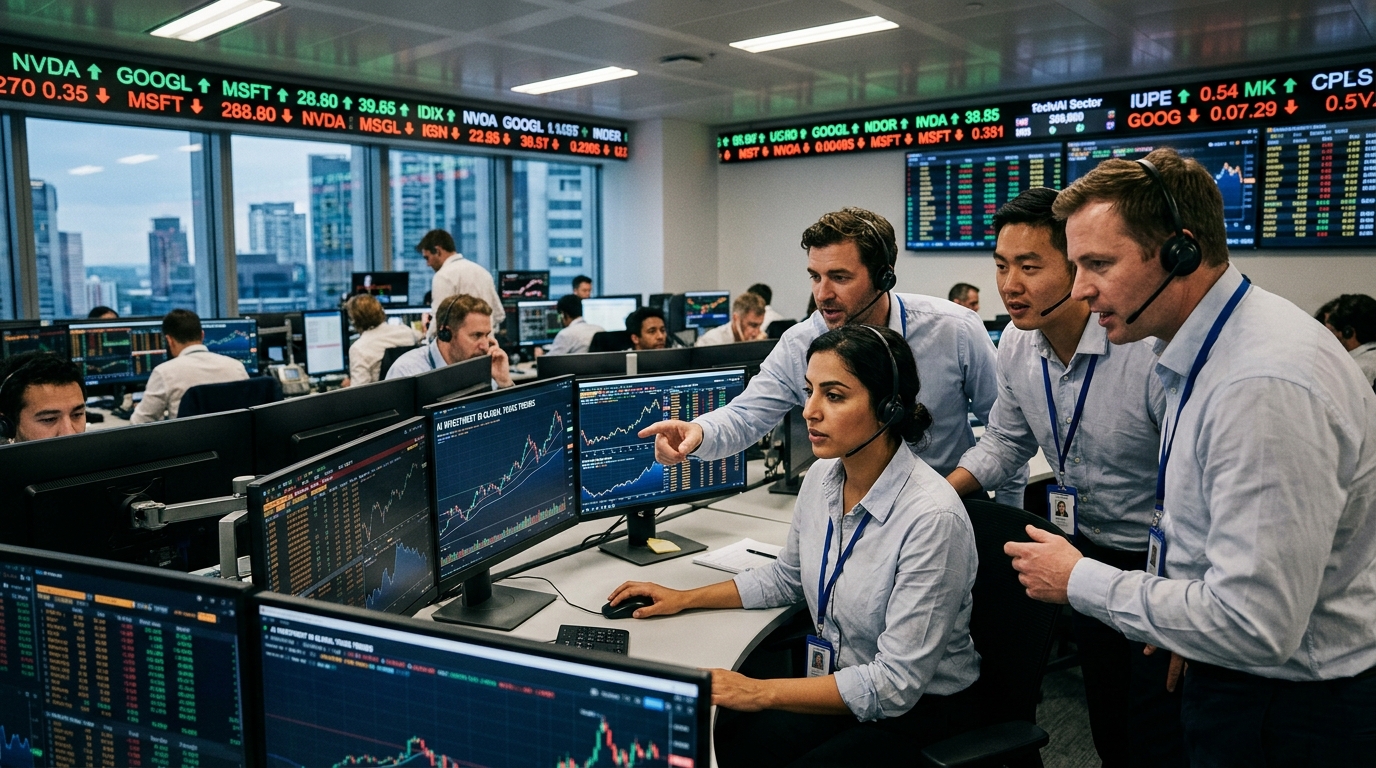
The 2026 stock market is defined by a peculiar form of schizophrenia: on one hand, there is an insatiable thirst for AI innovation; on the other, a punitive reaction toward companies that don’t deliver immediate, explosive returns on their massive infrastructure investments. The recent dip in Alphabet’s (Google’s parent company) stock following its Q1 2026 earnings report is a textbook example of this trend. While the company beat expectations on both revenue and earnings per share, the market recoiled at the surge in capital expenditures (CAPEX) dedicated to AI infrastructure.
The Expectation Trap vs. Infrastructure Reality
For the seasoned investor, such corrections are not a red flag but a strategic entry point. Alphabet isn't just investing in "fancy" chatbots; it is constructing the nervous system of the global economy for the next decade. The development of its proprietary chips (TPU v6), the expansion of data centers across Europe and Southeast Asia, and the full integration of the Gemini model across the Google ecosystem—from Search to YouTube—create a competitive moat that rivals find increasingly impossible to bridge.
The primary bear case rests on the idea that the cost-per-query is rising due to AI processing requirements. However, Alphabet has already demonstrated an ability to optimize model efficiency at rates that outpace analyst projections. The shift from classic Search to the Search Generative Experience (SGE) is not a threat; it is the single largest monetization opportunity in the company’s history, enabling hyper-targeted and intent-driven advertising.
Cloud Growth and Data Sovereignty
Where Alphabet truly shines in 2026 is Google Cloud. Growing at an annualized rate of over 25%, the Cloud division is no longer a distant third to AWS and Azure. It has become the destination of choice for enterprises looking to train custom AI models using Google’s specialized toolsets. Access to vast data moats via YouTube and Google Maps provides the company with an advantage no other tech titan possesses: the ability to train models on real-world, multimodal data in real-time.
- Valuation multiples remain attractive relative to Big Tech peers.
- A massive $70 billion share buyback program signals management's confidence.
- AI integration in Google Workspace is driving higher ARPU (Average Revenue Per User).
"Artificial Intelligence is not a product; it is a new architecture for information itself," Sundar Pichai recently noted, and Alphabet is the lead architect of this era.
Conclusion: The Long-Term Vision
The post-earnings sell-off is noise generated by short-term trading algorithms and reactionary sentiment. For investors who understand that AI is a marathon rather than a 100-meter sprint, Alphabet offers a rare combination of safety and explosive upside. The current valuation does not fully account for the latent value of the Gemini ecosystem or the company's dominance in the next generation of digital advertising. Ultimately, those who control the flow of information will control the AI economy.