Alibaba Group Holding, the giant that once symbolized the unstoppable rise of Chinese technological prowess, finds itself at a critical crossroads. After years of regulatory scrutiny from Beijing and the emergence of aggressive competitors like PDD Holdings (Temu), the company is fundamentally reshaping its strategy. At the heart of this new era are two pillars: the aggressive integration of Artificial Intelligence (AI) and global expansion through iconic sporting events, most recently highlighted by its landmark deal with UEFA.
Artificial Intelligence as a Growth Catalyst
For Alibaba, Artificial Intelligence is not merely an add-on; it is the new core of its ecosystem. The company’s Cloud Intelligence Group is leading this charge, developing the "Tongyi Qianwen" large language model (LLM). Alibaba’s strategy diverges from its American counterparts by focusing on providing affordable AI infrastructure for Chinese enterprises, aiming to make Alibaba Cloud the "operating system" of China’s new digital economy.
The integration of AI into e-commerce (Taobao and Tmall) aims to personalize the user experience to an unprecedented degree. From smart shopping assistants to automated content creation for merchants, Alibaba is betting on AI to reclaim the market share it lost to platforms like Douyin (TikTok). Real-time data analysis allows the company to predict consumer trends before they fully manifest, providing a significant advantage in supply chain management.
The European Expansion and the UEFA Euro 2024 Deal
The recent partnership of Alibaba, through AliExpress and Alipay, with UEFA for Euro 2024 represents a masterstroke of "soft power" and economic penetration into Europe. In an era where Chinese firms face skepticism in the West, Alibaba is utilizing football as the vehicle to win the trust of European consumers. The sponsorship is not just about advertising; it is a demonstration of technological superiority. Alipay+ is being used to facilitate seamless payments across stadiums, connecting various digital wallets from around the globe.
This internationalization is vital. With the domestic Chinese market showing signs of saturation and the Chinese economy recovering at a sluggish pace, Europe offers an opportunity for higher profit margins. AliExpress is investing billions in logistics (via Cainiao) to ensure five-day deliveries, directly challenging Amazon and Shein on European soil. The goal is to transform from a "cheap goods" portal to a reliable, high-tech retail infrastructure.
The Valuation Puzzle: Value Opportunity or Trap?
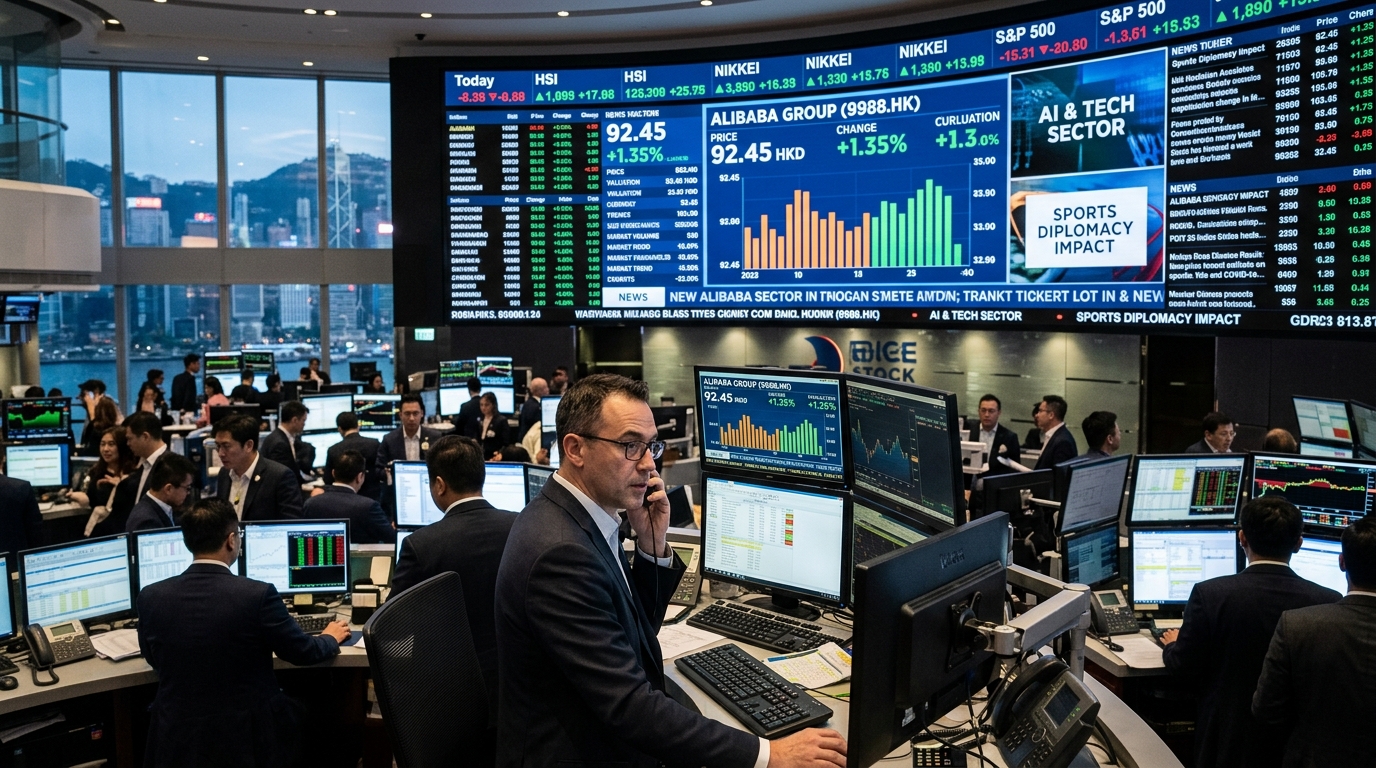
Despite these strategic moves, Alibaba’s stock trades at levels that many analysts consider provocatively low. With a price-to-earnings (P/E) ratio that often lags significantly behind US Big Tech peers, the market appears to be pricing in a substantial "geopolitical risk." Investors remain cautious due to the volatility in US-China relations and the potential for fresh interventions from Beijing.
However, the company’s financial health remains robust. Boasting massive cash reserves and an aggressive share buyback program, management is working hard to signal confidence to the markets. Simply Wall St notes that if Alibaba can successfully translate its AI leadership into consistent revenue growth in the Cloud sector, the current valuation could be viewed as a historic buying opportunity. The question remains: can a Chinese company ever be valued using the same metrics as an American one as long as geopolitical polarization persists?
- Alibaba is rebranding as an "AI-first" company to counter domestic competition.
- The UEFA Euro 2024 sponsorship is a key pillar for global brand recognition and trust.
- Alibaba Cloud remains the most significant driver for future profitability and margin expansion.
- Geopolitical risk remains the primary hurdle for a sustained re-rating of the stock.