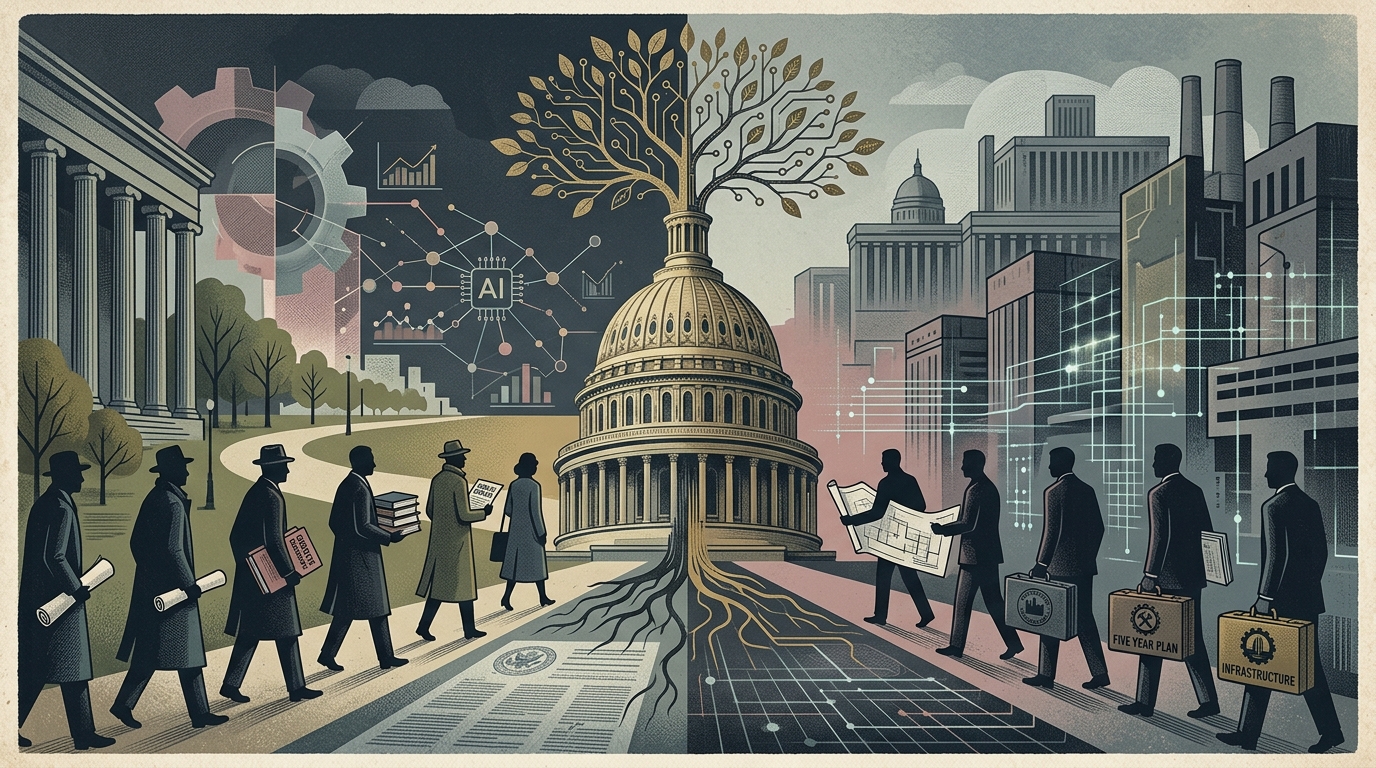
The era of easy growth for Chinese technology giants appears to be giving way to a period of intensive investment and strategic retrenchment. As we move through the first half of 2026, Alibaba Group and Tencent Holdings are grappling with a new reality: Artificial Intelligence (AI) is no longer just a promise for the future, but a costly present that is eating into their profits. According to recent market analysis and data from Futu Niuniu, the slowdown in earnings is the price they must pay to remain competitive on the global technological stage.
The Infrastructure Trap and the Cost of Silicon
The primary concern for analysts is capital expenditure (Capex). To train and deploy their Large Language Models (LLMs), such as Alibaba's Tongyi Qianwen and Tencent's Hunyuan, these companies require immense computational power. However, access to this power has become both prohibitively expensive and strategically complex. US export restrictions on advanced chips, such as Nvidia’s H100 and B200 series, have forced Chinese firms to pivot toward less efficient versions (like the H20) or domestic alternatives from Huawei. These domestic solutions often require larger clusters to achieve the same performance, driving up costs.
This creates a cycle of escalating expenses: companies must purchase more hardware to achieve parity with Western models, which in turn increases energy consumption, cooling requirements, and data center footprints. Alibaba, currently attempting to revitalize its Cloud Intelligence Group, is seeing its margins compressed as it offers aggressive discounts to attract AI clients while its underlying infrastructure costs skyrocket. Tencent, despite its stable revenue from gaming and advertising, is forced to commit billions to integrate AI across the WeChat ecosystem to prevent losing user engagement to ByteDance’s AI-driven platforms.
The Monetization Gap
The question haunting both Wall Street and Hong Kong investors is when these massive investments will yield a return. So far, AI monetization in China is taking a different path than in the US. While Microsoft and Google have successfully introduced subscription-based AI tools for productivity, Chinese companies face a domestic market that is historically reluctant to pay for software-as-a-service (SaaS).
Chinese enterprises often demand highly customized, on-premise AI solutions, which increases operational friction and costs for providers like Alibaba Cloud. Furthermore, a brutal domestic price war has broken out. With Baidu, Alibaba, and Tencent slashing their LLM API prices by as much as 90% to capture market share, profitability is being sacrificed for the sake of ecosystem dominance. This "scorched earth" strategy may eliminate smaller startups, but it also bruises the balance sheets of the victors.
Geopolitical Uncertainty and Regulatory Friction
Beyond the direct financial costs, Alibaba and Tencent operate within a volatile geopolitical landscape. The persistent threat of further sanctions from Washington means these companies must engage in "panic buying" of semiconductors, tying up vast amounts of capital that could otherwise be returned to shareholders through dividends or buybacks. Simultaneously, Beijing maintains a strict regulatory eye on AI-generated content, requiring companies to invest heavily in safety filters and compliance mechanisms to ensure output aligns with state guidelines.
In conclusion, the observed earnings slowdown is not necessarily a sign of terminal decline, but rather an inevitable phase of structural transformation. Alibaba and Tencent are betting their futures on AI, understanding that failing to lead in this domain would result in long-term irrelevance. However, for investors accustomed to high-growth narratives and fat margins, the next two years will be a test of patience as the "AI tax" continues to weigh on the bottom line. The race for intelligence is proving to be a marathon with an increasingly expensive entry fee.