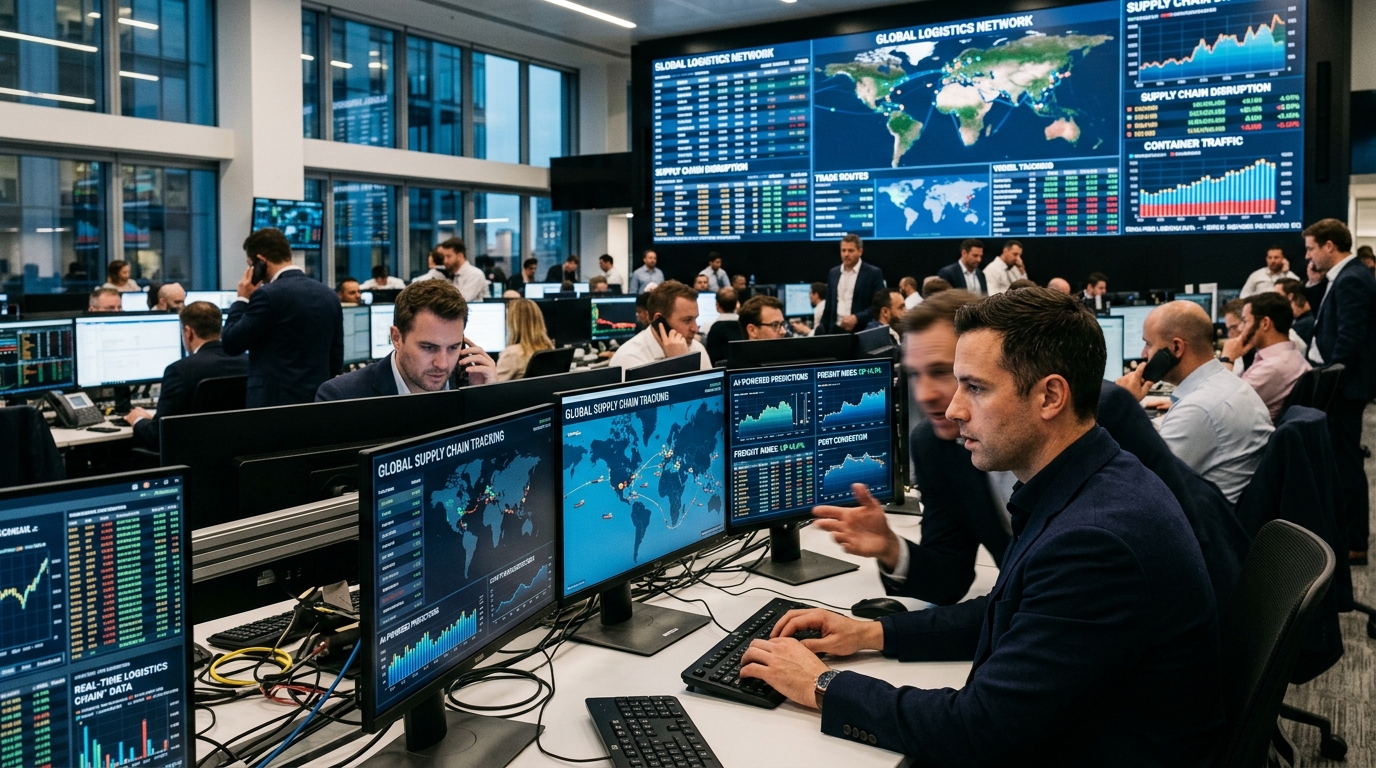
The global economy stands at the threshold of a new era, where the movement of goods is no longer solely dependent on ships and trucks, but on the invisible power of data. A recent report from Vietnam, an emerging giant in global manufacturing, highlights a critical shift: Artificial Intelligence (AI) is no longer an experimental tool but the backbone of the modern supply chain. In a world still reeling from geopolitical instabilities and the memories of pandemic-driven disruptions, AI offers the promise of ultimate predictability within an environment of inherent uncertainty.
The Predictive Revolution and the End of Uncertainty
For decades, the logistics industry relied on historical data and human intuition. This often led to the so-called "bullwhip effect," where small fluctuations in consumer demand caused massive distortions in factory inventories. Today, machine learning algorithms analyze billions of variables in real-time—from weather patterns and port strikes to social media trends—to predict demand with an accuracy reaching 95%.
In Vietnam, the adoption of these technologies is accelerating as the country seeks to upgrade its position in the global value chain. Local logistics firms are investing in AI systems that optimize shipping routes, reducing fuel consumption and carbon emissions. This is not just a financial necessity but a survival strategy in a market that now demands "green" supply chains.
Warehouse Automation: The Rise of Collaborative Robots
The image of the traditional warehouse with workers manually moving parcels is becoming a thing of the past. AI now guides fleets of Autonomous Mobile Robots (AMRs) that work seamlessly with the human workforce. These "cobots" do not simply replace humans; they take over the most dangerous and repetitive tasks, increasing productivity by up to 300%.
In Asia, and particularly in hubs like Hai Phong, smart warehouses use computer vision to identify defects in products before they are loaded, drastically reducing the cost of returns. The integration of the Internet of Things (IoT) allows every pallet to "speak" to the system, reporting on temperature, humidity, and its exact location, ensuring the quality of sensitive products such as electronic components and food.
Geopolitical Resilience and the 'China Plus One' Strategy
The rise of AI in logistics is inextricably linked to geopolitical realignment. As multinational corporations implement the "China Plus One" strategy to reduce their dependence on China, countries like Vietnam, India, and Mexico are becoming the new destinations. However, the infrastructure in these countries often lags behind. This is where AI steps in to bridge the gap.
Through "digital twins," companies can simulate entire supply chains in a virtual environment, testing crisis scenarios before they occur. This digital resilience allows businesses to shift production with greater flexibility, ensuring that a crisis in the Suez Canal or a trade dispute in the Pacific will not paralyze the global market. AI is transforming the supply chain from a rigid line into a dynamic, self-healing network.
The Social Challenge: The Future of Work
Despite the benefits, the rapid introduction of AI raises serious questions about the future of work. The logistics sector employs millions of people worldwide, many of whom are low-skilled. The transition requires a massive retraining program. Truck drivers must learn to manage autonomous driving systems, and warehouse workers must become operators of digital platforms.
The challenge for governments like Vietnam's is to ensure that technological progress does not lead to social marginalization. Investing in education and creating new jobs in the field of maintenance and programming of AI systems is the only way forward. Logistics in 2026 is no longer just about hands; it is about the mind and the ability to interact with the machine.