The frenzy that erupted with the arrival of ChatGPT and peaked over the last two years seems to be hitting a wall of economic reality. As we move through June 2026, the global market is entering a phase of "sobriety," where promises of a universal productivity revolution are being scrutinized by Chief Financial Officers (CFOs). The initial rush to adopt every new generative AI tool is giving way to rigorous cost-benefit analysis, with corporations drastically revising their budgets.
The Gap Between Expectations and Actual Performance
For nearly three years, major enterprises have poured billions of dollars into AI infrastructure, driven by the fear of being left behind in the global race. However, the reality is proving to be more nuanced. Despite the impressive capabilities of Large Language Models (LLMs), their integration into daily business workflows has yet to deliver the long-awaited exponential growth in profits. Instead, maintenance costs, the need for specialized talent, and exorbitant cloud service fees have created a financial "black hole" for many organizations.
Recent analyses suggest that many companies are finding AI functions more as a tool for marginal performance gains rather than an engine for radical transformation. This is leading to a strategic retreat: investments aren't stopping, but they are becoming far more targeted. The "AI-first" mantra is being replaced by "Value-first," as executives demand proof of return on investment (ROI) within months, not years.
Human Sacrifice at the Altar of GPUs
The most concerning phenomenon of this budgetary revision is the impact on the workforce. A paradoxical trend is emerging: while AI was supposed to liberate workers from repetitive tasks, in practice, it is being used as a justification for mass layoffs to free up capital for purchasing processing power and software licenses. Companies are not merely replacing humans with machines; they are firing humans to fund the machines that might eventually replace them.
- Mass layoffs in marketing and customer support departments.
- Work intensification for remaining staff, who are often tasked with "training" the systems meant to succeed them.
- Hiring freezes for junior positions, creating a generational gap in the labor market.
The pressure is also taking a toll on mental health. Employees are experiencing "AI anxiety"—profound insecurity regarding their career longevity—while simultaneously being pressured to show higher efficiency using tools that are often still experimental or prone to errors (hallucinations).
From Hype to Maturity: The Path Ahead
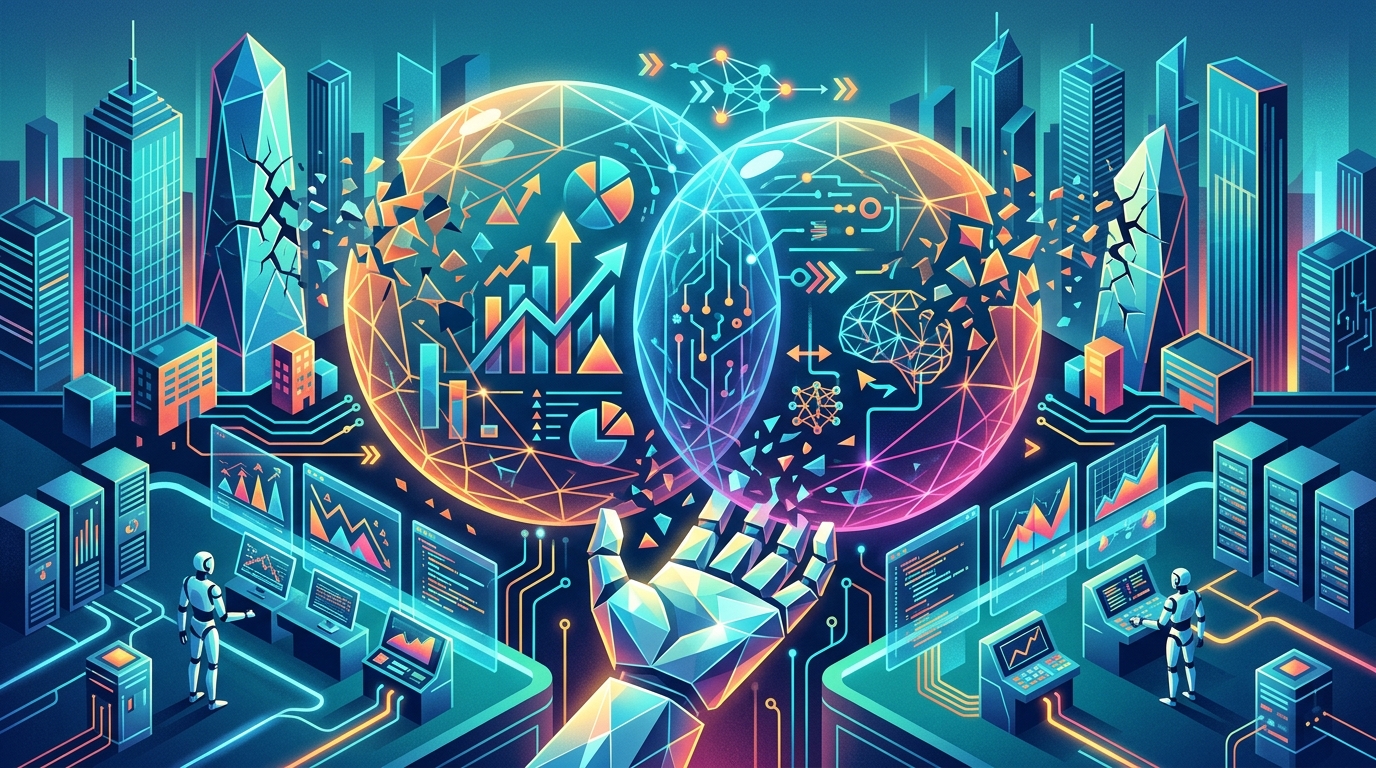
Despite the current turmoil, the cooling of the AI frenzy may prove beneficial in the long run. The market needs to purge the toxic elements of over-optimism and focus on solutions that solve real-world problems. This "correction" is a natural part of any technological cycle, similar to the dot-com bubble of the early 2000s.
"We are not witnessing the end of AI, but the end of naivety regarding it. Technology is the tool, not the destination," notes a leading market analyst.
The challenge for 2026 and 2027 will be balancing technological advancement with social sustainability. The companies that will survive and thrive will not be those that spent the most on GPUs, but those that managed to integrate technology with respect for human capital and a realistic understanding of the limits of machine intelligence. The focus must shift from artificial intelligence to augmented intelligence—where the machine supports rather than supplants the human element.