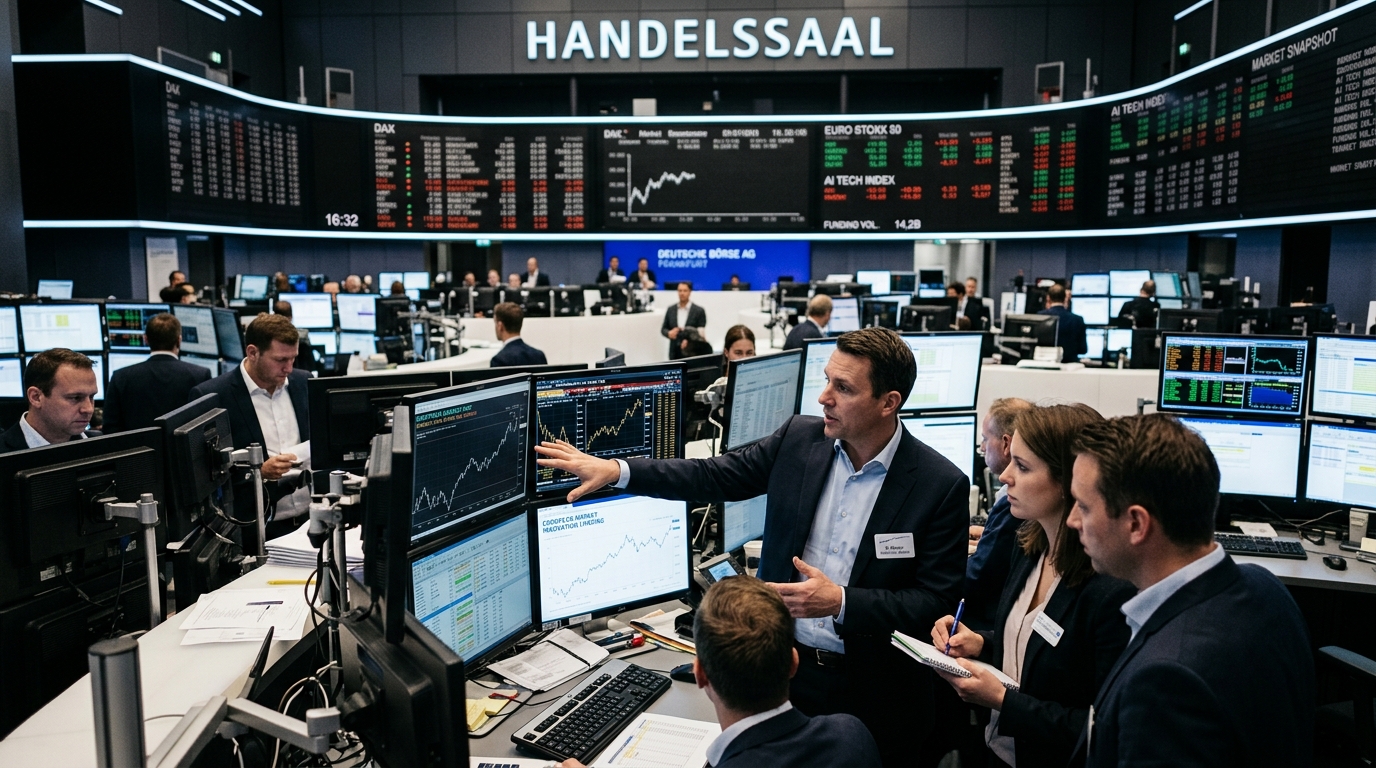
At a critical juncture for the future of the European tech landscape, the conversation surrounding Artificial Intelligence (AI) is shifting from the realm of ethics and rules to the field of hard finance. According to recent reports from Table.Briefings, the need for increased financial support for innovative companies developing cutting-edge technologies has never been more urgent. As we move through May 2026, the Old Continent is realizing that the AI Act, while regulatory pioneering, is not enough to nurture tomorrow's tech giants without the necessary capital injection.
The Pivot from Regulation to Investment
For years, the European Union focused on creating a "safe and human-centric" environment for AI. However, the numbers are stark: the investment gap between Silicon Valley and European tech hubs remains cavernous. The new initiative, emerging through the corridors of Brussels and Berlin, aims to create new financing tools that will allow medium-sized companies (scale-ups) to compete on equal terms.
It is no longer just about research grants. The new model includes tax breaks for venture capitalists (VCs), loan guarantees for computing power infrastructure, and the strengthening of the European Innovation Council (EIC). The goal is clear: to stop the "brain drain" and capital flight to the other side of the Atlantic, where access to working capital is traditionally easier.
Sovereign AI and Infrastructure
A central point of the new strategy is the concept of "Sovereign AI." Europe does not just want to use tools like ChatGPT or Gemini, but to develop its own Large Language Models (LLMs) based on European values and data. To achieve this, funding is now also being directed towards the construction of European data centers and the purchase of specialized processors (GPUs), reducing dependence on American infrastructure companies.
"Innovation without capital is just a theoretical exercise. If we want Europe to be a global player, we must learn to risk capital in the same way we risk ideas."
The above phrase, frequently heard in economic forums, reflects the change in mindset. Innovative companies in Europe often face the "valley of death" problem: they can start, but they struggle to scale up due to a lack of large funding rounds (Series C and above). The new measures aim precisely at this gap.
The Role of the Private Sector and Partnerships
State and European funding acts as a catalyst, but the real difference will come from the mobilization of private capital. Public-private partnerships (PPPs) are becoming the norm. Major European industries, from automotive to pharmaceuticals, are being called upon to invest in domestic AI startups, creating an ecosystem of interdependence that strengthens the local economy.
- Creation of specialized funds for AI startups with reduced bureaucratic burden.
- Access to supercomputers for small and medium-sized enterprises through European programs.
- Incentives for talent retention through stock options and favorable taxation.
In conclusion, the funding boost described in the Table.Briefings reports is not a simple financial injection, but a strategy for survival. In a world where artificial intelligence determines geopolitical power, Europe is called upon to prove it can combine democratic regulation with economic aggressiveness. The stakes are high, and the next two years will show whether the Old Continent can remain relevant in the digital age.