The first phase of the Artificial Intelligence (AI) revolution was defined by an unprecedented concentration of power. Massive GPU clusters in remote data centers, predominantly powered by Nvidia, undertook the titanic task of training Large Language Models (LLMs). However, as we move through 2026, the landscape is shifting radically. The industry is realizing that for AI to become truly useful, ubiquitous, and economically viable, it must descend from the cloud and reside within the devices we hold in our hands. This is the era of Edge AI.
The Necessity of Decentralization
Reliance on data centers presents three primary challenges: latency, cost, and privacy. When every query to a digital assistant must travel to a server thousands of miles away and back, the user experience suffers. Furthermore, the energy and financial cost of processing billions of requests in the cloud is unsustainable in the long run. Finally, sending sensitive personal data to external servers raises serious security concerns.
The solution lies in local processing. New smartphones, personal computers, and industrial machines are now being equipped with specialized Neural Processing Units (NPUs). This allows AI to run locally, providing instantaneous responses and protecting user data. In this new ecosystem, the dominant player is not necessarily the one manufacturing the most powerful graphics cards, but the one who owns the architecture upon which almost all low-power processors in the world are built.
Arm Holdings: The Toll Booth of the Digital Age
While Nvidia dominates model training, Arm Holdings is emerging as the ultimate winner of the AI inference phase on devices. The British company, majority-owned by SoftBank, does not manufacture semiconductors itself. Instead, it designs the architecture and instruction sets that companies like Apple, Qualcomm, and Samsung use to create their own processors.
Arm's business model is unique and highly profitable: it collects royalties for every chip sold globally that utilizes its technology. With the introduction of the Armv9 architecture, the company has effectively doubled its royalty rates, as this new version is optimized specifically for AI workloads. Analysts estimate that the transition to Edge AI will force the entire smartphone and PC market to upgrade to Armv9-based hardware, creating a massive revenue cycle that is only just beginning.
Why Edge AI is the Greatest Opportunity Since the Internet
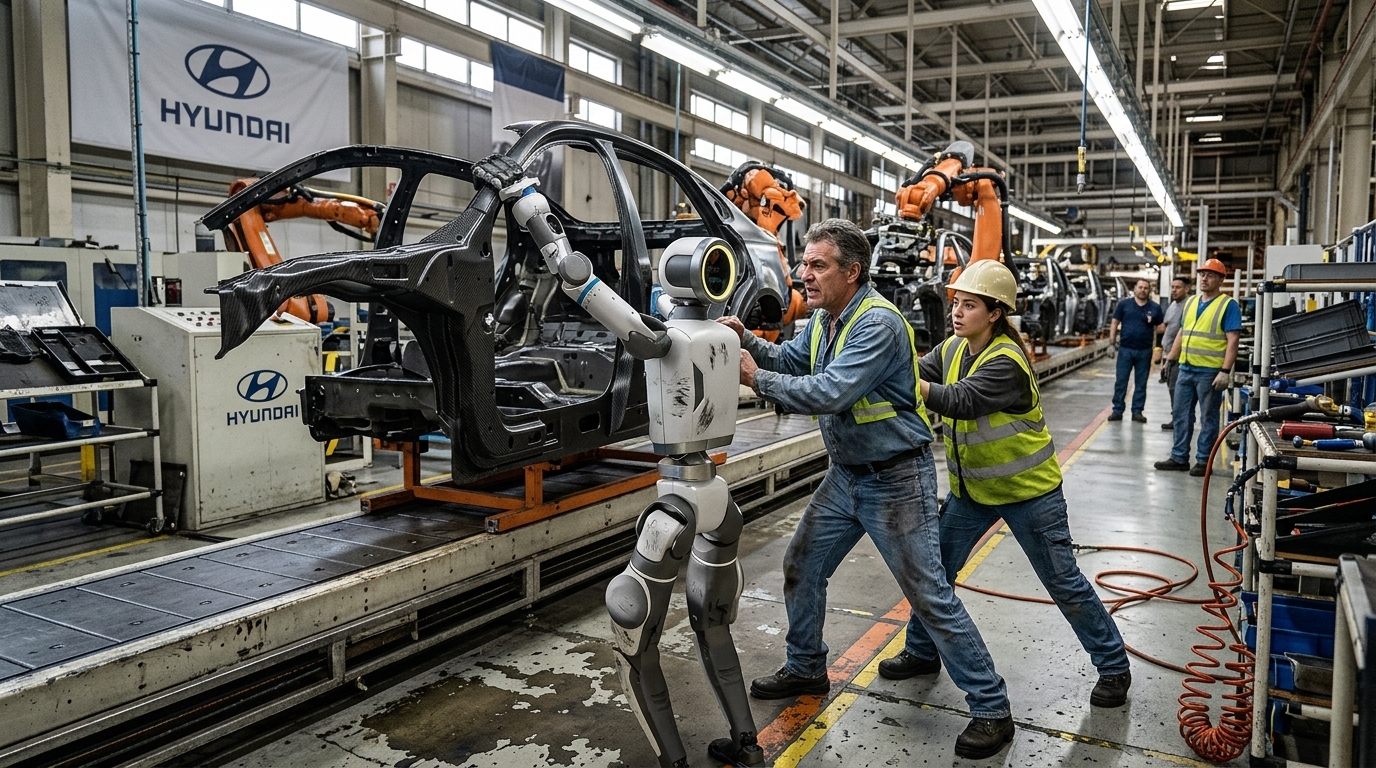
The shift toward Edge AI is not just about mobile phones. It extends to automobiles, which require local processing for autonomous driving, smart cities, and industrial manufacturing. The ability of a device to "think" without an internet connection is a game-changer. Arm is at the center of this transformation, as its energy efficiency is unrivaled—a critical factor for battery-powered devices.
- Energy Efficiency: Arm's RISC architecture offers the best performance-per-watt ratio on the market.
- Ecosystem: Millions of developers already write code optimized for Arm, making it difficult for competitors like Intel (x86) to displace it.
- Scalability: From tiny IoT sensors to supercomputers, Arm's technology covers the entire spectrum.
In conclusion, while the market has already priced in Nvidia's massive success, Arm Holdings appears undervalued regarding the role it will play in the daily application of AI. As AI software becomes lighter and more efficient, the necessity for Arm's architecture will grow exponentially, making it one of the most strategic investments of the decade.