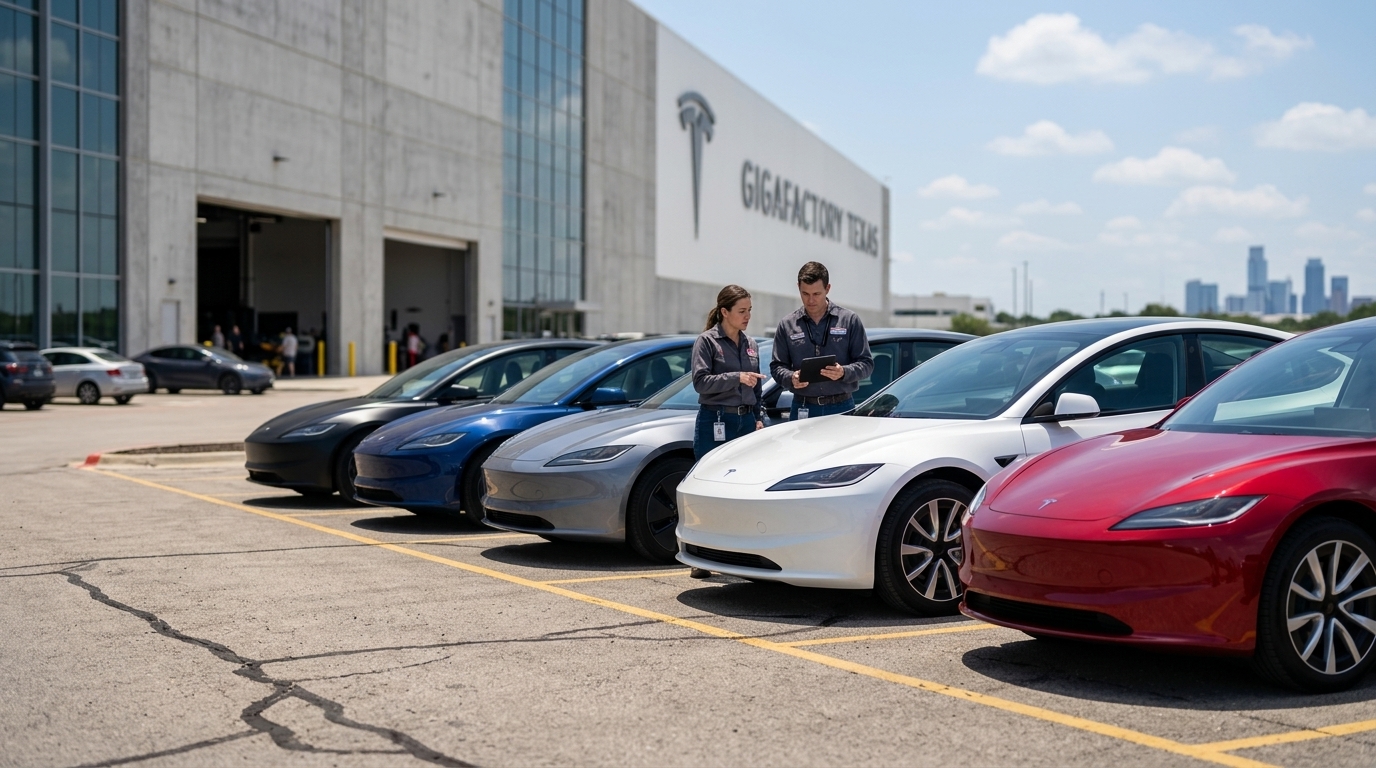
When Tesla delivered the first Model S units in 2012, the automotive world viewed electrification as a niche experiment for wealthy environmentalists. Twelve years later, Tesla is no longer a struggling startup but a titan at a critical crossroads. Elon Musk’s recent strategic pivot—de-emphasizing the Model S and Model X in favor of Artificial Intelligence and humanoid robotics—marks the end of an era and the beginning of a much riskier chapter.
The Legacy of Model S and Model X
The Model S wasn't just a car; it was proof that an electric vehicle could be faster, more beautiful, and more technologically advanced than any internal combustion engine peer. With the introduction of the Model X in 2015, Tesla proved it could innovate in the SUV segment, despite the initial mechanical headaches of the 'falcon wing' doors. These two models were the pillars upon which Tesla’s multi-hundred-billion-dollar valuation was built.
However, sales of the S and X now represent a tiny fraction of the company's total deliveries, as the Model 3 and Model Y have taken over the mass-market heavy lifting. The decision not to fundamentally refresh these aging platforms signals that Musk views the 'luxury passenger car' chapter as effectively closed.
The Pivot to AI and Optimus
Elon Musk has repeatedly stated that if one does not believe Tesla will solve Full Self-Driving (FSD), they should not be a shareholder. The shift toward the Robotaxi and the Optimus humanoid robot is not merely a portfolio expansion; it is a complete corporate redefinition. According to Musk, the value of Optimus could eventually eclipse the entire automotive market.
"Tesla should be thought of as an AI and robotics company, not an automaker. If you see it as the former, the future is limitless. If you see it as the latter, it's just another low-margin manufacturing business," he has emphasized.
This pivot carries immense risks. While Tesla dominated EVs, the competition in AI from giants like Alphabet (Waymo) and NVIDIA is fierce. Furthermore, FSD technology remains at Level 2, requiring driver attention, despite years of promises regarding total autonomy.
Economic Implications and Chinese Pressure
The "AI-first" strategy comes at a time when Tesla is under intense pressure from Chinese manufacturers like BYD and Xiaomi. Chinese rivals are now offering luxury EVs with tech specs that rival or exceed the aging Model S and X at significantly lower price points. By stepping back from its premium vehicle roots, Tesla is essentially ceding market share to focus on a future that may still be years away.
- Profit Margins: Shifting to software-as-a-service (SaaS) and robotics services promises margins exceeding 50%, compared to the 15-20% typical of hardware manufacturing.
- Capital Expenditure: Billions are being diverted into supercomputers like Dojo and neural network training.
- Brain Drain: The singular focus on robotics has led to the departure of key executives who wished to see Tesla maintain its automotive leadership.
Conclusion: An All-or-Nothing Bet
The Tesla of 2026 bears little resemblance to the company we once knew. Musk is betting his legacy and the company's survival on the ability of machines to think and move autonomously. If the Robotaxi and Optimus succeed, Tesla will likely become the most valuable company in history. If they fail, the abandonment of the models that built the brand will be remembered as one of the greatest strategic blunders in business history.