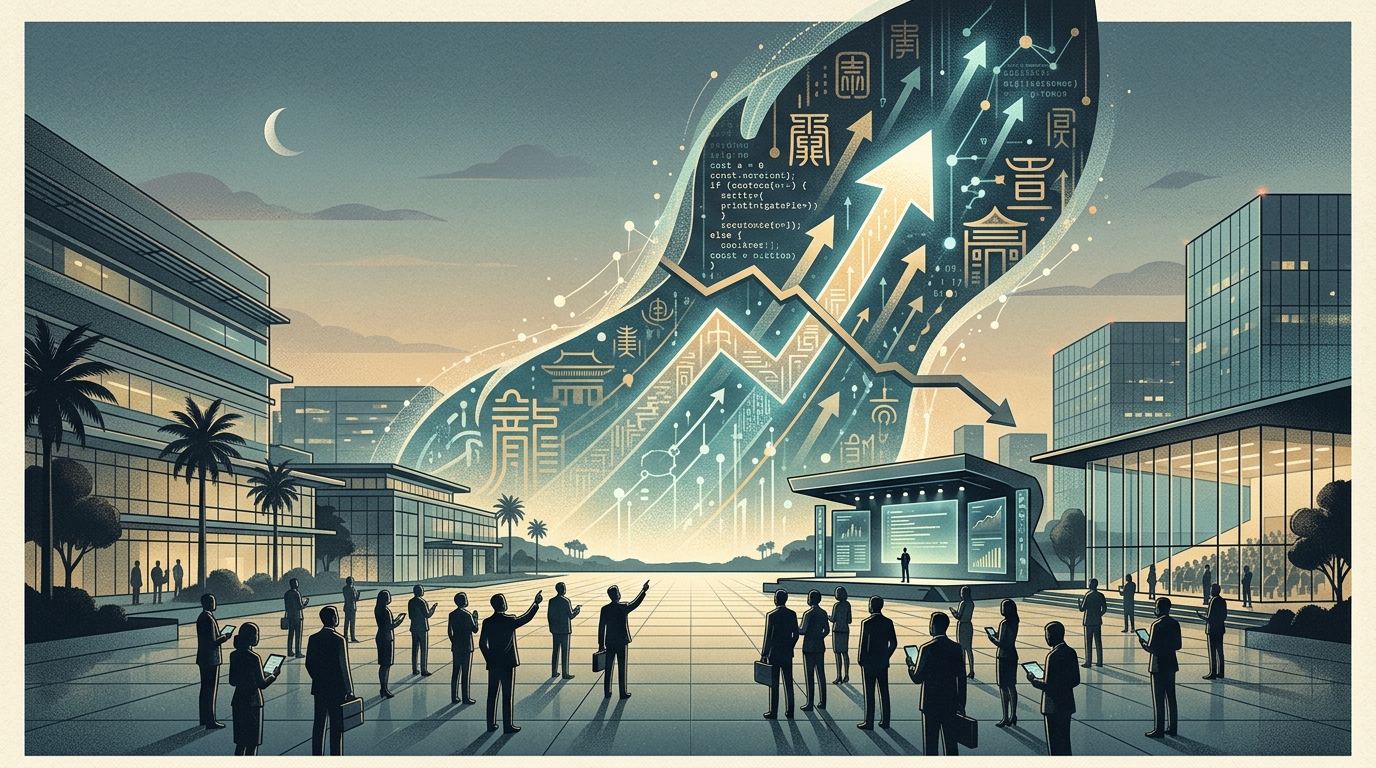
In the high-stakes geopolitical chessboard of artificial intelligence, China appears to be making a strategic move that could fundamentally realign the global balance of power. According to industry reports, the two traditional rivals and pillars of the Chinese digital economy, Tencent and Alibaba, are in advanced talks to co-invest in DeepSeek. The valuation for the startup, which has stunned Silicon Valley with its unprecedented architectural efficiency, is expected to exceed $20 billion, firmly placing it among the world's most elite AI unicorns.
This news is more than just a corporate transaction; it is a profound statement of intent. At a time when the United States is tightening export controls on high-end semiconductors, China is pivoting toward internal consolidation and architectural innovation. DeepSeek, which began as a research lab under the wing of High-Flyer Quant, has proven that machine intelligence does not necessarily require infinite resources, but rather ingenious design.
A Strategy of Forced Reconciliation
For long-time observers of the Chinese tech landscape, a collaboration between Tencent and Alibaba is a rare sight. These two giants have spent decades competing in every conceivable vertical, from mobile payments to cloud infrastructure. However, the meteoric rise of DeepSeek has created a new paradigm. DeepSeek is not just another competitor; it is the custodian of a technology that allows for the training of GPT-4 class models at a fraction of the cost and compute power typically required.
This investment serves several strategic objectives:
- Access to Frontier Architecture: While both Tencent and Alibaba have their own proprietary models (Hunyuan and Qwen), DeepSeek’s expertise in "efficient learning" is vital for reducing operational overhead in their cloud divisions.
- Sanction Resilience: As Nvidia chip restrictions tighten, DeepSeek’s ability to extract high performance from less advanced hardware has become a national priority for Beijing.
- The Birth of a National Champion: Concentrating capital from the largest players around a single entity mirrors the OpenAI model, but with distinct state-aligned strategic goals and oversight.
The DeepSeek Effect: Disrupting Silicon Valley
Only a few months ago, DeepSeek was a name known primarily to niche research circles. Today, it is regarded as the single greatest threat to the dominance of American Big Tech. The release of its DeepSeek-V3 and R1 (Reasoning) models demonstrated that China is no longer merely playing catch-up; it is charting an independent course. By utilizing techniques like Mixture-of-Experts (MoE) and highly optimized custom kernels, the company has achieved benchmark performances that rival OpenAI’s o1-series with budgets that Western firms would consider rounding errors.
"DeepSeek has fundamentally changed the rules of the game. It’s no longer about who has the most chips, but who can think most effectively on top of the silicon," noted a senior tech analyst based in Beijing.
The $20 billion valuation reflects this paradigm shift. While Microsoft and Google are pouring tens of billions into massive data centers, DeepSeek promises a more sustainable path toward Artificial General Intelligence (AGI). This model is incredibly attractive to Tencent and Alibaba, who must balance the demands of technological supremacy with the realities of corporate profitability and regulatory pressure.
Geopolitical Implications and the Future of the Cloud
This move will certainly not go unnoticed in Washington. The consolidation of Chinese tech giants around DeepSeek reinforces the argument that chip bans may eventually act as a catalyst for Chinese self-reliance. If DeepSeek successfully integrates into the massive ecosystems of WeChat (Tencent) and Taobao (Alibaba), AI will become the "operating system" of Chinese society in a way that the West is still struggling to implement due to fragmented markets and regulatory hurdles.
In conclusion, the reported investment marks the end of the "wild west" phase of Chinese AI startups. We are entering a period of consolidation around those who possess genuine architectural innovation. DeepSeek, backed by the financial and infrastructural might of Tencent and Alibaba, is transforming from a promising challenger into a global powerhouse capable of challenging the Silicon Valley status quo for years to come.