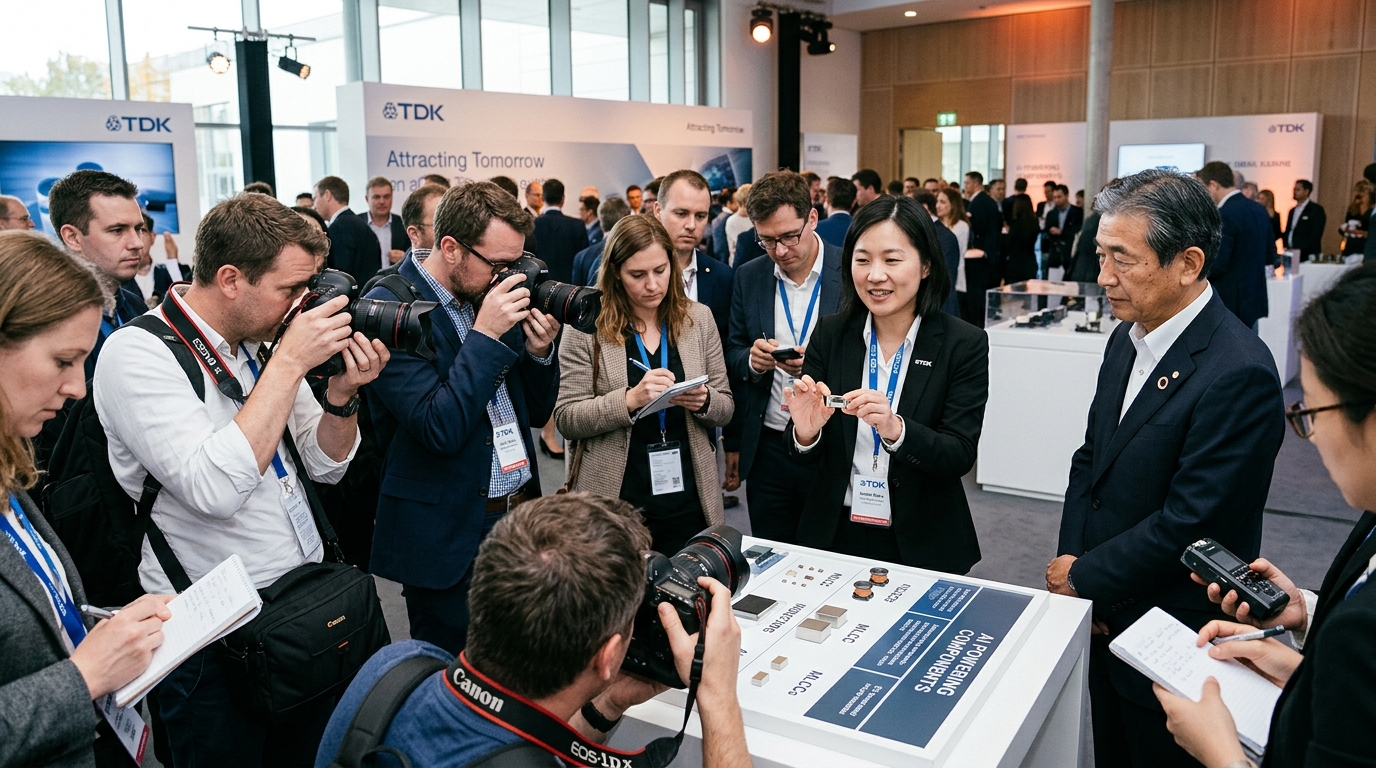
At the heart of the global technology stage, where the brilliance of artificial intelligence software often overshadows the hardware it runs on, Japan's TDK Corp. is emerging as one of the most critical players. In a recent interview with Bloomberg, the company's CEO, Noboru Saito, presented a picture of an organization that is not just watching developments, but fueling them—literally and figuratively.
The Battery Revolution in the Age of On-Device AI
TDK, known to the general public for its legacy audio cassettes, has evolved into a components giant, holding a leading position in the smartphone battery market as a key supplier to Apple. Saito emphasized that the advent of "on-device AI" is fundamentally changing the rules of the game. AI models running locally on phones and PCs require immense computing power, which in turn drains batteries at an unprecedented rate.
To meet this challenge, TDK is investing heavily in next-generation silicon-anode batteries. This technology allows for higher energy density in a smaller size, which is vital for the slim smartphones of the future. Saito explained that the demand for these high-capacity batteries is not just a trend but a necessity to keep AI functional in users' daily lives without the need for constant charging.
Data Centers and the Return of Magnetic Storage
While the world focuses on Nvidia's chips, TDK sees a massive opportunity in data center storage infrastructure. Despite the rise of Solid State Drives (SSDs), traditional Hard Disk Drives (HDDs) remain the most cost-effective solution for storing the vast volumes of data required to train Large Language Models (LLMs). TDK holds a dominant position in manufacturing magnetic heads for these drives.
According to Saito, a recovery in the data center market is now visible in the company's financial results. The need for "cold storage"—data that does not require immediate access but must be kept securely—is growing exponentially. TDK is continuously improving its magnetic head technology to allow for greater recording density, ensuring that physical hardware can keep pace with the digital explosion.
Geopolitical Strategy and Supply Chain
One of the most sensitive points of TDK's strategy is its geopolitical positioning. With a large portion of its production in China and Apple as its main customer, the company sits at the center of trade tensions between the US and China. Saito was cautious but clear: TDK is following a diversification strategy, expanding its production bases in India and other parts of Southeast Asia.
- Expansion of battery production in India to serve the local market and reduce dependence on China.
- Focus on components for electric vehicles (EVs), where TDK's sensors and capacitors are essential.
- Investment in R&D for solid-state batteries, promising greater safety and longevity.
The company's "Seven Seas" strategy aims for dominance in seven key market segments, from automotive to wearables. Saito believes that the balance between traditional Japanese quality and the speed required by Silicon Valley is the key to long-term success.
Conclusion and Future Outlook
TDK is no longer the company we remember from the 90s. It is a technological pillar that enables artificial intelligence to exist in the physical world. As demands for energy and storage increase, the importance of component manufacturers like TDK will continue to grow. For investors, the company serves as a bellwether for the health of the entire hardware ecosystem, reminding us that behind every "smart" algorithm lies a complex and demanding physical infrastructure.