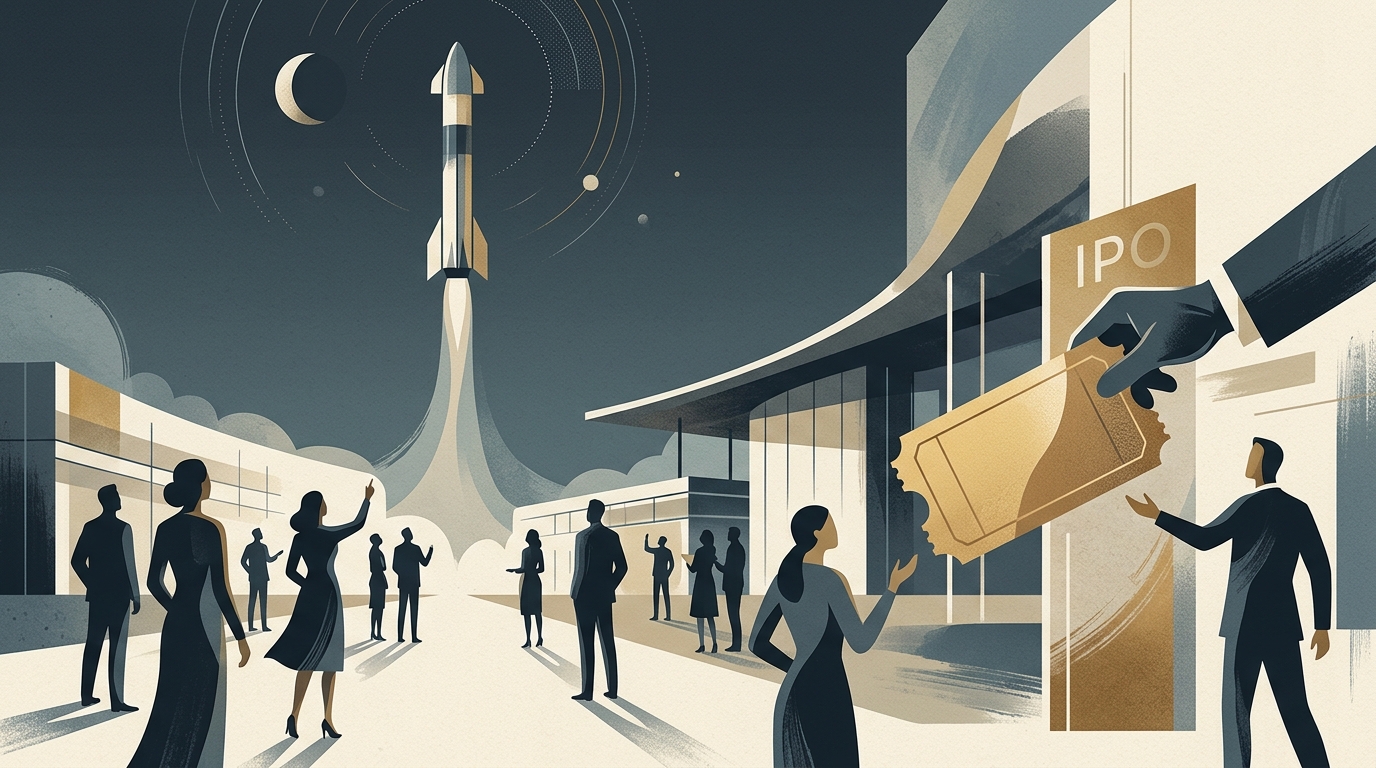
The decades-long anticipation for SpaceX's entry into public markets appears to be reaching its climax, with Goldman Sachs emerging as the primary winner in the race to lead the initial public offering (IPO). In a move that many analysts are calling the "deal of the decade," Elon Musk's aerospace company is targeting a valuation starting at $75 billion for this specific public offering tranche, even though the company's total private market valuation has already soared past $200 billion.
Goldman Sachs and the Battle for the Final Frontier
The selection of Goldman Sachs is no coincidence. The investment bank has maintained deep-rooted ties with the Musk ecosystem for years, despite the billionaire's occasional public spats with the Wall Street establishment. Goldman is now tasked with balancing SpaceX's massive capital requirements for the Starship program against investors' demands for consistent profitability. This IPO is not just about raising capital; it is about validating SpaceX's dominance in a sector that was once the exclusive domain of nation-states and supranational organizations.
Market expectations suggest that the IPO will focus primarily on Starlink, SpaceX's satellite internet subsidiary. Starlink has already achieved positive cash flow, making it the ideal vehicle for a public debut. With millions of subscribers globally and contracts with governments for defense purposes, Starlink serves as the "cash cow" intended to fund Musk's ultimate vision of Mars colonization.
Starlink as the Economic Engine
At the core of Goldman Sachs' analysis is Starlink's explosive growth. The service has managed to democratize internet access in remote regions while simultaneously becoming an indispensable tool on the modern geopolitical chessboard. From Ukraine to the remote reaches of the Amazon, SpaceX's infrastructure is now of critical strategic importance. Investors see a unique opportunity in Starlink: a technology company with physical assets (thousands of satellites) and a recurring revenue model that mirrors top-tier Software-as-a-Service (SaaS) firms.
However, the challenge remains managing the overhead. Launching new satellites and maintaining the constellation requires a continuous stream of capital. Goldman Sachs will need to convince institutional investors that the model is sustainable in the long run, especially as competition from Amazon's Project Kuiper and the Chinese state-led space industry intensifies.
Risks, Regulations, and the Musk Factor
An IPO of this magnitude is not without political implications. SpaceX is inextricably linked to U.S. national security. The influx of foreign capital through public markets will be scrutinized by the Committee on Foreign Investment in the United States (CFIUS). Furthermore, Elon Musk's persona remains a volatile factor. Regulatory bodies like the SEC will demand levels of transparency and corporate governance that Musk has often circumvented in his private ventures.
- Launch Dominance: SpaceX currently holds approximately 80% of the commercial launch market.
- Cost per Kilogram: Rocket reusability has slashed costs to levels competitors cannot match.
- Data Value: Starlink is not just an ISP; it is a global data collection infrastructure.
Goldman Sachs is betting that the market's hunger for "pure-play" space stocks will outweigh any reservations regarding the company's governance or Musk's leadership style. The $75 billion IPO is merely the beginning of a new era where space becomes a core pillar of institutional investment portfolios.
Implications for the Global Space Economy
In conclusion, this move signals the maturation of the private space industry. If Goldman Sachs successfully executes this offering, it will pave the way for other players in the sector to follow suit. SpaceX is no longer the experiment of an eccentric billionaire; it is an industrial titan reshaping the global economy from Earth's orbit. The question is no longer whether SpaceX will succeed, but who will manage to secure a seat on the rocket before it leaves the launchpad of public valuation.