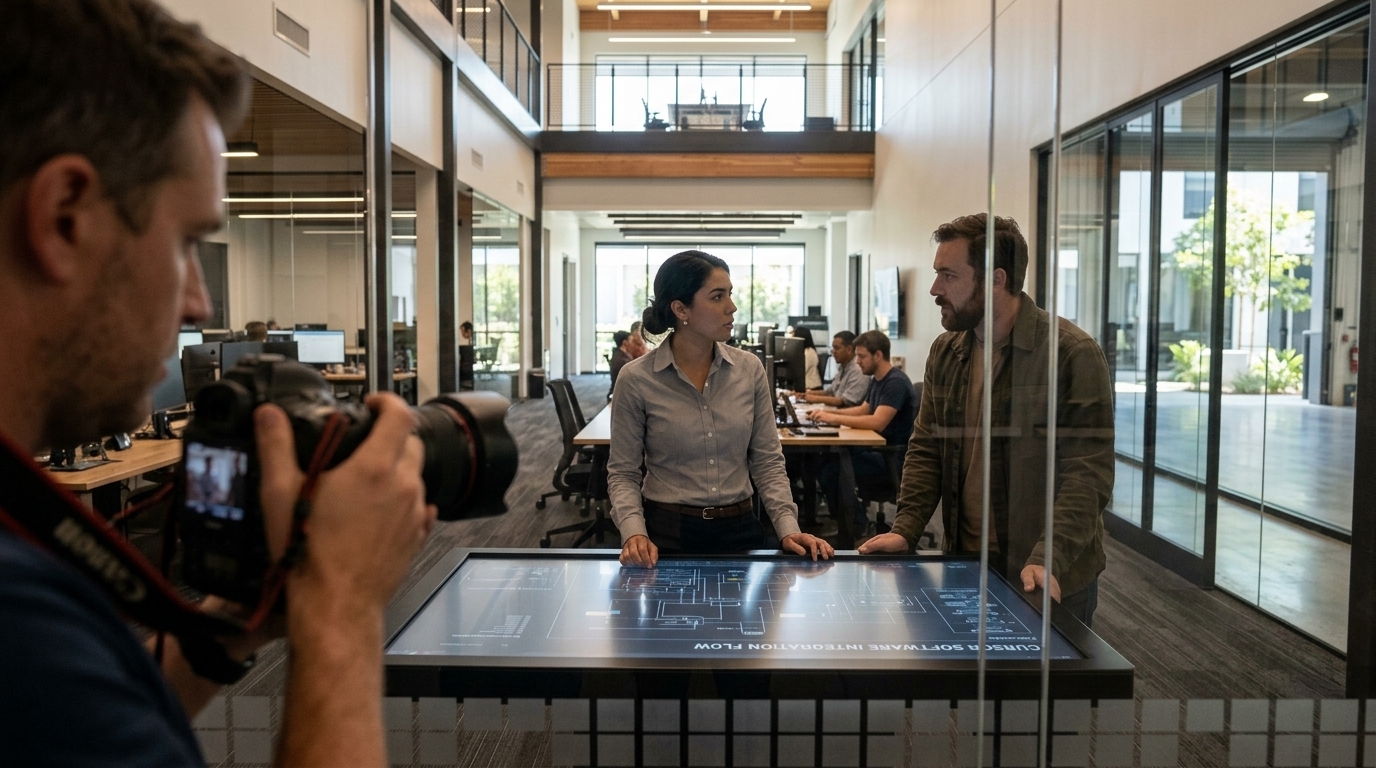
The news breaking early this morning from Fortune Greece has sent shockwaves through the tech industry: SpaceX, the company that redefined the history of space travel, is acquiring Cursor for a staggering $60 billion. This move comes just months after SpaceX's historic Initial Public Offering (IPO), which provided the capital firepower necessary to execute one of the largest software acquisitions in global history.
The Strategy Behind the Code
Why would a rocket company invest billions in a code editor (IDE)? The answer lies in the increasing complexity of SpaceX's systems. From the autonomous control of Starship rockets to the management of the global Starlink constellation, software has become the critical point of both failure and success. Cursor, which began as a bold startup integrating artificial intelligence directly into the programming workflow, has managed to become the indispensable tool for millions of developers worldwide.
This acquisition is not merely about using a tool; it is about owning the infrastructure upon which the future is built. With Cursor under its umbrella, SpaceX gains access to top-tier AI talent and technology that can accelerate code development by 10 or even 20 times. In a world where time is the most expensive currency—especially when aiming for Mars—this acceleration is worth every dollar.
Integration with the Musk Ecosystem
One cannot view this acquisition in isolation from Elon Musk’s broader vision. The integration of Cursor with xAI’s models (such as Grok) is expected to create a closed, hyper-efficient development loop. Imagine a world where the code for SpaceX’s navigation systems is written by an AI specifically trained on data from previous missions, within an environment (Cursor) that understands the unique constraints of aerospace engineering.
- Integration of xAI with the Cursor development environment.
- Automated code generation for Starship telemetry systems.
- Optimization of Starlink routing algorithms via AI-assisted coding.
- Creation of a new standard for 'Mission Critical' software.
Challenges and Competition
Despite the excitement, the acquisition raises serious antitrust questions. Microsoft, which owns GitHub and VS Code (the foundation upon which Cursor was originally built), now faces a formidable rival. Regulatory bodies in the US and the EU are expected to scrutinize the deal, fearing the concentration of excessive power in the hands of a single player who already controls satellite communications and the space infrastructure of the West.
"SpaceX isn't just buying a software company; it's buying the ability to think faster than its competitors," stated a prominent Silicon Valley analyst.
In conclusion, the acquisition of Cursor marks the transition to the era of 'Software-Defined Space.' SpaceX realizes that to conquer space, it must first conquer the way intelligence is written to lead us there. The $60 billion bet is bold, but if history has taught us anything, it is that Musk rarely bets on anything that doesn't have the potential to change the world.