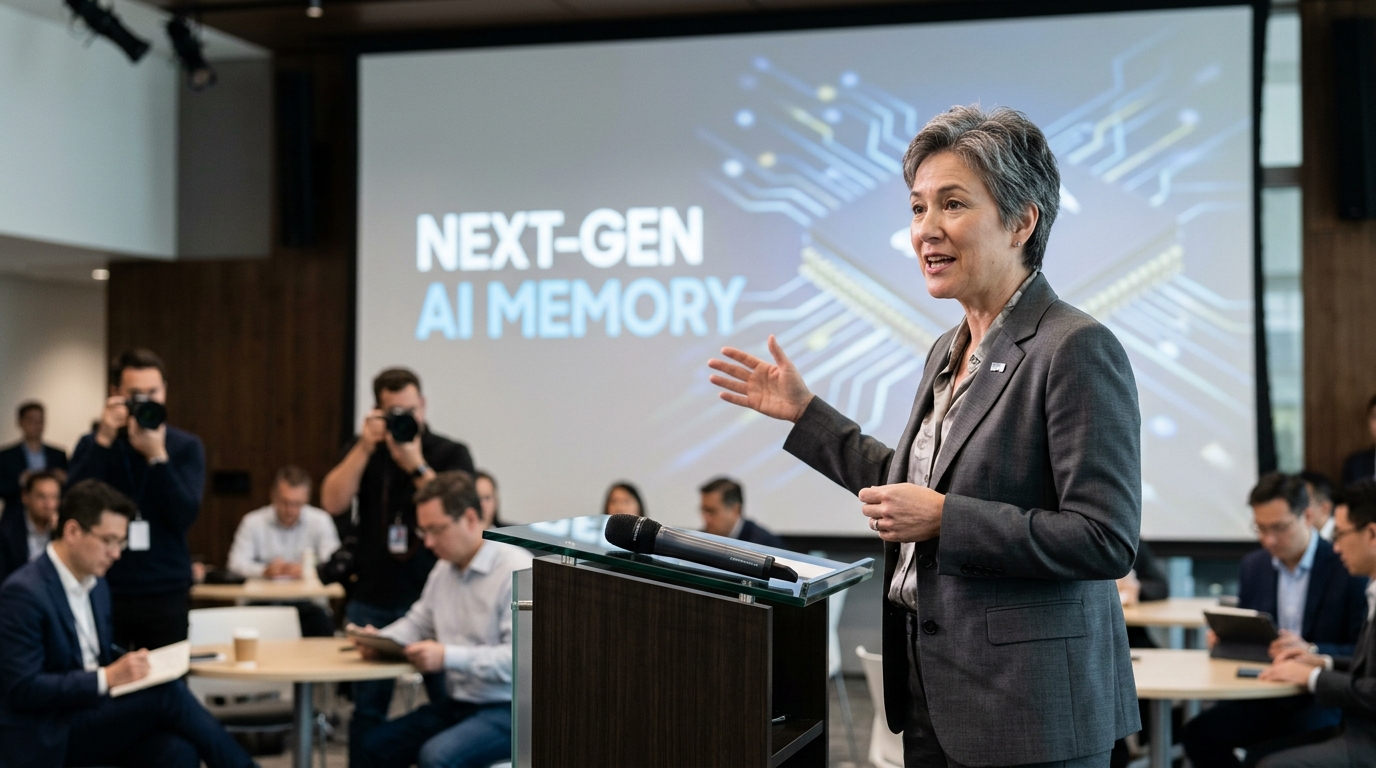
In a decisive move reshaping the global semiconductor landscape, Samsung Electronics Co. has announced the commencement of shipping samples of its most advanced High Bandwidth Memory (HBM) chips to customers. This development, occurring in late May 2026, marks the South Korean giant's return to the forefront of a market that until recently appeared to be under the total control of rival SK Hynix Inc.
Samsung’s Strategic Counter-Offensive
For nearly two years, Samsung found itself in an uncharacteristic position: that of the underdog. While SK Hynix managed to become the exclusive supplier for Nvidia’s HBM3 and HBM3e chips, Samsung struggled with yield rates and certification delays. However, today’s news regarding the shipment of HBM4 samples—the next major memory architecture—suggests that the company has not only closed the gap but potentially leapfrogged its competitors.
The new samples consist of 12-layer and 16-layer memory stacks, offering unprecedented data transfer speeds and significantly reduced power consumption. The significance of this advancement cannot be overstated: as Large Language Models (LLMs) grow increasingly complex, memory has become the primary bottleneck in AI system performance.
The Nvidia Factor and the Accelerator War
Nvidia, which holds the lion's share of the AI accelerator market, has been desperately seeking a second reliable supplier to reduce its dependence on SK Hynix and drive down production costs. Samsung’s entry with cutting-edge technology shifts the balance of power. Industry analysts suggest that Samsung utilized a new manufacturing method, blending its traditional strength in DRAM production with advanced packaging techniques developed in collaboration with TSMC for the logic dies.
This surprise collaboration between Samsung and TSMC for HBM4 is the key to its success. Although the two companies are fierce rivals in the foundry sector, the necessity for compatibility with Nvidia’s next-generation GPUs forced a "marriage of convenience." The result is a product promising 50% more bandwidth compared to the current generation.
Geopolitical and Economic Implications
Samsung’s leadership in AI memory is not just a matter of corporate pride; it is a point of national security for South Korea. In an era where the US and China are clashing over semiconductor control, the ability to produce the "lungs" of artificial intelligence provides immense geopolitical leverage. The Seoul government has already announced multi-billion dollar support packages to ensure the country remains the global hub for memory technology.
Furthermore, Samsung’s success is expected to bring a level of price stabilization to AI servers. With three major players now in the game (Samsung, SK Hynix, and Micron) competing for contracts from Nvidia and AMD, the market is entering a phase of maturity where production scale will play a decisive role.
The Future of Computational Power
Looking toward 2027, the industry is preparing for the integration of memory directly onto the processor (Processing-in-Memory - PIM). Samsung appears to be leading in this field as well, testing architectures where data processing occurs within the memory chip itself, eliminating transfer latencies. If the samples shipped today pass customer testing, Samsung will have achieved the greatest comeback in modern tech history, turning a strategic setback into a triumph of innovation.